2 hours ago
Why are Palestinians protesting against Abbasi?
Periskopi(5 years ago)
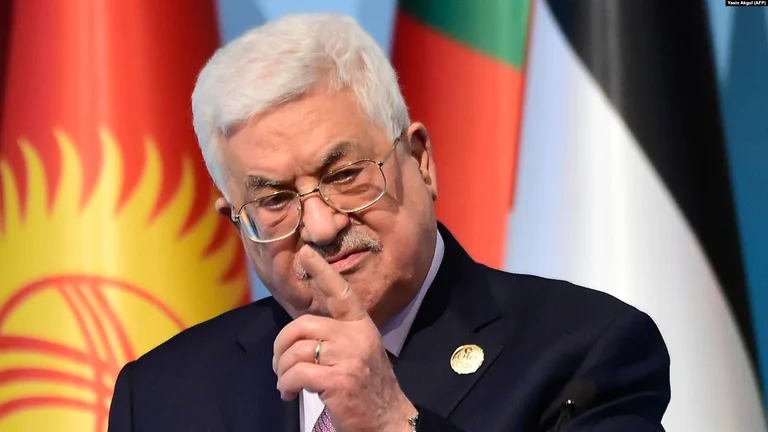
(5 years ago)Thousands of Palestinians have taken to the streets in recent days to protest President Mahmoud Abbas and the Palestinian Authority, whose security forces, along with supporters, have violently distributed them. Protests erupted after the death of a well-known Palestinian Authority critic while he was in custody last week, but complaints [...]
Thousands of Palestinians have taken to the streets in recent days to protest President Mahmoud Abbas and the Palestinian Authority, whose security forces, along with supporters, have violently distributed them.
Protests have erupted after the death of a well-known Palestinian Authority critic while he was on hold last week, but complaints go beyond this case.
Abbasi's popularity has fallen after the annulment of the first elections in 15 years, in April, as well as after it has been sidelined by the war that has included Gaza in May.
The Palestinian authority has long been considered involved in corruption and intolerance towards reconciliation. This authority is due to the recent manifestations of the peace process, which has not been very active for more than a decade and is considered by Israel, the United States and the European Union, as the key partner for promoting stability.
Stand by
The Palestinian authority was established in the 1990s through temporary peace arrangements between Israel and the Organisation for Liberation of Palestine (PLO), which still represents the cause at the international level.
The Palestinian authority is considered a pending state and has been guaranteed limited autonomy in parts of the West Coast and Gaza Strip.
Israel and the Palestine Liberation Organization have held a series of peace talks in 1990 and 2000. The Palestinians, negotiating from the lowest position, have sought independent states east of Jerusalem, the West Coast, and Gaza, territories that Israel has occupied in the 1967 war.
The parties have never reached an agreement, and there has never been a comprehensive talks since 2009.
The militant group Hamas has won power in Gaza in 2007, a year after convincing victory in Palestinian elections. This has limited Abbas ' authority to parts of the West Coast.
Tens of attempts at Palestinian reconciliation over the years have failed.
Although the Palestinian Authority has ministries and security forces, its authority is limited to the most popular centers, which number about 40 percent of the West Coast.
Israel has the most extensive authority and has access to the territories of the Palestinian Authority, which Palestinians consistently compare to the form of Bantustan government created by apartheid in South Africa.
The Rise of Inquiry
The Palestinian authority, with increasing authoritarianism, is dominated by the secular party Fatah, of Abbsas, which is run by a close circle of men in their 60s and 70s.
Abbas, 85, whose four-year presidential mandate has expired in 2009, leads the Palestinian Authority, the Organisation for Liberation of Palestine and the Fatah party.
The leadership of the Palestinian Authority, which enjoys special privileges for co-operation with Israel, is considered by Palestinians as corrupt and in their own service.
Its policy of co-ordination with Israel, to follow Hamas, and other common enemies, is extremely unpopular.
Rooters at the Al-Axa mosque have on Friday accused the Palestinian Authority of becoming an accomplice, a disassembled charge of treason.
Last week, security forces have raided a house in the occupied West Coast to arrest Nizar Banat, who has repeatedly criticised the Palestinian Authority for online posts.
His family said he was beaten before being dragged.
The Palestinian authority has said it has launched investigation into his death, which has sparked recent protests.
Banat has been a candidate in the parliamentary elections, which Abbas has cancelled in April, after it is believed Fatah party could face humiliating losses to Hamas.
During the Gaza war that erupted several weeks later, Hamas is considered a defender of Palestinian rights and defender of Jerusalem until the Palestinian Authority has done nothing.
In a poll conducted after the war, dramatic growth of support has been seen for Hamas, as more than half of the residents have said he should lead the Palestinian movement.
Staying in Power
Despite the lack of popularity, Abbas may depend on the support of powerful friends such as Israel, the United States and Western donors, who have invested heavily in the survival of the Palestinian Authority.
This Authority also pays salaries for hundreds of Palestinian civil servants who would otherwise find hard work.
Leading large population centres, the Palestinian Authority limits the military and financial burden of the West Coast, occupied by Israel 54 years.
This body also helps preserve the idea of eventual two - states solutions, although Israel expands the scope of Jewish settlements and consolidates control in the West Coast and the birth of Jerusalem.
The European Union has invested hundreds of millions of dollars in the Palestinian Authority over the years and the US, as have other nations, have trained and equipped security forces.
US President Joe Biden's administration has said it hopes it will strengthen the Palestinian Authority, and work for the reconstruction of Gaza where this Authority has no power.
Israel, the US and the EU prefer the Palestinian Authority, unlike Hamas, whom they consider a terrorist group.
These countries are committed to working with this Authority to manage conflict, and reduce tensions, until once in the future, when the peace process can be experienced.
But after a few weeks of unrest in Jerusalem, the Gaza War, and now street violence in the West Coast, this approach seems further and more distant.