 7 hours ago
Montenegro Contacts Kosovo Authorities to Arrest Gazimestan
Periskopi(5 years ago)
(5 years ago)Vidovdan's note began Monday morning with a liturgy at the Gracanica Monastery, which Serb Patriarch Porfirije led. After that, a memorial service was held in Gazimestan to remind the victims of the battle in Kosovo. This is the first time that Patriarch Porfirije led the memorial service in Gazimestan since [...]
Vidovdan's note began Monday morning with a liturgy at the Gracanica Monastery, which Serb Patriarch Porfirije led.
After that, a memorial service was held in Gazimestan to remind the victims of the battle in Kosovo.
This is the first time that Patriarch Porfirije led the memorial service in Gazimestan, since he was elected to the post of head of the Serbian Orthodox Church.
During this service, he briefly addressed the attendees, where he called for unity and reiterated the stance that Serbian “-sherds in Kosovo must be protected.
He expressed the same attitudes after the liturgy held in Gracanica, where he stressed that diversity is a gift and that it should not cause conflict.
The Serbian patriarch added that “views Albanians as our brothers” and said he is sure that “not only can we understand each other, but we can live together, grow up and build”.
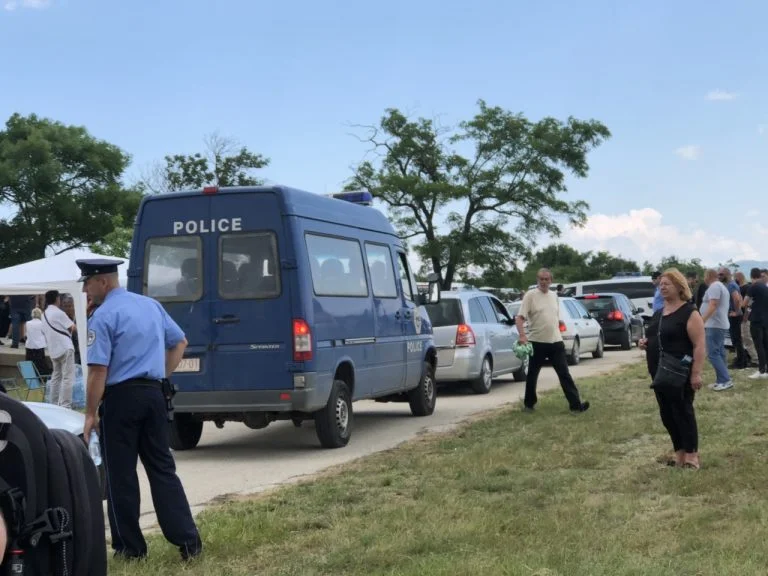
Those present in Gazimestan during the day sang patriotic songs, while Kosovo Police, which are implementing a special operational plan for the celebration of Vidovdan, arrested one person, but did not elaborate on the arrest.
Meanwhile, Kosovo's chief of office in Serbia's Government, Petar Petkovovic, and the leaders of the Serbian List, which is the largest political party of Kosovo Serbs and enjoys the support of official Belgrade, also participated in liturgy at the Gracanica Monastery.
However, as in previous years, they did not go to Gazimestan.
Every year in Gazimestan, the Serbian Orthodox Church, as well as Serbs from Kosovo and the region, on 28 June, celebrate Vidovdan to remind the Serbs of the suffering in the battle in Kosovo on 1389, against the Turkish military.
It was June 28th in 1989, when Serbia's former president, Slobodan Milosevic, delivered a speech to tens of thousands of Serbs, where he claimed he did not exclude the armed “bets”
This Milosevic speech was seen as a warning to the wars that followed in the 1990s in the former Yugoslavia.











