3 hours ago
KSF transition according to pre-priced dynamics strengthened country's stability
Periskopi(5 years ago)
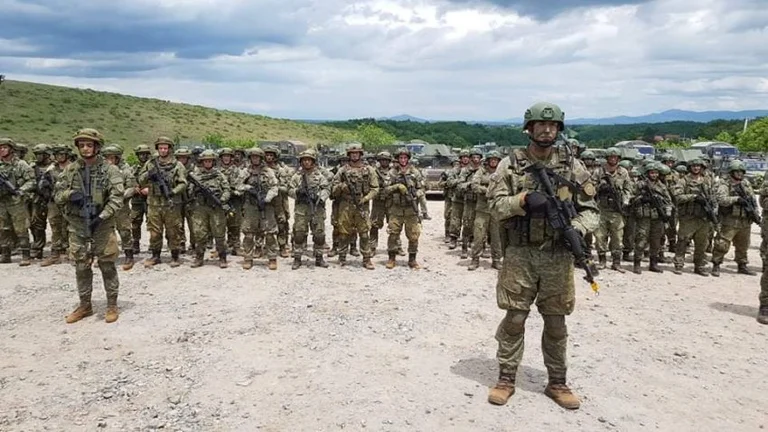
(5 years ago)It has been about three years since Kosovo institutions moved forward with the decision to start the transition process of the Kosovo Security Force (FSK) from a civil protection mandate and emergency response to the defence force. However, this movement by Kosovo leadership, prompted by massive public support, was [...]
However, this move by the Kosovo leadership, prompted by massive public support, was seen with scepticism by some of the country's traditional allies, who feared the decision would lead to instability.
But was there real instability as a result of that decision? The short answer is no.
So said a report by the Kosovar Centre for Security Studies.
The “Seeing the process is clear that the consequences some feared from the KSF transition to the defence force for Kosovo were exaggerated, and it seems that the decision was nothing less than a regular technocratic act of Kosovo institutions.
Some may even claim that in fact the transition process of KSF's mandate has helped social cohesion in Kosovo and, as such, has strengthened the country's stability. In other words, the disturbing disk about the KSF transition has proved unfounded, and the decision so far has proved more beneficial than expected”.
The publication identifies the achievements so far from this process, where, among other things, it finds the development of which force is occurring according to the previous dynamic.
Furthermore, the report finds that the transition as such has proved to have been a common bureaucratic decision of Kosovo institutions, and that its excessive politicisation on the part of Serbia and some skeptical countries turned out to be unfounded.
The transition process of KSF's mandate is also said to be moving forward according to plan. The defence ministry (MM) seems to be pursuing the transition process rigorously, as defined in the General Transition Plan for the construction of defence capabilities. He had no intention of other ambitions or “leaping” from the original plan;
“since 2018, The KSF intensified its efforts to serve as force of good intentions, both inside and outside. In recent development, it made tangible contributions during the earthquake disaster in Albania in November 2019 and landed its first mission abroad in Kuwait, as part of the American IOWA contingent in March 2021;
The KSF transition did not become any escalation of relations between Kosovo and Serbia, and its development trajectory so far did not contribute to the restructuring framework in relations between the two countries;
KSF transition sceptics have weakened, while those who support the new mandate have been energized”.