5 hours ago
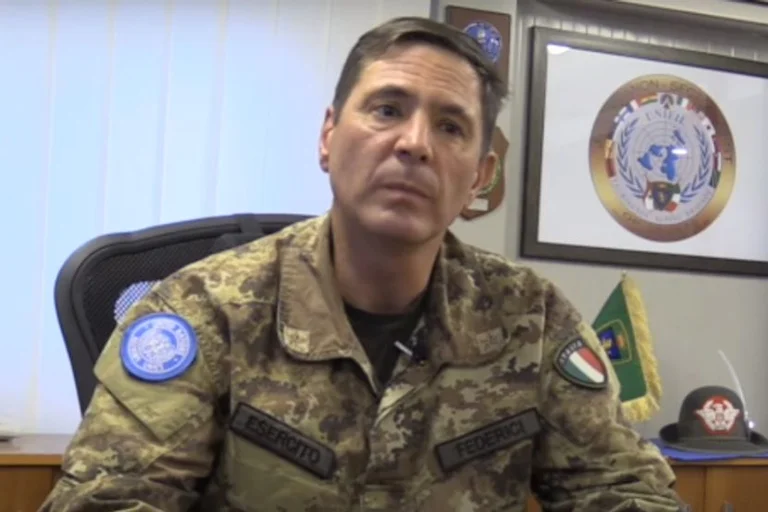
KFOR Commander: KSF north only after I authorized it, NATO expects continuation of Agreement Respect
Periskopi(5 years ago)
(5 years ago)KSF soldiers can emerge in northern parts of the country after permission is granted. This has been fourfold said, KFOR Commander in Kosovo, Major General Franco Federic, who has stressed that this issue is in his hands. In an interview for Clancosova. tv he has confirmed that NATO expects continued respect for [...]
This has been fourfold said, KFOR Commander in Kosovo, Major General Franco Federic, who has stressed that this issue is in his hands.
In an interview for Clancosova. tv he has confirmed that NATO expects continued respect for the agreement signed by Kosovo institutions with the North-Atlantic Alliance on the issue.
Federic has stated about this after being asked to send to the prosecutor on the part of Prime Minister Albin Kurti of the 2013 agreement signed by then Prime Minister Hashim Thaci.
Regarding the decision to build the KSF barracks in the north, the head of KFOR estimates it is the issue of Kosovo institutions.
In addition, Federic is talking about transforming the KSF, where he claims it is a long process that takes time.
“The army is held within the day”, he declared.
INT PLOSE ERVIS:
Major General Federic, what is the security situation currently in Kosovo?
Franzo Federici: The security situation in Kosovo is stable and we are monitoring it closely. We remain fully focused on the daily implementation of the NATO-led KFOR mission's mandate through UN Security Council Resolution 1244 to ensure a safe environment and freedom of movement for the benefit of all communities living in Kosovo.
What is co-operation with Kosovo security institutions?
Franzo Federici: KFOR has very good co-operation with all local and international institutions operating in Kosovo, not only those engaged in the area of security. As an example, I can say that KFOR and Kosovo Security Organisations co-operate annually in organising and maintaining the exercise “Silver Sabre”.
The event is conveyed by representatives of the Kosovo Security Council, the Agency for Emergency Management, Kosovo Police, the Kosovo Security Force, the Kosovo Red Cross and EULEX. The aim is to achieve the high level of co-operation among all actors in Kosovo who are in management of emergency scenarios.
Since you received the mandate at the end of last year, being at KFOR's helm, what do you assess as the biggest security threat in Kosovo?
Franzo Federici: There is no indicator that indicates any potential concern or threatening disorder. Above all, the security situation is the result of many factors, such as economy, politics and prosperity. We regularly monitor the situation in order to discover a potential development that can affect the security situation.
KFOR is willing to take any necessary measures to implement the UN mandate. In general, Kosovo has achieved much in terms of security in recent years. Until I say that, we don't like ourselves. Some challenges continue, including the impact of organised crime, illegal economic activities and certain harmful rhetoric based on ethnic affiliation; unemployment is also a concern, especially after the outbreak of COVID-19.
The Balkans are known as a fountain of wars and conflicts. Do security movements in this region reflect in Kosovo today.
Franzo Federici: Security and stability in the Western Balkans matter for NATO, given their direct impact on security throughout the Euro-Atlantic zone and beyond. Since the late 90s, NATO forces have helped maintain peace and stability in the Western Balkans.
KFOR's mission in Kosovo is the most tangible demonstration of this commitment: many results have been achieved in terms of stability and security, and we will continue to provide a safe environment and freedom of movement for all communities in Kosovo, under the mandate of UN Security Council Resolution 1244.
Months ago at South Mitrovica's Municipal Assembly, a decision has been adopted on providing a space for the construction of a KSF military barracks. Is this part right here to get that building up?
Franzo Federici: The decision to establish an KSF base has been made by Kosovo institutions. This is not a KFOR issue.
It is Prime Minister Albin Kurti who has sent a 2013 agreement to the prosecutor in the middle of former Kosovo Prime Minister Hashim Thaci and NATO that KSF soldiers cannot make it to the northern part of the country without KFOR's permission. How much do you believe Kurt is right when he calls this agreement harmful to Kosovo?
Franzo Federici: Our position regarding the Kosovo Security Force has become clear and has been consistent. We support the development of the KSF under its original mandate, that of a civil defence force, respectively. Discussions about this issue among the allies are continuing.
NATO and KFOR remain fully committed to security in Kosovo and regional stability. We as KFOR continue our daily activities under the UN mandate, aimed at ensuring a safe environment and freedom of movement for all communities in Kosovo. KFOR monitors the situation, including all institutions and communities in Kosovo, and has continued contacts with Serbia's Chief of Defence, and also with international organisations in Kosovo, in particular with the EU.
The KSF should be authorised by me before any deployment in the northern part of Kosovo, in line with the previous agreement with Kosovo institutions that NATO expects to continue to implement.
The issue of forming the Commission Association with the Serb Majority has accompanied other KFOR commanders who have been before you. How do you see it, and do you estimate it violates Kosovo's territorial integrity?
Franzo Federici: All sides must make sure that any decision will not increase tensions in the region. All responsible political actors should focus on reform progress and dialogue.
The Kosovo Security Force for the first time recently took part in “Defender Europe 21”, a drill with other armies of military superpowers. Is this a signal that the KSF transformation process is advancing properly?
Franzo Federici: It takes a long process of changing the current capacities of the Kosovo Security Force to become an army; it is something that is not achieved within the day, or just adopting a law, and in any other case it will take many years to form an army.
The military is not only a matter of making the decision of transformation, but it also means acquiring their equipment and maintenance, recruiting a greater number of personnel, improving educational and training systems, and so on.
So far the KSF was under the original mandate, where it proved they were able to undertake operations during crises and civil defence operations and also assist civil authorities, in response to natural disasters and other emergencies in favour of all people living in Kosovo. As I said before, the position of NATO for KSF is clear and consistent. We support the development of the KSF under its original mandate, that of a civil defence force, respectively.