 5 hours ago
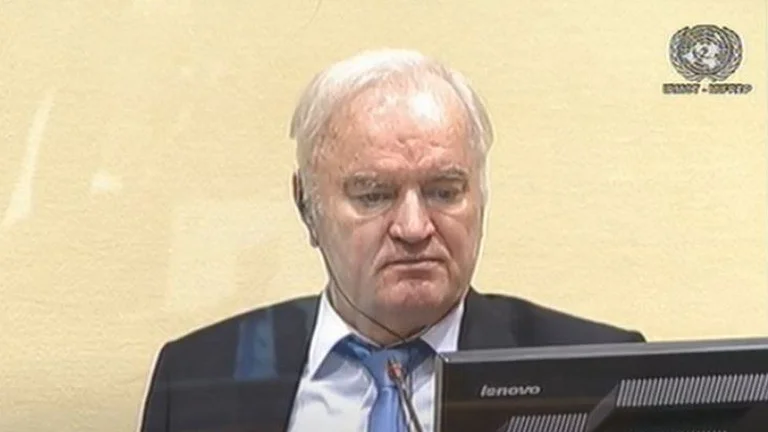
The Hague today gives the final verdict for the “Bosnian Casap”, Ratko Mladic
Periskopi(5 years ago)
(5 years ago)The International War Crimes Tribunal in the former Yugoslavia will decide on the appeal of former Serb commander to Bosnia Ratko Mladic over his conviction for genocide and crimes against humanity. He was sentenced to life imprisonment in 2017 for his part in the 1995 Srebrenica massacre when they were killed around [...]
He was sentenced to life imprisonment in 2017 for his part in the 1995 Srebrenica massacre, when about 8 thousand Bosniak men and boys were killed.
At his appeals hearing in The Hague last August, prosecutors demanded his sentence on another genocide charge.
His lawyers have argued he was far from Srebrenica when the massacre occurred, the BBC writes.
The Srebrenica massacre, carried out in an area supposedly under UN protection, was the worst atrocity in Europe since World War II.
Mladic, known as the “Bosnia's Casap”, was one of the last suspects to face trial at the UN International Criminal Tribunal for the former Yugoslavia. He was arrested in 2011 after 16 years on the run.
In 2017 he was found guilty of genocide over Srebrenica, but was acquitted of genocide during his military campaign in 1992, in which Bosniaks and Bosnian Croats were expelled from their homes or arrested in terrible conditions.
In 2016, the same court sentenced former Bosnian Serb leader Radovan Karadzic to plan the Srebrenica massacre, among other crimes.
His initial 40-year sentence for genocide and war crimes was later raised to life imprisonment in 2019, the rest of which will serve in the United Kingdom.
Ratko Mladic was the doer of a political plot established at the helm to eliminate parts of Bosnia's Muslim population.
Ethnic cleansing began with persecution, propaganda turned neighbours against each other, and for many thousands ended when Ratko Mladic's people invaded the UN base in Potocari, a designated safe zone.
Right here, Munira's 17-year-old son, Nermin, was taken from her arms after he tried to assure her that everything would be okay. 22 members of her family were killed in genocide.
Ratko Mladic spent 16 years as a fugitive, many feared he would not live to see this final legal judgment.
Munira has travelled to The Hague to witness the moment she believes will bring peace.
Prosecutors here hope this trial will send a message echoing in the region and beyond that delayed justice does not mean that justice is denied.
The hearings in August had been delayed by Mladic's health problems and coronary restrictions.
He was challenging all the time, attacking both the court and the prosecutor.
Speaking to Srebrenica, he said he had signed an agreement with the Bosnian Muslim Army to honour her and other protected areas and suggested that he was not guilty of any violations of these areas.
But prosecution lawyer Laurel Baig said Mladic was convicted of some of the most hated “crimes of the 20” century.
“Madic was at the helm of the Srebrenica operation,” she said. “He used forces under his command to execute thousands of men and boys”, broadcast Clankosova.tv.
A defence lawyer, Dragan Ivjek, denied that his client played a role, saying: “Z. Mladic is not a villain. He was someone who at any time was trying to help the UN do the work it couldn't do in Srebrenica at a humanitarian level “.











