 34 minutes ago
Which exiles carry more money to Kosovo?
Periskopi(5 years ago)
(5 years ago)For 13 years, Kosovo has accepted nearly nine billion euros of remittances. These financial tools sent by Kosovo citizens living abroad to their families have not been absent even during the pandemic with COVID-19. Sixteen June marks the International Family Remitency Day. The contribution of over 200 million labor migrants is known on this day, [...]
Sixteen June marks the International Family Remitency Day. The contribution of over 200 million hardworking migrants, women and men, who send money to over 800 million households, is known on this day.
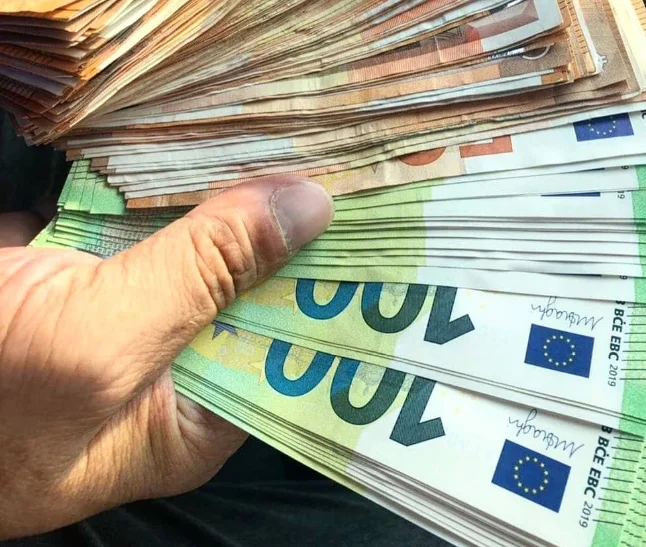
In Kosovo, in 2020, the value of remittances, according to Kosovo Central Bank data (BQK), was about 940m euros. In the first quarter of this year, however, the value of remittances totals over 200m euros.
Remitists in Kosovo present the largest category under the account of secondary incomes.
She says helping her family in Kosovo has never been absent over the years.
I send you to my grandparents. Every year we send, we always help. I send the money every two or three months. I haven't done any estimates of how much money I could send during this time, but I can say that every two or three months I send it from 300 euros”, she tells Radio Free Europe
Over the years, remittances have had an important role in Kosovo's economy, boosting economic growth and providing additional income for smaller-income families.
Most remittances, according to BQC data, go for consumption, then into investments, mainly in real estate purchase.
Freedom Krasniqi, researcher and policy analyst in the organisation “Germin”, an organisation that deals mainly with diaspora issues, tells Radio Free Europe that remittances have played a very important role in the sense of maintaining social peace.
“Remits should be addressed in other areas, such as the high cost of remittances, also channels in which these remittances are spent. Despite the high amount of remittances, a large sum of them is spent on internal consumption, meaning that the impact is not as large as it can be, because Kosovo has an unfavourable trade balance and most of domestic consumer basket products come from import”, he says.
Radio Free Europe via, a survey published on its website last year has asked citizens how much they depend on remittances. In this survey, 68 percent of participants have claimed to depend on that money.
The number of Kosovo citizens living abroad, according to data from the Kosovo Statistics Agency, by the end of 2018, is estimated to be over 850 thousand people.
Kosovo citizens mostly live in the largest number in Germany and Switzerland, and remittances mainly, according to CEC data, are sent from these countries.
Remititions, Krasniqi adds, have also had the negative effect, since some form has in some cases developed a false dependence on families that one needs to work and contribute to, and has not motivated, especially young people, to be found on the job market.
He says it is important to increase financial education in acceptance of remittances so that they can have information on how the impact of remittances can be increased on the country's economy.
“T] we reorientise remits through increased acceptance education and the creation of institutional mechanisms that lower the cost for the sender and on the other hand, to create the mechanisms, such as different investment funds or diaspora bonds, which would be used for capital investments in Kosovo”, Krasniqi says.
Government plans to issue treasury bonds to diaspora
Kosovo's government in the four-year government plan has envisioned that through the creation of instruments for investment, diaspora capital be channeled into investments that create jobs. This government plan has been envisioned since the first year of governance to issue treasury bonds dedicated to the diaspora.
According to the United Nations Organization, remittances are vital to the world's development.
Individual remittances may be “relatively small value”, but general remittances are three times larger than official world development assistance. According to the UN, remittances serve to cover many basic family needs and support education.











