 4 hours ago
Are the criteria for visa liberalisation for Kosovo increasing?
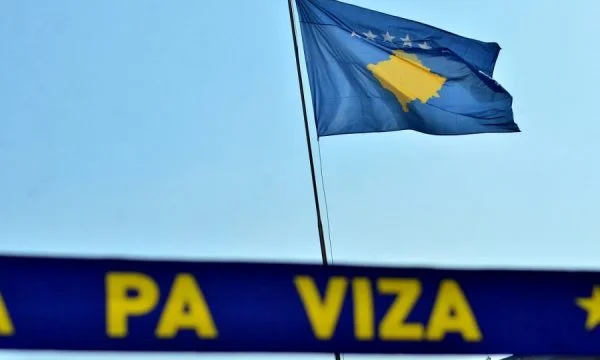
Periskopi(5 years ago)
(5 years ago)Kosovo is moving further away from the visa liberalisation process. Following the reluctance of several states that have recognised Kosovo's independence over this issue, which are being called in the absence of a high-level fight against corruption, Professors at the Department of Science, Jehona Lushaku-Sadriu told Radio Free Europe. [...]
Following the reluctance of some states that have recognised Kosovo's independence over this issue, which are being called in the absence of a high-level fight against corruption, Professors at the Political Science Department at Pristina University told Radio Free Europe.
The key “problem lies in meeting the criteria, which are formally met. But it is likely that certain countries have more accurate and sadr information about meeting these criteria. Beyond that, I think this has a little more political co-operation and is likely seen to connect with other integration and dialogue processes with Serbia”, Lusaku-Sadriu estimates.
Kosovo's Deputy Prime Minister for European Integration, Development and Dialog, Besnik Bislimi, before the deputies of the Commission for European Integration in the Kosovo Assembly, has said that visa liberalisation for Kosovo is not greatly hampered by the five European Union states that have not recognised Kosovo, but by the states that have recognised Kosovo's independence, as according to him, they are not satisfied with the fight Kosovo has fought against crime and corruption.
<x0m>Problem slightly larger appears to have France's Ministry of Internal Affairs and Kosovo's Minister of Internal Affairs, Jelal Svecla, has initiated contacts with MPB in France to prove that he is serious in fighting corruption”, Bislimi has said.
And one of the places that has been said to have remarks is also the Netherlands. And so, Kosovo's MPJ is in contact with them, to convince them that Kosovo has fulfilled its obligations. Unofficially it has been said that such sorrows are shared by Belgium, although Belgium's prime minister has officially declared he will support Kosovo in visa liberalisation”, he added.
Lushaku-Sadriu: This process is entering critical stage
As long as the liberalisation process is postponed and prolonged and the process is not put into the agenda of the Council of Ministers, this process is entering the critical phase of the postponement indefinitely, Lushaku-Sadriu said. She added that Kosovo must commit to not connecting this process with the Kosovo-Serbia dialogue.
“This is one of the carrots the European Union can even use politically to condition Kosovo in other phases”, she said.
Kosovo remains the only country in the Western Balkans that has no visa liberalisation with the EU, despite meeting the criteria set by the European bloc.
In the Council of the European Union, most member states agree with the European Commission's assessment that Kosovo has met all criteria.
As for the visa liberalisation process, the president of the European Commission, Ursula Von Der Leyen, in a letter sent to Kosovo President Vjosa Osmani-Sadriu, to congratulate the post, has said it will be needed for a positive EU decision about visa liberalisation for Kosovo.
Citizens skeptical of realising the visa liberalisation process
Citizens surveyed in Pristina say sceptical about the possibility of visa liberalisation. Naser Plana, a professional economist, mentions some of the reasons that he feels have hampered this process. Some of the reasons he mentions are the political situation with Serbia and the failure to meet the criteria required by the European Commission, such as fighting crime and corruption.
Kosovo has not fully met that criterion, as the main element for us. Then, when this criterion is met, we don't need much visas because we will have Kosovo better than anywhere”, he points out.
But, Altin Azi absolvent at the Department of Political Sciences at the University of Pristina, considers that without completing the process of Kosovo-Serbia dialogue, which is realised with the European Union's mediation, there will be no visa liberalisation.
“Mandin also concerns the five European Union states that do not recognise Kosovo. And normally, every state in the EU must pass to the assembly the visa liberalisation process for a new state”, he says.
Blerina Selimin, a student at a private college, expresses sceptical expectations that soon Kosovo citizens will be allowed free movement in the Schengen area. She says commitment to the issue is not even being observed by the new Kosovo government.
For many years it has been mentioned that this process is occurring and has not occurred. So I don't hope anymore. Disliberalisation has been of great help to young people who have wanted to study in EU states”, she said.
Reports of four Western Balkan states have been approved at the plenary session of the European Parliament, which was held in March. The report on Kosovo in large part speaks of the problems facing Kosovo, the need for an election system reform, lack of transparency in media ownership, challenges in maintaining the environment, the need for depoliticisation of public administration and reform of the judiciary.
Kosovo is also required to do more in the fight against organised crime and corruption. The invitation is also extended to a greater commitment by the Kosovo authorities even in communication with civil society. From Kosovo, as well as Serbia, commitment and constructive approach are required even in dialogue.











