 3 hours ago
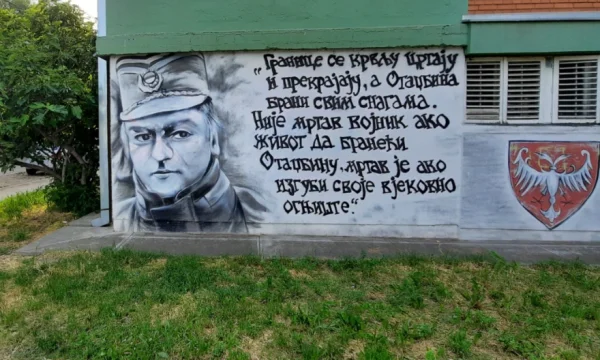
He was condemned eternally for genocide, but Mladic in Serbia is seen as hero and figures across the wall
Periskopi(5 years ago)
(5 years ago)Even a decade after Serbia has extradited to The Hague tribunal former Bosnian Serb commander Ratko Mladic, his face continues to be present in Belgrade on the walls of buildings, on souvenirs, but also on the skin of some. In 2017, The Hague sentenced Mladic to the first degree. [...]
In 2017, The Hague sentenced Mladic to first degree to life imprisonment after he was convicted of genocide, crimes against humanity, and violations of the laws of war.
After 15 years on the run, Mladic was arrested by Serbian police on May 26th 2011 and has immediately surrendered to The Hague Tribunal.
The trial against him began in 2012, and lasted a total of 530 days.
Although he has left Serbia physically, he seems to still be present there at least according to what can be seen in the streets and buildings of Belgrade.
Mladic has been convicted of genocide against Bosniaks in Srebrenica in the summer of 1995, when Bosnian Serb forces have killed over 8,000 men and boys, for persecution of Muslims and Croats from Bosnia, for terrorising civilians during the siege of Sarajevo and hostage-taking of members of the foreign mission, U n NPROFOR, during the war in Bosnia.
Authorities in Serbia continue to refuse to admit that genocide has occurred in Srebrenica, despite the decision of an international court that has confirmed it.
This kind of rhetoric is reflected in many public places in the Serbian capital.
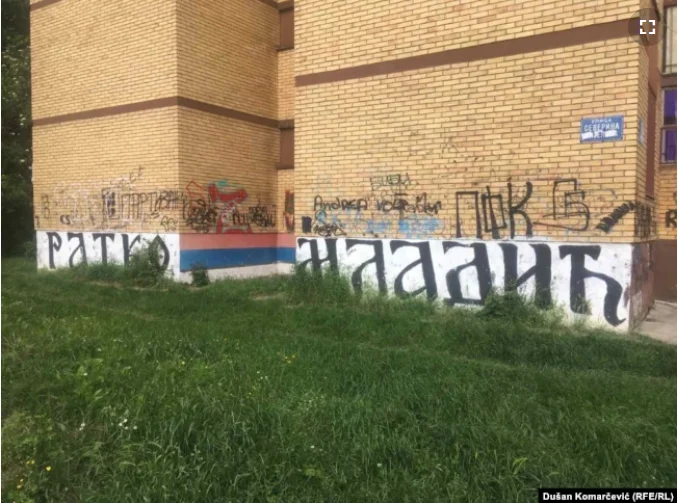
Activists of nongovernmental organisations in Serbia constantly remember the crimes committed under Mladic's command. But divisions in Serbia's society over this subject are still big.
The Internet distribution of this footage in the neighbourhood of New Belgrade has had its consequences.
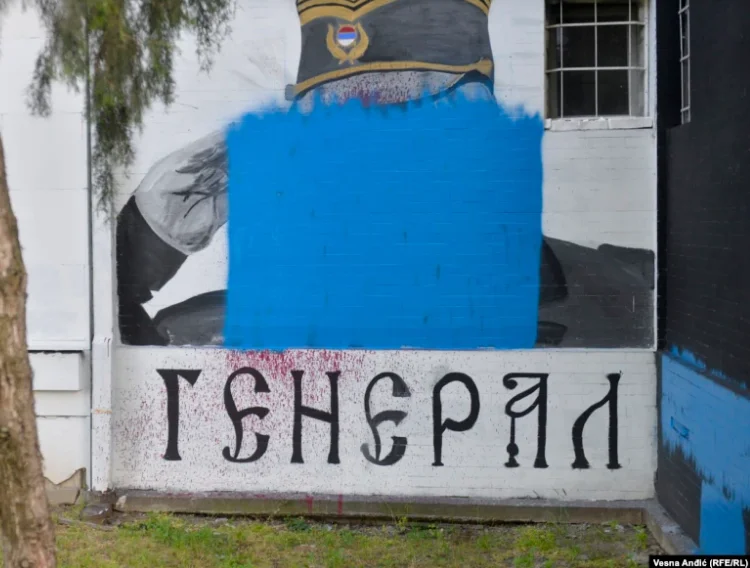
After posting this photo on social networks, with the comment: “Space Intervention”, Bosnian Federal Television correspondent Dejan Kozul received numerous threats in May of this year.
In some of them he has been threatened with death and described as “traitor”.
The “is an army of robots that exploit such opportunities to demonstrate how capable we are of”, Coszul told the Balkan Radio Free Europe Service.
Graffiti for Mladic can be seen in other cities in Serbia.
The myth about Mladic polarises society not only in Serbia, but throughout the Balkans and such scenes, according to Kozull, show things the way they are.
This myth is present because the crime trails are clouding because they are not spoken of, because they have never been removed from the turquoise, under which Mladic and his team only have protected the Serbian people”, Kozhul has indicated.
Of all the crimes committed during the fighting in the former Yugoslavia, international courts have characterised crime in Srebrenica only as genocide. Genocide has been confirmed with the International Court of Justice ruling at The Hague in February 2007.
However, the myth about Mladic as a Serbian hero is present in Serbian society so much that he moves from the walls to the skin of his supporters.
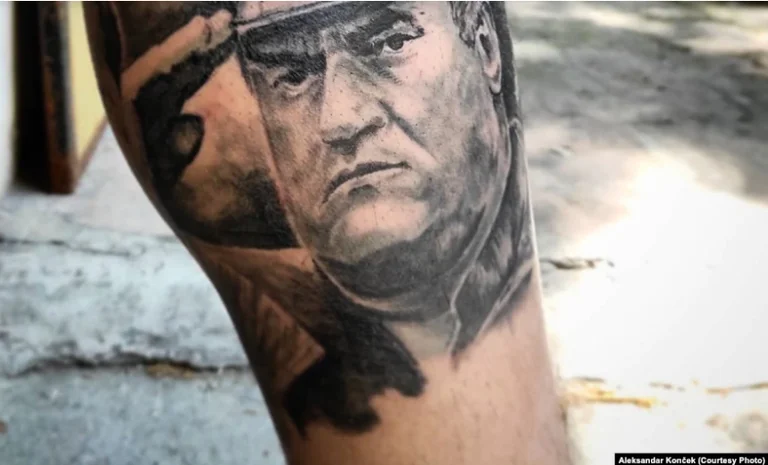
Aleksandar Koncek of Belgrade, who authored this tattoo, has told Radio Free Europe that his clients go to him several times a month, with the desire to tattoo Mladic.
“We know that we are a region that pays very much attention to nationalism, patriotism and therefore they require many such motives”, he said.
Mladic is also present in souvenirs on the streets of Belgrade.
According to one salesman, such souvenirs mainly buy tourists and visitors from Bosnia and Herzegovina and Republika Srpska.
As for Belgrade itself, people rarely ask for Mladic. It's because people from Bosnia or Republika Srpska buy it, or he's less wanted, said Mitar, a souvenir salesman on Knez Mihailova Street.
So far, 94 mass graves have been dug in the town of Srebrenica and more than 6,900 people killed by Serb Army forces have been identified. More than 1,000 missing Srebrenica residents are still required.
Besides Mladic, the International Criminal Tribunal for the former Yugoslavia in The Hague has convicted 13 other former members of the Serbian Army and police of the same crimes.
Youth Initiative for Human Rights programme co-ordinator Marko Milosavljevic has told Radio Free Europe that despite everything, it seems Mladic's character and work are not as visible in Serbia as they were ten years ago.
I think it's a little gone from the public, but that doesn't mean the myth is broken. I think he remains powerful in some politicians and certain sections of society. But I think the iconography is somewhat marginalized, which doesn't mean it's not dangerous”, Milosavlevic said.
Within the framework of his initiative, he has participated in several shares to wipe out murals and inscriptions for Mladic.
In 2009, the European Parliament has declared July 11th as the Srebrenica Genocide Memorial Day, and has recommended that countries in the region do the same.
In 2018, the European Parliament has approved the Resolution for the European Commission Report for Serbia, which, among other things, says recognition of the genocide in Srebrenica is a fundamental step on Serbia's path towards membership in the European Union.











