16 minutes ago
The vaccine process is going slowly, it needs to be given 20 thousand vaccines a day.
Periskopi(5 years ago)
(5 years ago)Health authorities need to speed up the rate of anti-inocation COVID-19, the disease causing the Coronavirus, in order to meet the goal of the Government of Kosovo, to vaccinate 60 percent of the population by the end of this year, says Blerim Syla of the Federation of Health Unions and Bujar Vitita, a journalist in the newspaper “Shneta”, i [...]
However, both say immunization depends on the amount of doses Kosovo provides.
Health Ministry officials on Friday have indicated they have reached an agreement with the Pfizer company, providing over 1.2 million doses of anti-cronobrus vaccines.
Pharmaceutical giant Pfizer has confirmed on Saturday for Radio Free Europe, agreement reached with Kosovo Government for supply of vaccines against COVID-19.
However, in response it is said that the amount and period of sending vaccines to Kosovo remains confidential.
The Inoculation Process Against COVID-19, in Kosovo, started two months ago, already up to 29.05. 2021 more than 63 thousand citizens, or over 1,000 citizens, have been vaccinated in one day.
Kosovo has so far accepted over 177 thousand doses of vaccines, as a donation from the World Health Organisation's COVAX programme for granting vaccines to poor countries, or the European Union.
Syla: It takes 20,000 doses of vaccines per day
Blerim Syla, from the Federation of Health Unionists, in a conversation for Radio Free Europe, said the vaccine depends on the number of doses reaching Kosovo, and that authorities should create opportunities for the country to vaccinate by as many as 20 thousand citizens by day.
The current immunization “Rimmation is within the country's current doses of vaccines. As there are larger doses of vaccines, the National Institute of Health and Health Ministry must expand their capacities, push all Family Medicine Centres to function so that they can produce 20 thousand vaccines per day. About 20 thousand doses are very ideal and it is possible, with the potential Kosovo has, but normally that a slightly better organisation” is needed, Syla said.
Year: Immunity depends on amount of doses reaching Kosovo
Bujar Vitita, journalist in the newspaper “Shneta”, said that at the current rate of vaccination, it is difficult to achieve the government's goal. However, it says that the fulfillment of the Government's commitment to immunization of 60 per cent of the population depends on the amount of doses Pfizer sends to Kosovo.
We need to understand that Pfizer company, now there are many contracts with the countries of the world and high demand for doses to be delivered, because all countries of the world have been aiming to communicate their citizens before entering the summer. And we're already entering the summer and the second half of 2021 and all will depend on the amount of doses Pfizer will send to Kosovo for the immunization of this 60 per cent citizen”, he points out.
As for human capacities, Vitita estimates that Kosovo is prepared in this respect.
“health workers generally have a good vaccination tradition. In the past, for various epidemics, within a very short period, perhaps several days, health workers have managed to vaccinate hundreds of thousands of Kosovo citizens. So I think the capacity has, but everything depends on whether there will be sufficient doses of vaccines for their management by health workers”, Vitia points out.
In the State Communications Plan, 2,703 doctors and 7,700 nurses are reportedly employed in public health institutions. The total number of immunization teams in 38 municipalities is 212 or 630 service providers.
Anti - Inoculation Committee COVID-19 has estimated that existing vaccination teams committed are sufficient for the first phase of the vaccine.
But, as stated in the plan, if there are larger amounts of vaccines available, an increase in capacities that can be accomplished in two scenarios can be applied: increasing the working hours of current personnel, or employing additional personnel.
The state immunization plan is divided into three phases. Initially, health workers, people over 80 years of age and chronically ill have been vaccinated.
Currently, the second phase of the communication process is under way, where 65-9-year-old group is being vaccinated.
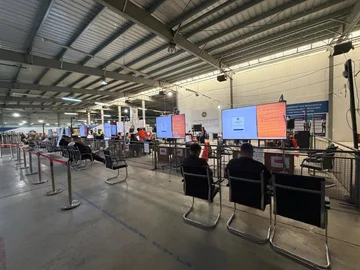
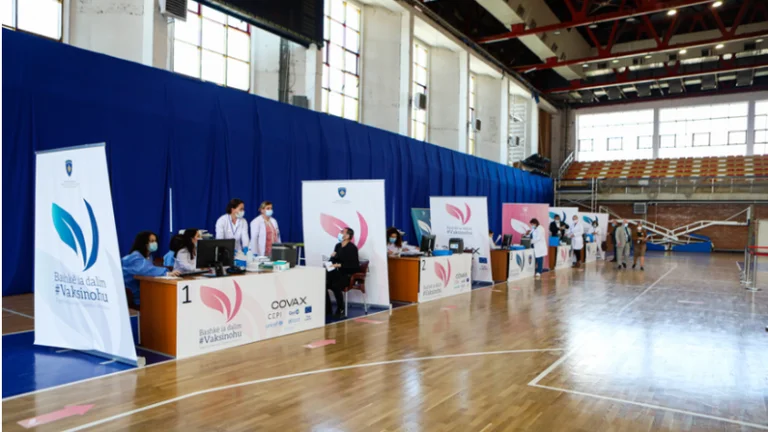
Immmunization is taking place in October “1st, October” in Pristina, as well as at family medicine centres in several municipalities.
Under this plan, in the first and second phase, about 360 thousand citizens are said to be vaccinated.
The third phase, on the other hand, will extend to the rest of the population, and some 900,000 are expected to be isolated.