 5 hours ago
Poisonous gas from the volcano in Congo caused the deaths of seven
Periskopi(5 years ago)
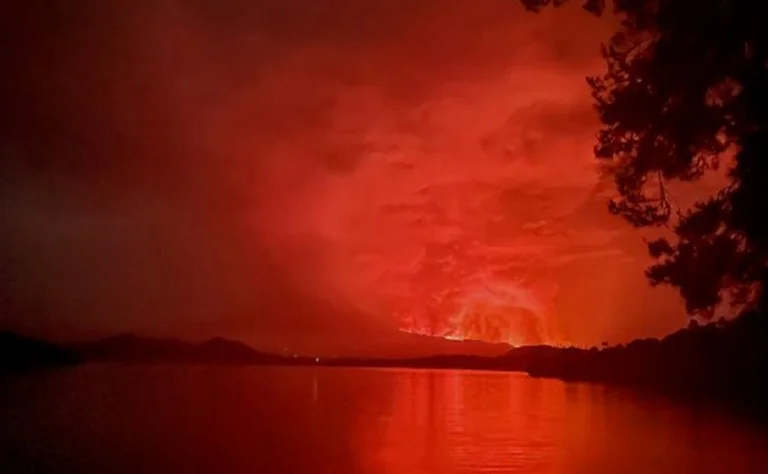
(5 years ago)The death toll from Saturday's volcanic eruption in Congo has increased to 22 after seven people died of poisonous gas. They died while walking on a street that was partially covered by cold mortar now near the town of Goma, east of Congo, the science director of [...] told the AP.
They died while walking on a street that was partially covered by the cooled mortar now near the town of Goma, in eastern Congo, the science director of the Volcanic Observatory in Goma, Celestin Kasereka Mahinda, told the AP.
“Populsia must not visit countries affected by the explosion because they have been poisoned,” he said.
Mt Niirago spread Ila streams in the villages Saturday evening, killing at least 15 people and destroying more than 500 homes.
On Monday, residents sought the missing in the midst of their homes destroyed on the outskirts of Goma, while the vapors rose from the cold mortar that covered part of the Niiragonga area.
A government delegation also visited Goma, promising assistance in principle.
Because of the reduction of funds, scientists from the Volcane Observatory could not warn the public of the explosion, Mahinda said.
“Observator no longer has the support of the central government or external donors, which explains why the explosion was a surprise,” told Mahinda of the AP.
Partnership between the state and the World Bank, which supported the observatory, was cut off in October 2020 due to an pandemic.
The observatory only began working again last month thanks to new funding from the US Geological Service Assistance Programme (USGS) for Volcanic Disasters, but for now it can collect data only after the explosion.
The volcano is still active and earthquakes are being recorded, Mahinda said, demanding that the population be cautious.
The military governor of the northern Kivu province, Constant Edima, called on the Goma population not to send children to school.
Goma International Airport and Kavulu Airport in South Kivu were closed for security reasons, he said.
The volcano's eruption led to about 5,000 people leaving a settlement in Gome, a city of two million people across the border near Rwanda. Another 25,000 people have sought refuge in Sake northwest, announced. U n NICEF.
It is estimated that more than 170 children disappeared during the blast, and U officials NICEF said that they were hosting Transit centres to help children without disaster, as more than 150 children were found separate from their families.
There was mass destruction in Goma at the previous outbreak of Niiragonga in 2002, where hundreds of people died and more than 100,000 were left homeless.
Goma is a regional center for many humanitarian agencies as well as a UN peacekeeping mission. It is threatened by a host of armed groups struggling to control lucrative mines in the area.











