 6 hours ago
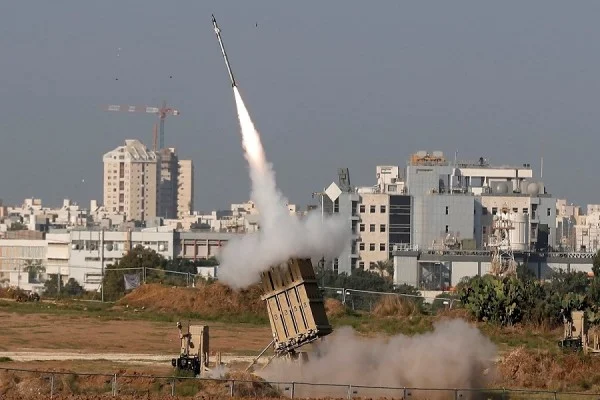
Meet the Israeli system destroying Palestinian missiles in the air
Periskopi(5 years ago)
(5 years ago)Israel is gathering ground forces along the border with Gaza, and Palestinian organisation Hamas has carried out a missile attack on southern Israel as the worst clashes continue for years. Sirens fell to Tel Aviv at night and missiles that destroyed Israel's rocket system “Iron Cup” filled the sky while thousands of Israelis [...]
Israel is gathering ground forces along the border with Gaza, and Palestinian organisation Hamas has carried out a missile attack on southern Israel as the worst clashes continue for years.
Sirens fell to Tel Aviv at night and missiles that destroyed Israel's rocket system “Iron Cup” filled the sky as thousands of Israelis fled for refuge.
What exactly is the Iron Cup system that is one of the most important points in the new fierce conflict between Israelis and Palestinians in recent days?
It's an air defense mobile system that works in all weather conditions. That's it, at least it's predicted that way.
Developed by two Israeli firms: Rafael Advanced Defense Systems and Israel Aerospace Industries, its main goal is to locate, track and destroy missiles targeting a populated or strategic area. It is a specialised device in short-range missile operations that have a short flight time. The system reveals within a radius of 4 to 70 miles [4 - 70 km] and has its way to populated or strategically important countries. Israel hopes to expand the range of functionality to 250 kilometers in the future.
The Iron Cup was released in 2011. As Bloomberg reported in a video about technology several years ago, about $200 million has been spent on development. But it's just a question of development, so far much more money has been invested in the entire system.
In April 2011, just over ten years ago, the system seized a rocket thrown by Gaza for the first time. In March 2012, The Jerusalem Post, according to the English version of Wikipedia, wrote that the system dropped 90 percent of Gaza's missiles, which would fall into a populated area. By the end of 2014, the system had seized over 1,000 rockets, and its portals were written at the time. As the Post Jerusalem wrote a month ago on its 10th anniversary, the Iron Cup banned some 2,500 missiles. In the last few days, this number has certainly increased significantly.
How does this system work?
Drive cars with rockets are placed on the ground. It is a very mobile system that can be completely passed from place to place within hours.
Everything can be shifted within hours. We move it often because we don't want anyone to know where we are,” told Bloomberg in 2016 Liran Cohen, one of the commanders in charge of the Iron Cup.
The entire system is based on powerful radar that captures the moment a missile is launched from enemy territory. The algorithms, as Bloomberg explained, immediately try to assess what kind of missile it is and what is the aim of the missile. When the computer estimates where the missile will fall, and it takes seconds, the Iron Cup releases its missiles aimed at tracking and destroying the missile into the air.
It appears you can see in the sky above Tel Aviv in the last few days.
There are also weaknesses
But this system is not without its weaknesses. As the Post Jerusalem writes in a major analysis of the system in recent days, it is more effective when it comes to Hamas' sporadic attacks in which a small number of rockets are launched. But analysts and military experts have long warned that Hezbollah has a large number of missiles and is capable of launching about 1,000 rockets a day. That is why much attention has been focused on Hezbollah in recent years. It is estimated that this terrorist group has about 150,000 missiles.
Now the question is what Hamas has.
In the 2014 clashes in Gaza, Hamas fired about 4,000 missiles in about 50 days. In the worst attacks, which lasted about two weeks, about 100 rockets were launched every day. But in the last few days, at the time of the worst bombings, Hamas has fired about 100 rockets within minutes, mostly on Tel Aviv.
This clearly doesn't mean that the Iron Cup doesn't work. Most of these missiles were bugged and destroyed by the Iron Cup. But the question is whether military experts have underestimated Hamas' power and the number of missiles they can use to target Tel Aviv. Here comes another important question: If Hamas has such military power, what does the most powerful Hezbollah have?
Clearly, in terms of the Iron Cup, it has proved to be a very effective defence system in recent days. However, it is not flawed, and it is clear that a large number of shells fired within a short period of time exceed a considerable number of them and hit their target.











