 3 hours ago
KDI: Pandemia dims municipal budgetary transparency
Periskopi(5 years ago)
(5 years ago)Today, Kosovo Democratic Institute (KDI) under the U projectAID for transparent, effective and accounting municipalities launched Transparency Index for Municipal Government for 2020. The index results depend on the measurements of 41 indicators on six pillars of governance: 1) the transparency of municipalities in public expenditures realised through public procurement, 2) [...]
Today, Kosovo Democratic Institute (KDI) under the U projectAID for transparent, effective and accounting municipalities launched Transparency Index for Municipal Government for 2020.
The index results depend on the measurements of 41 indicators to six pillars of governance: 1) the transparency of municipalities in public expenditures carried out through public procurement, 2) budgetary transparency, 3) transparency in grants and subsidies, 4) the level of involvement in municipal decision-making, 5) access to public documents, and 6) municipal accountability to address corruption risks and conflict of interest.
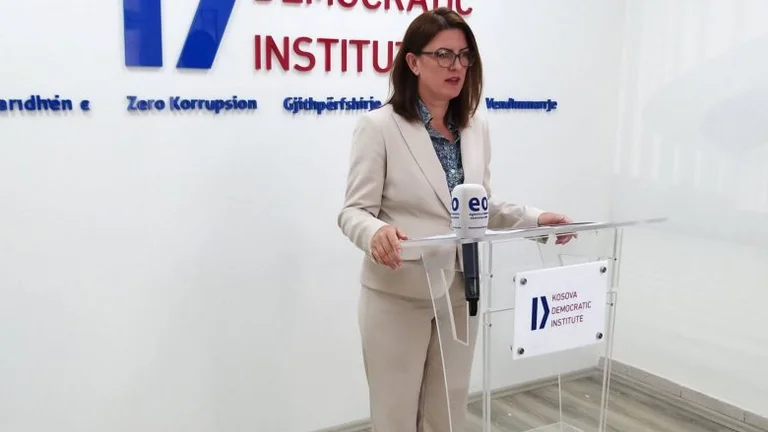
Diana Metushi-Krasnici, project manager in KDI, during the presentation of key findings in the report said that “in 2020, due to the COVID-19 pandemic, Kosovo suffered a decline in transparency in local governance of 1% compared to the previous year. Total transparency on the six weighted pillars in 2020 is 69% compared to 70% in 2019. This is a clear indication that in addition to the challenges facing a major force, municipalities should focus on publishing more information about their citizens.
Metushi-Krasniqi added that the publication of these documents on municipal websites is the first line of accountability to their citizens. Moreover, this is evidenced by the number of visits to municipal websites. According to information received by the Ministry of Local Power, the municipal websites in 2020 were visited 4,167,112 times, from 1,248, 850 visitors”
While average rates of transparency in public procurement have remained the same as that of 2019 (57%), 2020 showed a change of -12% on the budget transparency bar, from 73% to 2019 to 61% in 2020.
A change of -3% transparency in municipalities was also noted in promoting professional ethics and fighting the conflict of interest from 76% to 2019 to 73% in 2020.
A positive trend was noted on the information stake and on public participation.
According to data obtained from 32 municipalities, during 2020, these municipalities organised 169 budgetary hearings with 16,718 participants.
One of the main contributors to increasing public participation was the use of social networks as digital means of communication with citizens. Also, compared with 2019, although the number of requests for access to public documents had dropped (from 1,069 to 2019 to 843 requests in 2020), the index shows that municipalities were more willing to respond to them (84% in 2020 compared to 78% in 2019).
The transparency index in municipal governance for 2020 lists the Pristina municipality as the most transparent with 100 points in cautious indicators, conveyed by the municipalities of Lipjan (98.75 points), the Gjakova municipality (94.50 points), the Vushtrri municipality (92.88 points), the municipality of Rahoveci (91.63 points), and the Yunik municipality (91.38 points).
KDI encourages all municipalities to review their shortcomings in this index in 2020 and focus on increasing transparency on all pillars in 2021, regardless of the challenges involved by the pandemic.











