5 hours ago
Hamas is shaking the world with the quantity of missiles: Who is supporting him, and where is he taking him?
Periskopi(5 years ago)
(5 years ago)Who supports Hamas and where do they get the missiles? The rival of the Organisation for the Liberation of Palestine is struggling with large quantities of Israeli missiles. “This key word is regularly used in some German media regarding Hamas. During the recent escalation, the atrium has changed: more is now spoken of in an organization [...]
Who supports Hamas and where do they get the missiles? The rival of the Organisation for the Liberation of Palestine is struggling with large quantities of Israeli missiles.
“This key word is regularly used in some German media regarding Hamas. During the recent escalation, attribution has changed: more is now being talked about in an Islamic terrorist organisation. Most Western states also make a similar assessment. Exceptions are Norway and Switzerland, which, referring to their neutrality, keep in touch with Hamas, who is ultimately politically in power at the Gaza Strip since 2007. Other countries go further on their support.
How did Hamas get to where he is today?
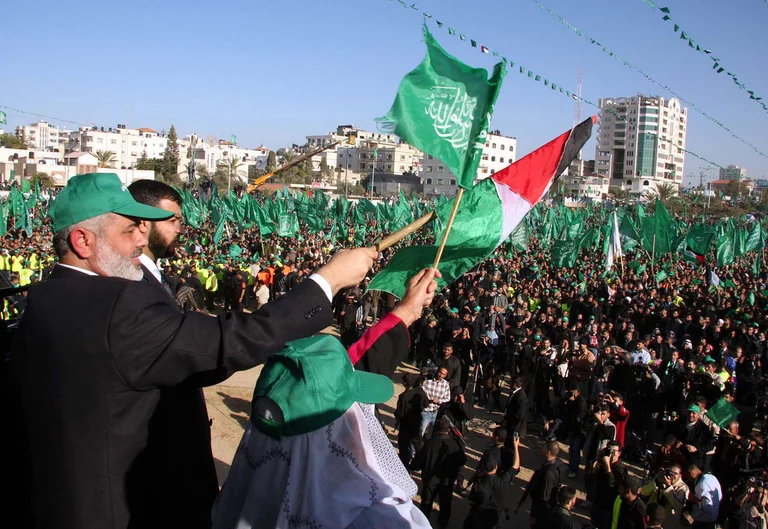
Hamas was founded in the second half of the 1980s and has since been in opposition to OCP, the Association for the Liberation of Palestine of Yaser Arafat. The question is whether Hamas at his beginning even supported with money from the Israeli government as a counterweight a scenario that all sides strongly reject today. Unlike the OCP, Hamas denies Israel the right to exist; Hamas' emblem shows Jerusalem's Rock Cup and, among Palestinian flags, the sketch of an inseparable Palestinian state, which includes the territory of the Israeli state.
Araphat made peace with Israel in 1993 as part of the Oslo Process, thus ending the First Intifade, but Hamas did not recognise it and continued to conduct attacks on Israeli territory. In 2006, Hamas won an absolute majority in the Gaza Belt elections, which were consolidated a year later with a couplike move. Since then, Palestinian territories have been divided not only geographically but also politically: the moderate Fatah party under Mahmoud Abbas rules in the West Coast.
In Gaza, Hamas continued his attacks “on Israel's defence” and there have been three exchanges with the Israeli Army: 2008/09, 2012 and 2014.
Who supports Hamas?
Gaza's belt is one of the most populated areas in the world. It is economically isolated with fortified borders with Israel and Egypt in the south and east and the Mediterranean Sea in the west. Large parts of the population live in great poverty and depend on humanitarian aid, however, which has recently been severely reduced under pressure from former US President Donald Trump. Hamas continues to dig smuggled tunnels for arms transport, especially towards Egypt, yet the government there has no interest in allowing that.
One of Hamas' most important donors and allies is Qatar: In 2012, Emiri was the first head of state to visit Hamas' leadership in Gaza. The small Gulf state so far has transferred more than 1.5 billion euros. However, Israel hopes Qatar to join “Agreement Abraham” initiated by Trump and establish diplomatic relations with Israel, like some other Arab states.
Another key ally of Hamas is Turkey -- immediately ahead of the latest rocket attacks by Hamas, President Recep Tayyip Erdogan promised in a conversation to Hamas political leader Ismail Hanoh, that he would support him.
Where do the missiles come from?
The missile fire, which Hamas led from Monday to Israel, exceeds the torrential peaks of escalation by only numbers: on Tuesday, Hamas announced he had fired 130 rockets within a few minutes by which the Israeli air defence system “The Dome” (“the Iron Cup” was hard to deal with. As of Friday, the Israelite army counted more than 1,800 Gaza - thrown missiles. This at a time when each defence missile of the “Iron Cup” is much more efficient, precise and certainly more expensive than the attacker's.
For a long time, missiles from Iran were used in particular. Analyst Fabian Hinz, who specializes in missiles in the Middle East, told German public broadcaster ZDF: “knew that different groups have massively expanded their arsenal of missiles and that the number of missiles available to them is in thousands, confirmed several times by Israeli sources “. Thus, Jerusalem Post quoted intelligence sources this week that declared that the size of Hamas' arsenal consists of 5,000-6,000 rockets. This adds up to 8,000 other missiles owned by the Islamic Jihad group, which co-operates in part with Hamas.
According to Hinzi, Iranian missiles had been smuggled through Sudan and finally Egyptianly into the Gaza Strip since Sudanese dictator Omar al-Bashir left power in 2019. Meanwhile, however, Hamas reportedly produces most of his missiles in the country at the Gaza Strip in part with foreign aid. / DW