 3 hours ago
Government Kurti criticised for restoring technical issues for visa liberalisation
Periskopi(5 years ago)
(5 years ago)Kurti Government's approach to visa liberalisation is being criticised by the opposition and European integration connoisseurs. The executive claim in the governing programme for the technical recovery of this process is being seen as unrealistic and the tendency to give otherwise visa liberalisation. Meanwhile, European Parliament rapporteur Violet Von-Cramon gives [...]
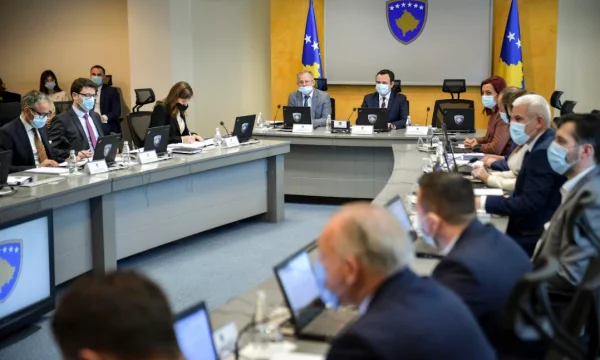
Kurti Government's approach to visa liberalisation is being criticised by the opposition and European integration connoisseurs. The executive claim in the governing programme for the technical recovery of this process is being seen as unrealistic and the tendency to give otherwise visa liberalisation.
Meanwhile, the rapporteur for Kosovo in the European Parliament, Violet Von-Cramon, gives support to Prime Minister Kurti for readiness to implement technical processes, but says the same must enter into political dialogue with sceptical countries.
While in the ruling party, they say that through this form they will give the right message that they deserve visa liberalisation, even though they do not date for it.
Democratic Party of Kosovo MP Ariana Musliu-Sashi tells Kosovo that the return from the political process of visa liberalisation is wrong.
The programme says we will turn it from politicised process into a technical process. This government must have a special strategy to convince states that have unfortunately recognised us and are not for us to receive visa liberalisation. This is a challenge this government will have because it must convince these states. When these states obey we can get visa liberalisation because we have met all technical criteria. This is a mistake or a non-information of Mr. Kurti”, she says.
That claim by the government, Emir Abrashi from Democracy Plus, is viewing the visa liberalisation process as unrealistic and a goal to address it.
Annie why she says rule of law and is important to Kosovo, Abrashi stresses that visa liberalisation is the political process.
The government claimed from a political process to turn into a technical process. However, this process has become a political process on the part of the EU. Therefore, it is unrealistic for our government to aim at this process differently. We have also been told in a sense that we have fulfilled all the criteria for visa liberalisation. That twice as much criteria as all countries in the region. The stalemate for visa liberalisation remains in the political approach of states. So the government needs to focus on diplomacy in this regard and work with all EU states. We have received the green light from the European Commission and the European Parliament. It is now known that the process of remaining with the interior ministers of EU member states. So we have to be very active in the lobby process with these countries and especially with countries like France and the Netherlands not supporting this process”, he declares.
But, the rapporteur for Kosovo in the European Parliament, Violet Von-Cramon, tells Kosovo Press that the Kurti Government should be willing to engage with the relevant authorities on technical issues, if they want to have their assessment.
She says the visa problem is also political, as France is unwilling to move in this direction with all technical readiness.
For this reason, Von-Cramon called on Prime Minister Kurti to enter political dialogue and convince relevant governments not only for technical details but also for addressing concerns about the other consequences.
The visa liberalisation was supposed to be a technical issue, and Kosovo has met all technical standards nearly three years ago. Prime Minister Kurti has the right to show Kosovo's readiness in these technical processes. The government should be willing to engage with relevant authorities on technical issues if they want to have their assessment. However, the problem is also political, as some EU member states (mostly France) are not willing to move in that direction, despite technical readiness. That is why Prime Minister Kurti will have to try to enter into a political dialogue and convince relevant governments not only for technical details but also address some of their concerns about the other consequences”, she says in a written response to Kosova Prees.
While Vetevendosje Movement deputy Victory Pacolli-Dalip says that fighting crime and corruption will convince states separately for visa liberalisation.
Even so, the majority MP does not give the date when visas under the government Kurti II can be liberalised.
We have met the criteria, but the EU must convince, states apart. We have to convince France, Holland and other countries that probably have dilemmas about our issues regarding meeting the criteria... we can't even declare dates and give the date when it can be moved. Our job is to work without stopping even with member states all, especially those that still have doubts. This is our task, because we cannot give dates because it is not up to us, nor the EU institutions, but from the decisions of separate states... we are different from past governments, we are aimed at fighting corruption and organised crime, and no current government decision will be in conflict with EU principles”, she says.
Finally, support for visa liberalisation gave Kosovo back to the European Parliament, until it is unknown whether this point will enter the agenda under the upcoming Slovenian presidency during 2021.











