 7 hours ago
Government for the indictment against Serbia for genocide: It will take time
Periskopi(5 years ago)
(5 years ago)Sheriff Mirena during the Kosovo war, Serbian forces killed his husband, Nazifi, and along with him 15 other family members. For Mirena, it is unacceptable how Serbia has so far not been convicted of crimes, massacres, murders and disappearances of persons. Too long, many years have been done and Serbia has not been condemned [...]
Over the course of many years, Serbia has not been convicted of genocide. That's unfair. To kill people and not be punished by anyone, nor the state of Serbia”, Mirena said.
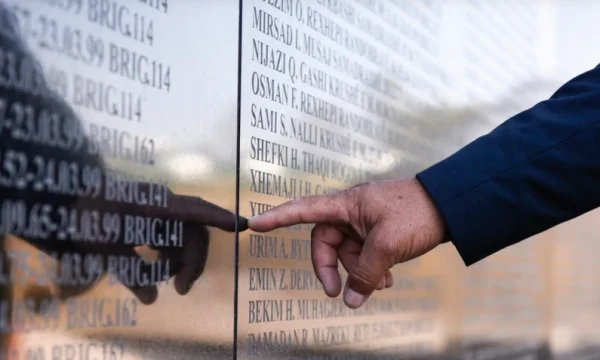
On April 21st 1999, in the Fushë Kosovo municipality district, Serbian forces removed 16 men and boys over the age of 15, who belonged to the same family from their homes. Then they were executed. According to family members, despite giving evidence to the United Nations mission in Kosovo, U n NMIC, and then the European Union, E ULEX, never initiated judicial process for killing these people.
Sheriff Mirena told Radio Free Europe that the state of Kosovo should not waste time, but must file charges against Serbia in international courts.
Serbia, for crimes committed in Kosovo, must take on a very serious damage”, Mirena said.
Kosovo Prime Minister Albin Kurti has already warned and expressed determination that his government will prepare indictments against Serbia for genocide. Last week, Kurti said that raising the indictment against Serbia is one of the issues expected to be realised under the governing programme. As he has said, the indictment is expected to be filed with the International Court of Justice.
Rosafa Kelmendi, spokeswoman for the Government of Kosovo, told Radio Free Europe that in terms of establishing the pandemic for genocide against Serbia, jurisdictional assessments are being made and internal and external analysis is being conducted so that further procedures can be continued.
“As soon as the plan drafting process is finalised, it can also be started with the drafting of the indictment. But one of the things that's important in all of this process is the massive work that is done behind the curtains, since this indictment is delivered directly against another state, and additional care is required”, Kelmendi said.
She said the prosecution process against Serbia is sensitive and complex, therefore, according to Kelmed, this issue will take time.
The “is early to talk about when it will happen and we cannot say any specific date, despite working intensively in all phases of the process. This process must be very well prepared, so it will also take more time”, Kelmendi said.
Ahmet Gryqevci, director of the organisation “Hope and Cameron” -- an organisation that investigates the issue of missing persons and war crimes in Kosovo -- says Kosovo has been very late in establishing the genocide indictment against Serbia.
I think that to establish a criminal threat to crime and genocide over the Albanian population in Kosovo, we must be very aware that we must be very well prepared, well arranged with materials, facts and arguments because we need to know who we are working with. As for the structure which needs to be prepared around this material, it should be eminent people who know this work well, who are workers of this issue, in collaboration with legal experts”, Gajqevci said.
Gracekevci said Kosovo has abundant evidence to prove that genocide has been committed in Kosovo, but he criticised institutions that have so far not arranged evidence and facts.
The witnesses are out of order and it takes time here. This has been the neglect of our institutions, not establishing the Institute for War Crimes, to prepare the entire files, ranging from victims to plundering state institutions”, Garyqevci added.
Knowers of international affairs have differing views regarding whether Kosovo should aim for such an indictment to be filed with the International Court of Justice or at the International Criminal Court. Africa Hoti, professor of International Law at the University of Pristina, has earlier told Radio Free Europe that in establishing a lawsuit against Serbia's genocide in Kosovo, the possibility exists, in view of the fact that war crimes, including genocide, are acts that cannot be submitted.
But, according to him, in a formal sense, Kosovo is faced with certain difficulties, because at the International Court of Justice, only states that are members of the United Nations Organisation, of which Kosovo is not yet part.
In contrast, International Criminal Law Professor Ismet Salihu has said that the International Court of Justice's decision, whether he is, should Kosovo eventually deposit the indictment, would have only counseling and non-communicative character. Consider this and other complications, Saliu has said that Kosovo will act justly in the event such an indictment is filed at the International Criminal Court (GJPN).
In 2007, the International Court of Justice in The Hague has found that the killings of about 8 thousand Bosnia and Herzegovina Muslims in Srebrenica have constituted genocide.
Otherwise, according to the Fund for Humanitarian Law, about 13,500 people have been killed in the last war in Kosovo.











