3 hours ago
German politician cut: Borders in the region are immune and should remain so
Periskopi(5 years ago)
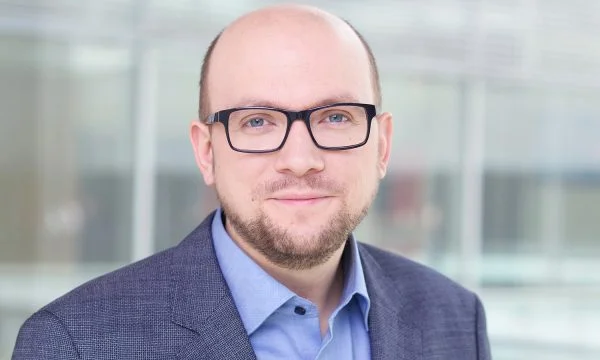
(5 years ago)In an interview with DW, Green Party politician Manuel Sarrazin highlights the importance of a co-ordinated German-French policy for the Western Balkans he has also spoken of <x0non-paper” that has circulated in the opinion of changing Balkan borders. Total interview: Mr. Sarrazzin, in circulation is a so-called non-paper for [...]
He has also spoken of <x0non-paper” that are circulated in the opinion of changing Balkan borders.
Total interview:
Mr. Sarrazzin, in circulation is a so-called non-paper for a new overhaul of border changes in the Western Balkans, that is, the territory of the former Yugoslavia. What do you think of that?
Manuel Sarrazin: I have the conviction that all these thoughts about my opinion and tests need a clear rejection by the German government and the European Union: Borders in the region are immune and should remain so. And I am very happy, that Foreign Minister Maas has formulated it so beautifully during his visit to Kosovo that the idea of drawing ethnic borders belongs to the basket of history.
This same time the ideas of border correction are being launched by and with the support of EU members. Apparently within the EU there are different positions and not a clear rejection...
Manuel Sarrazin: First I would say that since the exchange discussion between Kosovo and Serbia was shown, it was actually clear that he left the table temporarily that certain actors would try, so near the end of the Merkel wind to test again, if the German stance really remains as strong as he was then held by the Chancellor. And that is why it is primarily important that the German government maintain a completely clear superparty stance.
I can tell for my party, that attitude is very clear. Annalena Baerbock, for example, personally highlighted this position once again on the anniversary of the Srebrenica massacre. The second is, we are told this letter does not come from the Slovenian government. There are also rumours that people appointed by the Slovenian government may have written on it. And I consider this a really dangerous development, which needs to be answered with a strong commitment from Paris and Berlin to the Western Balkans.
Next Monday (10 May 2021) EU foreign ministers will again deal with the Western Balkans. Not only Slovenia is following its course, but also from France and other countries have continually obstacles to keeping promises to the Western Balkans, as in the issues of accession talks for northern Macedonia and Albania or visa liberalisation for Kosovo.
Manuel Sarrazin: I think it's important that the EU's perspective has not only been the answer to the wars of the ninety years, but it must be the worthy response to countering the ideas of such non-paper, ideas of ethnic reconciliation. EU weakness is presented on the one hand through a possible rift in EU attitudes, but also through lack of credibility, which we really want to push forward with all our strength. It is therefore extremely important that accession negotiations with Albania and Macedonia be held, so that we can reinforce credibility in the EU again. If there are promises to be kept. Kosovo has long met the technical criteria for visa liberalisation. That is why we are engaged in the German government, but also our European partners, to approve visa liberalisation as soon as possible. That would also be an important signal to the region that progress is possible and also a signal for peace in Kosovo.
Even so, consensus is lacking in the EU. Perhaps, given the EU's internal blockades, a new approach is needed for Western Balkan countries?
Manuel Sarrazin: I'm not sure that now that we've adopted the enlargement procedure, we need new procedures, as it were. But I think it is extremely important that the engagement of Berlin and Paris is renewed and the feeling that Berlin and Paris want to work closely together with their partners in the region comes up. The second important thing is to make it clear without equivoke, that the EU knows, it is trying, if it intervenes for solutions, these solutions should not contribute to the toughness of ethnic division lines.
And this should be the standard, which should be explicitly formulated, for example in the EU's activity regarding electoral law reform in Bosnia and Herzegovina: Any Brussels and European capitals solution should measure the fact, whether it serves the goal for less ethnic division, or whether it may even achieves otherwise.
When we're in Bosnia and Herzegovina: How should it function within the Dayton framework, which cements the ethnisation of Bosnian politics? Do we need a Dayton 2?
Manuel Sarrazin: I understand all those who would like a big step, because everyone knows that Dayton 1995 ended the war, but of course with the structure and history of creation cannot fully answer the country's problem. But in the current geopolitical situation and the conspiracy of influential actors in Bosnia, I don't think it's realistic or strategic to try to negotiate now for a big deal. I think we need to focus on adapting the country's constitution to respond to the European Court of Human Rights decision.
This should be the interest of all members of the Council of Europe and later, as a result, to educate a reform of electoral law, to really serve to reduce the country's ethnic division and improve access to elections and people, who do not want to be included in one of the ethnic groups. A big Dayton 2 right now I wouldn't want to touch it.
A few days ago 250 intellectuals and opinion promoters from Western Balkan countries published an appeal letter, in which they not only express opposition to border changes, but also accuse the EU of taking sides with the wrong players and that it is supporting the stabilizers, who are part of the problem. Do you agree with the authors?
Manuel Sarrazin: We are seeing more than ever, that certain political actors in the region no longer run domestic political agendas with a view to priority EU membership. And this on the one hand is certainly politically wrong, but in some cases you can't take for the worse if they have the feeling that the reward is not coming, when compared to very difficult, sometimes very painful reform processes and then don't get the promises from the EU, like opening accession negotiations.
In terms of freedom of the press, the variety of political landscapes in many countries in the region, we see in recent years a trend of going back, which conflicts with the road to the EU. I think that for this reason we as the European Union should begin not to invest alone in negotiating chapters and discussions with governments, but to work harder on the thinking of people: to get into direct contact with civil society there. To strengthen their role in political action processes, as it were, in the face of major parties. It is, of course, important that, when the EU as such is involved in processes that address electoral reforms like Bosnia, transparency and sincerity of the procedure are extremely important.
I don't believe that the EU is able to successfully mediate behind-stage agreements, as it is to say among political personalities, because, in my opinion, oil-worn politicians from the region are sometimes more efficient than European diplomats, when it comes to organising agreements behind the stage. I say that respectfully, but certainly negatively.
How do you see the idea of Mini Schengen, at least freedom of movement and transport within Western Balkan countries, as integration ideas and perhaps an idea that supports reconciliation and mutual recognition?
Manuel Sarrazin: I've always seen the PR shares in the first place by some heads of government and so far I don't feel the negotiations will lead to rapid success. Just when it comes to the issue, at which point such regional integration facilitates steps towards EU integration or perhaps ultimately makes it more difficult, because it must certainly be based on legal definitions, which offers “Aquis communitaire” (include the whole of laws, legal acts and judicial decisions that constitute justice in the European Union, S.R.). But my impression is that the project has not yet become a shining example of successful regional co-operation.