11 minutes ago
EU: Transparency and Essential Accountability in European Integration Process
Periskopi(5 years ago)
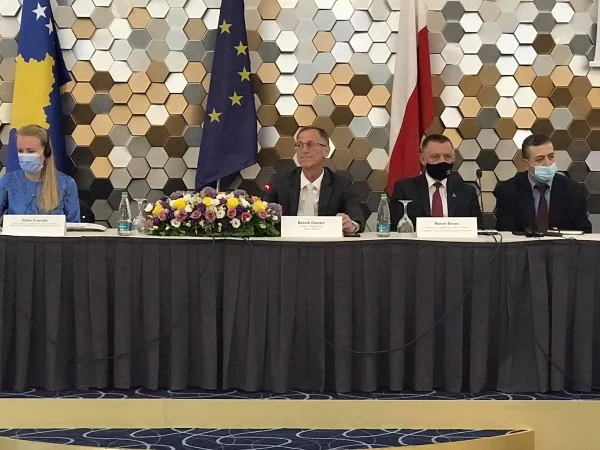
(5 years ago)Kosovo General Auditor Besnik Osmani has assessed the implementation of the further further implementation of the National Office's impact on Europe as successful auditing at %s Kosovo”, stressing that further strengthening of this office's influence has been made on giving recommendations and implementing them by budgetary organisations with [...]
Kosovo General Auditor Besnik Osmani has assessed the implementation of the further further implementation of the National Office's impact on Europe as successful auditing at %s Kosovo”, stressing that further strengthening of this office's influence has been made on giving recommendations and implementing them by budgetary organisations in order to improve and increase transparency and accountability.
For the European Union-funded project implemented by Poland's Supreme Audition Office with the support of experts from Croatia's Supreme Audition Institutions, the Republic of Czech Republic, Latvia, Lithuania and Portugal, Osmani said the EU citizens' taxes have gone to the right address, as the project has good results.
“We have achieved all the objectives we had under the project, and the overall objective of the project has been to improve public finance management in Kosovo, build a confidence in public spending and help promote transparency, boost public accountability. But when we close the project, I am proud that we today have a communication strategy aimed at a more effective communication with citizens, with parliament and with other parties of interest. We have a guide for audit recommendations”, Osmani stressed.
While deputy chief of co-operation at the EU Office in Pristina, Hillen Francoke stressed that the project plays a major role in transparency and accounting of financial means that connects with Kosovo's EU integration.
Franzke also said that there have been some fundamental weaknesses in the system since 900 recommendations, only 40 per cent have been implemented 2020 by the ZAK.
“Supreme Audification institutions are one of the fundamental pillars in monitoring public spending, good governance in every economy, in every country and plays a role in empowering accountability, transparency and the integrity of the public sector. These are essential elements of the European integration process, but it is also a formal part of the Stabilisation and Association Agreement between the EU and Kosovo. And that's why we're very happy to have supported this”, said Frankke.
It has added that despite the difficulties in the past two years, in 2020 the ZKA has managed to publish 120 regulatory audits, while, as it said, the auditing of public enterprises has increased by more than twice starting 4 in 2016 in 20 companies in 2020.
While Poland's general audience, Marian Banash, said it is an honor for him to be completing such a project and to work for the good and quality of citizens through supervision of budget gains.
The seventh EU-funded project for ZKA was launched in October 2019.