23 minutes ago
EU with extraordinary conference Tuesday for escalation of violence in the Middle East
Periskopi(5 years ago)
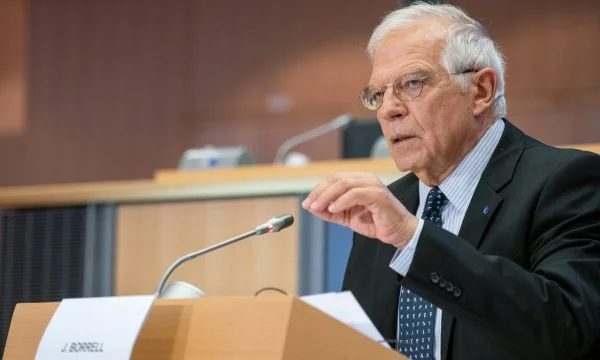
(5 years ago)The European Union will hold an extraordinary video conference online with EU foreign ministers about the situation of violence in the Middle East. In a Twitter post, EU High Representative Josep Borrell announced that at his conference called by him on Tuesday, the contribution that can be discussed [...]
In a Twitter post, EU High Representative Josep Borrell announced that at the conference called by him on Tuesday, he will discuss the contribution the EU can make to end the actual violence there.
The post is also associated with the EU statement about the situation in the Gaza Strip.
“In a function of continuing escalation of violence between Israel and Palestine and the unacceptable number of civilian victims, I am calling an extraordinary video conference of EU foreign ministers Tuesday. We will co-ordinate and discuss how the EU can better contribute to ending current violence”, writes Borrell.
The EU statement:
In the function of continued escalation between Israel and Palestine and the unacceptable number of civilian victims, I am calling an extraordinary VTC of EU foreign ministers Tuesday. We will co-ordinate and discuss how the EU can better contribute to ending current violence
The European Union is actively engaged in diplomatic efforts to contribute to the elimination of continued violence in Israel and the occupied Palestinian territory.
Over the past few days, European Commission Deputy Chairman Josep Borrell has continued efforts not to escalate the extremely disturbing situation in the region, especially in Gaza.
In the European Union's statement, High Representative Borrell reportedly sentenced Hamas and other groups that fired unprosecuted missiles against civilian targets in Israel. The High Representative stressed that while Israel has the right to protect its population from these kinds of attacks, it must act proportionally and avoid civilian victims.
Borrell has repeatedly underlined the need to immediately end the serious escalation of violence, prevent its further spread and ensure the protection of civilians from all sides. He has also called for full respect for international humanitarian law and to give full humanitarian access to those most in Gaza.
The fundamental causes that have led to this situation must be addressed. The status quo of sacred sites should be respected and avoided any promotional act around them, as Borrell underlined. He also reminded of the EU's long position on the need to stop placing activities, decay and deportations, including East Jerusalem.
He held discussions earlier this week with Palestinian President Mahmoud Abbas and Israeli Foreign Minister Gabi Ashkenazi. Borrell also exchanged opinions with key regional players, including Egypt Foreign Minister Sameh Schookry, Jordan Foreign Minister Ayman Safadi and Turkish Foreign Minister Mevluüt Cavuşoğlu.
At the same time, the EU High Representative remains in close contact with the EU member states' foreign ministers in order to co-ordinate and discuss how the EU can better contribute to the end of current violence.
Borrell has instructed the EU Special Representative for the Middle East Peace Process, Sven Coopmans, to work actively with other envoys from the Middle East Quartet to address the crisis. On the ground, the EU Delegation to Tel Aviv and the EU's representation in Jerusalem are also engaged with Israeli and Palestinian authorities and with representatives of the Member States.
The priority and message of the EU in this context remains clear: violence must now end.
There is an urgent need to address the underlying causes of the conflict and to find a political path that allows a return to meaningful negotiations towards a solution of two states based on internationally agreed parameters.
Israelites and Palestinians both have the right to live in security, freedom, and democracy. These constant cycles of violence must end.