 5 hours ago
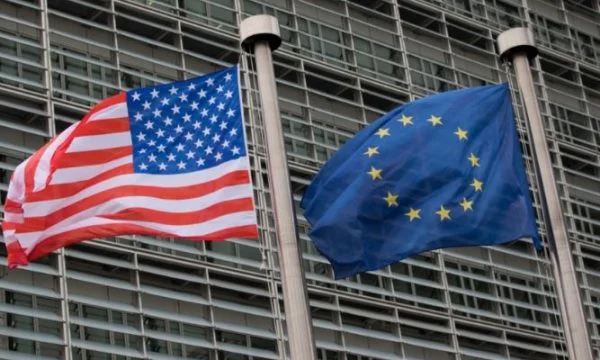
US, EU calls to convince five European countries to recognise Kosovo
Periskopi(5 years ago)
(5 years ago)Kosovo Prime Minister Albin Kurti has rightly refused the meeting warned on May 11th with Serbia's president, Aleksandar Vuciq, because the parties should be prepared before each meeting, says in an interview for Radio Free Europe, Engjelushe Morina, senior political member on the “Wider Europe” European Council programme for [...]
Kosovo Prime Minister Albin Kurti has rightly refused the meeting warned on May 11th with Serbia's president, Aleksandar Vuciq, because the parties should be prepared before each meeting, says in an interview for Radio Free Europe, Engjelushe Morina, senior political member in the “Winder Europe” European Council for Relations with Outbound (ECFR), headquartered in Berlin.
However, it estimates that the eventual stallion of the dialogue, “, goes in favour of the current leadership in Serbia”.
Political changes in the United States, but also in Kosovo, according to it offer a new and rare moment for the process of European dialogue and integration in NATO.
This moment, Kosovo should use it, Morina says.
According to her, there are already signals for a co-ordination between the US and the EU regarding the Kosovo-Serbia dialogue.
Morina cautions that Kosovo's leadership is carefully approachable, allegedly out of Slovenia, even though its authenticity has been rejected by authorities there.
Procrastination of the dialogue process suits Serbia
Radio Free Europe: Kosovo Prime Minister Albin Kurti has refused to attend the meeting with Serbia's president, Aleksandar Vuciq, warned by EU diplomacy chief Josep Borrell on May 11th. However, a meeting has already been announced for June. Are the parties buying out time, and why?
Engella Morina: Initially I would like to say that the visit to Brussels was beautiful, because the Kosovo Government delegation had managed to make several meetings, in such a short time, for two days. Of course, he received all his attention, especially on the first day, the rejection of the meeting warned on May 11th. I think it has rightly been rejected as a meeting, because according to what we learned from the media and the Government (of Kosovo), there has not been enough consultations with the Government of Kosovo for the 11 May meeting. I think the parties should be prepared before each meeting.
Do they buy out time or not? I would say that Kosovo institutions need a little more time for preparation, because institutions have now just received their duties, meaning, there are not even two months that the Kosovo institutions have been consolidated and they need some time for preparation, especially about the fact, that institutional leaders have stated several times, that they will not continue with the old programme with which they had continued dialogue with their ancestors, and that they will not continue where the dialogue is. This I don't believe it's worth the Serb side, because they don't believe they need any additional preparation. I also saw that a next meeting was announced for June. But as a meeting, the opportunity has been made quite open, and the modalities are not known when and how this meeting will be planned.
Radio Free Europe: We have had assessments from connoisseurs of political developments in Kosovo and Serbia, which some time needs even Serbian President Vuciq. Does that stand?
Engella Morina: I think that each suggestion of the dialogue process, in fact, goes in favour of the current leadership in Serbia, and especially in view of the fact that they will prepare very soon for elections sometime late this year or early next year. This is especially related to the presidential election there. Of course, Serbia's president does not seem willing to reach an agreement with Kosovo, and in this regard he suits any interference of the process. But does it take time for preparation? I don't think he needs it. Their stances, particularly of the president of Serbia, are already known. He has a destructive attitude towards the process.
US, “dedicated to working with the EU”
Radio Free Europe: The United States and the European Union have asked for a compromise solution. However, the US has defined a final solution as “mutual recognition between the two countries, meanwhile, the EU, sees the solution as normalising relations between the two countries. Do you see co-ordination between the US and the EU for how the dialogue goes?
Engella Morina: New political dynamics, especially from January onward and especially from the United States of America, but the political changes that took place in Kosovo offer a rare moment for the dialogue process and for the push of Kosovo, but also for the region, towards further integration into the European Union and NATO. The United States and the president (Joe) Biden several times said that they are very committed to working with the European Union on certain issues. One of them is for the Western Balkan region. I see there's going to be some kind of more positive commitment than we've seen in years past.
In the (US) administration, positions to deal with the Balkans have already been met. There are all persons or most of them who know the region very well and are more positive in approach than we have seen in the past four years under the (US) administration. I believe there will be coordination of attitudes. This has already started to happen. There will be an approach to attitudes as well. The negotiation process between Kosovo and Serbia needs much the presence of the United States of America and the impression so far is that this presence will be where it needs to be and with the intensity it needs.
Even the Kosovo side, I would like to add, should be willing to work or elaborize its positions very clearly due to the United States of America and the EU. It means, to relax what they're looking for in the process in a clear and explosive way. I believe cooperation will be much different than the one we've seen in years past.
Kosovo has had to swear position
Radio Free Europe: However, both sides -- Kosovo and Serbia -- continue to remain in their sworn negotiating positions. Are there signals that this phase of dialogue could be more serious, in the sense of walking towards a final solution?
Engella Morina: I, as far as I have seen so far, on the part of Kosovo, the process will eventually switch to another level, to a much more serious level, because now, the impression is that Kosovo institutions and actually have some kind of plan or vision of where this process should go. I believe, except it's going to be more serious, maybe the process will go into final phase. It's true he had concrete positions. I believe the Kosovo side is not to blame if I can say so because Kosovo institutions, in recent years, have been in a more protective fashion and more reactive.
It means they had to protect the negotiation process from the destructive interventions that have come from Serbia, from numerous demands, in those elements in which Kosovo has already carried out its duties. For example, for most aspects belonging to different communities in Kosovo or to the rights of different communities in Kosovo, they are only dedicated and even protected by Kosovo legislation and are something already done with the Ahtisaari Plan.
New demands from Serbia have always come about regarding what some elements should be opened -- those that are completed during the negotiation process by Ahtisaari in 2005 and 2007. I believe that Kosovo's positions have rightly been concrete to some extent and I believe that Kosovo institutions have had to be protected from these new demands that have come all the time from Serbia's side.
Executive power association isolates communities
Radio Free Europe: The Serbian side insists on forming the Serb majority municipalities' association. How much could all of this be an obstacle to continuing dialogue or unable to apply?
Engella Morina: That's true. Serbia's government always insists on having an Association of Serb majority municipalities with executive powers. It is something that has been rejected by our institutions, by leaders not by those who signed these agreements in 2013 and 2015, but by the opposition leaders (then) and numerous critics of this process.
It has also been rejected by the Constitution of Kosovo. It means, this association, with executive power, will not surround and integrate communities in Kosovo, but will remove and isolate. This insistence of Serbia, through the Serbian List in Kosovo, is definitely not something that helps the process, but has only been a destructive element in the dialogue process. Now, the institutional leaders of Kosovo, the president and prime minister, have made it very clear that they will not support an association with these ethnic elements and always call on the Constitution of Kosovo.
Non-paper “slogen”, most dangerous
Radio Free Europe: In recent days, two so-called non-papers have been circulated in the media, where solutions to the Kosovo-Serbia conflict are claimed. Is the pulse of the parties and actors involved in the dialogue measured, or should they be viewed as trivial?
Engella Morina: Actually, I did. The circulation of the so-called first non-paper, allegedly leaving the Slovenian prime minister's office (Jez Jansha), is a little more serious. This is because it comes from a state that will assume the European Union presidency in July and the danger is that it will push these ideas away. These ideas, of changing borders on ethnic grounds, are not only dangerous, they are recipes for a future failure, which will not end well.
Besides, there's not much support to this idea. However, the fact that Slovenia is a member of the European Union and has the potential to push these ideas away along with some other actors in the European Union, such as Hungary, Poland and others, is the issue we should not ignore as trivial.
Radio Free Europe: However, Slovenian Prime Minister Janez Jansha has denied that this non-paper could have left him and his office.
Engella Morina: Eventually, in fact, I just saw, they didn't deny it and they didn't confirm it. So they left it neither. But most observers of these events assume that he is Slovenia's prime minister and point out the facts that Slovenia's prime minister, in fact, has not mentioned this topic, in several closed meetings with several different institutions in the European Union, but also in several Balkan states, in Bosnia and Herzegovina, especially. It means, the assumption is good enough that the odds are coming out of Slovenia, although the authenticity of this document has never been proven.
I'd like to say that compared to the first non-paper, the second person should not be taken seriously. If a little is read with caution, it is clearly biased and does not seem to be really written by those countries allegedly written by Germany and France.
In fact, Germany and France do not support some of the elements that are there in the second term, specifically speaking of the Kosovo-Serbia dialogue. I believe he should not be taken seriously at all.
EU had to do more for Kosovo
Radio Free Europe: Kosovo's European path passes through Kosovo-Serbia dialogue”, EU diplomacy chief Josep Borrell has declared. Such a rule seems to apply to Serbia as well. But, so far, besides the Stabilisation and Association Agreement, Kosovo does not seem to have any other concrete benefits in European integrations. Should there be a reaction from the EU in the sense of stimulating the sides for dialogue?
Engella Morina: I believe that the European Union has had to do much more for Kosovo. If I can get a little involved here with the fact that the United States of America has already shown a much stronger commitment this new administration. So it has shown a more different and more powerful commitment to the region and Kosovo. Right here I would say that now is the moment for the United States, together with the EU, to work as hard as possible on the alignment of attitudes and especially on the conviction of five European states, which have not recognised Kosovo, to get to know it as soon as possible. This would only facilitate the European Union, first its stance towards Kosovo and bring Kosovo closer to Euro-Atlantic integration.
These five states, which do not recognise Kosovo and are members of the European Union, in fact, are perhaps the biggest obstacles in the European Union's relations with Kosovo and the opposite. It means, the fact that the European Union doesn't offer enough and I think it hasn't offered enough for Kosovo is that the obstacle is right there, inside. In parallel with this, the European Union is needed as soon as possible, this is urgent that it lifts Kosovo's visa restrictions because Kosovo has already fulfilled all criteria, which were twice as much as for other Balkan states.
However, it has met the criteria and still awaits the removal of visa restrictions for the European Union. I'm going back to what I said first. The moment is very appropriate for the European Union, together with the United States of America, to empower the citizenship of Kosovo or to work, to approach attitudes for empowering Kosovo's citizenship, first by convincing these five states to recognise Kosovo and then to support Kosovo on its path to Euro-Atlantic integrations.











