 3 hours ago
Dinner at Borrell, what will be in <x0meny”?
Periskopi(5 years ago)
(5 years ago)The atmosphere at the Western Balkan leaders' meeting will be recalculated, and the dinner, however, is considered to be a “Darrica”. It says Josep Borrell has prepared a non-paper. Leaders of six Western Balkan countries will gather in Brussels on Tuesday (May 18th) for an already traditional dinner organised by the chief of diplomacy [...]
Leaders of six Western Balkan countries will gather in Brussels on Tuesday (May 18th) for an already traditional dinner organised by the EU's diplomacy chief.
Former European diplomacy chief Federica Moghrini has launched this practice of gathering leaders from the region to discuss the situation in the region and the countries' relations with the EU in a less formal atmosphere. Josep Borrell will continue this trend.
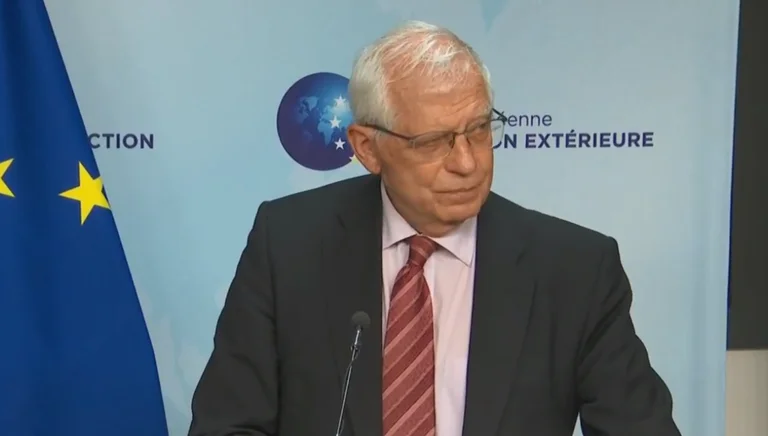
The Western Balkans is a major geopolitical issue for the EU. The region is part of the problem, but also part of the solution. That is why we should look at it from a geopolitical standpoint and we will do it at a dinner in Brussels, in which I hope all Western Balkan leaders will participate, Borrell said.
A week before dinner, EU foreign ministers held a geostrategic debate in Brussels, told “failure to commit to the EU in the Western Balkans”. In Brussels, they say they are aware of the fact that things are increasingly severe in relations between the region and Brussels, both when it comes to enlargement policy and foreign policy.
“The EU is concerned about the growing frustration in the Western Balkans due to the impasses in the enlargement process. That's why we have to see how to turn the lost influence on the region”, says European diplomatic sources.
This “frutrim” is defined as “as a feeling of deep frustration of citizens in the Western Balkans with the EU membership process”, said in an informal document that was published prior to the Council of Ministers' meeting. Unofficially, in Brussels they say this non-paper (in the recipient of the documents presented in recent weeks) has been compiled by Josep Borrell himself.
Although this document did not wake up as much attention as other ghost-steppers for changing borders, for resolving the Kosovo issue or fixing B-H, the document “added EU engagement in the Western Balkans” has defined the current EU policy frames to this region.
What can we expect from the EU?
Besides the well-known phrases of the “clear and strong support for the European perspective of the Western Balkans”, that the region's “future is in the EU”, the “importance of the region's stability and security is important also for EU stability and security”, that reforms are of “dodyable”, that a good neighbourly “co-co-operation”, in this document also talks on <x10% the deep prosperity and frustration of the European region with the enlargement <11).
“The lack of commitment to opening accession negotiations with Albania and Northern Macedonia, the slow progress of negotiations with Serbia and Montenegro on the road towards the EU, but also in implementing key priorities in B-H and in the Stabilisation and Association Agreement with Kosovo, uncertainty about Belgrade-Pristina dialogue, as well as the perception of the slow delivery of vaccines from the EU to the” region are some of the topics affected in the document.
The main message of the document is strengthening the European presence in the region, frequenting visits by senior EU officials and member states to the region, most frequent calls for representatives of the region in Brussels, public diplomacy and well-artified diplomacy about the EU and its role in the region, but politics in this region towards the EU.
I've asked member states to give concrete proposals in this direction. I expect you to examine them before the summer. We will no longer wait two years or two months to act”, Borrell says.
The menu ready, let's see what it's going to be “rex”?
The B-H is expected (still) to make progress regarding the European Commission's 14 main priorities, as well as “improving the functioning of the country, starting with electoral and constitutional reform”. From Serbia and Montenegro (amate) are expected to accelerate reform processes, especially in the area of rule of law, but also more political commitment to consolidating geopolitical orientation, which most refers to Serbia.
For Albania and Northern Macedonia, the message is (again) the same: there is no division of accession negotiations that should start “as soon as possible”. Kosovo and Serbia are required to use the moment of strong political mandates from both sides to reach a comprehensive agreement on normalising the reports.
All these messages will be in <x0meny” of the six Western Balkan leaders' dinner in Brussels, where major results cannot be expected. But it remains to be seen what “orexi” of member states, which should show political unity for the progress of relations between the EU and the Western Balkans. / DW











