 7 hours ago
China says most missile waste burned during return
Periskopi(5 years ago)
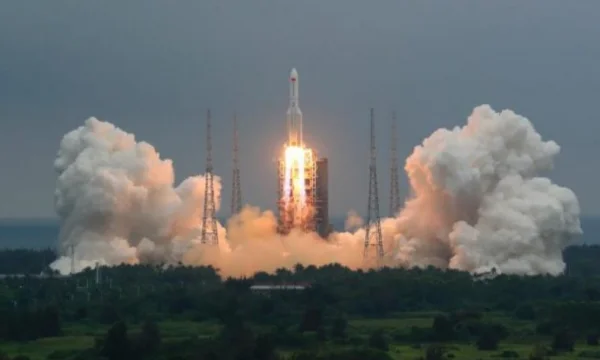
(5 years ago)China's Space Agency has said most missile waste was burned during the return. According to them, the basic and small segment of the largest missile entered again into the Earth's atmosphere over the Maldives in the Indian Ocean and that most of it was burned down. Harvard Astrophysicist Jonathan McDowell [...]
According to them, the basic and small segment of the largest missile entered again into the Earth's atmosphere over the Maldives in the Indian Ocean and that most of it was burned down.
Harvard Astrophysicist Jonathan McDowell, who tracked down the missile piece that crashed, said the fall and dive in the ocean was the most likely statistics, writes the Associated Press.
The official news agency in China “Xinhua” later clarified that the return took place Sunday at 10:24 (local time with Beijing), the vast majority of missile parts were burned beyond recognition during the entry process.
The remains of this 60 - foot [30 m] - long rocket are among the largest to fall from space to earth.
China's space programme, with its close military connections, has not shown why it put the main component of the missile in space instead of allowing it to fall back to the ground soon after it unloads its cargo, such as in such operations.
An 18-ton rocket that fell last May was the worst waste that fell uncontrolled from the former Soviet space station of Saleut in 1991.
China's first space station, Tiangong-1, collapsed in the Pacific Ocean in 2016 after Beijing confirmed that it had lost control.
In 2019, the space agency monitored its second station, Tiangong-2, in the atmosphere.
Both stations were briefly used by Chinese astronauts as a forerunner of China's permanent station.











