 3 hours ago
All you need to know about certificates for EU's COVID-19
Periskopi(5 years ago)
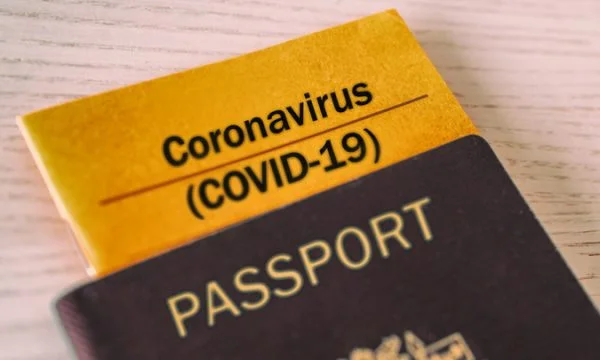
(5 years ago)European Union institutions on May 20th finally agreed to the so-called “passport” COVID-19 to facilitate the trip. Officially known as “Digital COVID-19 of the EU”, this document aims to ease travel restrictions among the bloc's 27 member states before the summer holiday season. For what [...]
What did the EU agree to?
Digital certificate will be valid in one of three ways: through full vaccine, through test PCR conducted within 72 hours or test witnessing the presence of antibodies, done within six months. Since health issues are more national competence than the EU, some states have also said they will accept antigen tests, conducted over 24 hours. Even if a person is completely vaccinated, he or she may be required to run a test method The PCR before the trip, as it is still unclear whether the vaccinated persons are carriers of the virus.
Will this enable the removal of quarantines and other measures during trips within EU member states?
The answer to that question is ideally yes, but that is not guaranteed. This, in fact, is one of the non-recognition points between the European Parliament, which argued that the certificate would have to free a traveler from additional tests and quarantines and Council member states, which still have concerns about increasing travel, new variants and a fourth wave of pandemic after the summer season. Eventually, a kind of compromise was reached, where member states must not impose additional measures unless they are necessary to maintain public health. If a state imposes quarantine, this decision should support the epidemiological data from the European Centre for Disease Prevention and Control (ECDC) and 48 hours before the decision announces Brussels and member states. Therefore, it will be necessary for people to watch the latest news before deciding to travel.
Were there other differences?
Yeah. European Parliament Angered That Tests PCRs are not available, are no longer free or free. From this EU institution, they said this test is discriminatory against EU citizens who have not yet been vaccinated or want to be vaccinated, or children, who are not expected to be vaccinated before the start of the summer holiday season. Member states, however, were unwilling to spend more money on these tests being free. Therefore, they agreed that the European Commission would pledge to provide at least 100 million to buy PCR tests. This money will be provided through the newly established Emergency Support Tool. However, whatever these tools will be shared, this will mean that tests will not be free, but that, in a future, tests The PCR will be cheaper.
What vaccines are in use?
All four vaccines approved by the European Bars Agency (EMA) are: Pfizer. BioNTech, Moderna, AstraZeneca and Johnson&Johnson. EU member states can also accept the vaccinated individuals with vaccines that are listed for emergency use by the World Health Organization, where, in addition to four subx1> Western”, there are also Chinese vaccine Sinopharm and, in the near future, it will probably be Sinocav vaccines. Similarly, the vaccine produced in Russia, Sputnik V, at the request of Budapest, is likely to be accepted at the request of Budapest that member states be free to accept certificates of vaccine issued for other COVID-19 vaccines for which there is authorization to use in a European bloc member state.
When will the use of certificates go into effect?
On July 1st, but there will be a six-week deadline for issuing certificates for member states that need additional time. The European Parliament's Civil Freedoms Committee will vote the text on May 26th, and on May 7th-10, the European Parliament will do the same. At the same time that the EP will vote for certificates, the Council is expected to officially adopt certificates, through the qualified majority.
How can you certificate equipment?
This depends on EU states, but will likely be in the hands of national health authorities, which will issue such certificates. This issue will be retroactively functioning and all those EU citizens, who before July 1st are completely vaccinated, will find it easy to manage with such a certificate. This certificate will be issued free of money and will be in print and digital format and will have currency for up to a year. The certificate will have a QR-Cod with information, such as name, birth date, state that issued this document, type of vaccine (or immunity evidence) and when the holder of this certificate has been vaccinated.
But what about people from outside the EU who want to spend summer holidays in one of the countries of the European bloc?
The EU's vaccine certificate must be in line with other certificates of vaccination of states outside the EU, and WHO is working on this issue. “keys” for QR codes can easily be exchanged. But even greater news came on May 20th, when the Council amended the recommendation for limiting travel to third states. Restrictions on nuclear travel will be lifted for citizens of third states, if the number of cases of COVID-19 in 100 thousand is 75 or less during the last 14 days. This is seen as facilitating the rules, since earlier the Council demanded that the number of cases be 25. This news means that in the coming weeks, more countries, likely Japan, the United States and Britain, will be placed on this list. The Council has also approved travel to travelers from third states, which have received vaccines approved by the EMA or by WHO, 14 days before reaching one of the EU states.











