 an hour ago
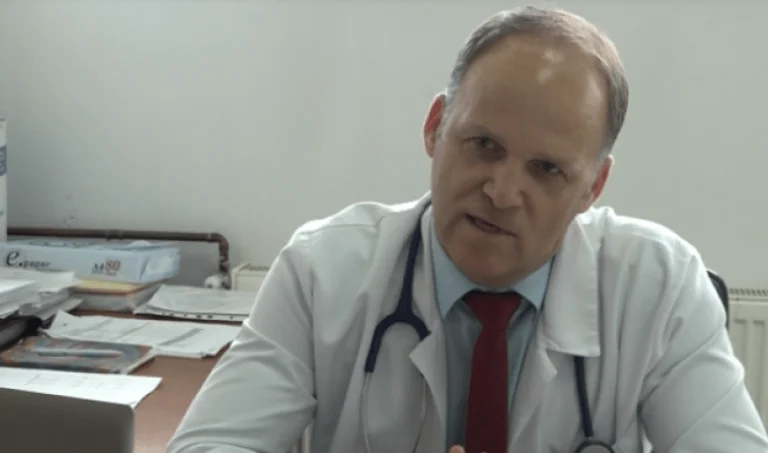
Valbon Krasniqi talks about reasons for increased cases, hospital capacities
Periskopi(5 years ago)
(5 years ago)The large number of new cases of people infected with COVIDD-19 and the rise in the number of hospitals have created a serious situation in the health system. Hospital capacity is almost limited, Valbon says in an interview for Radio Free Europe, General Director of Hospital Service and University Clinic of Kosovo. [...]
The large number of new cases of people infected with COVIDD-19 and the rise in the number of hospitals have created a serious situation in the health system. Hospital capacity is almost limited, says in an interview for Radio Free Europe, General Director of the Hospital Service and University Clinic of Kosovo Valbon Krasniqi.
He adds that over 80 percent of patients with COVID-19 lying in CKUK hospitals and clinics are being treated with oxygen therapy.
Krasniqi wants measures respected, such as wearing a mask, physical distance and personal hygiene. According to him, if these fail to produce their own results, then you should think of other measures to lower the curve of the infected.
Mr Krasniqi, Kosovo is marking every day high numbers of new cases with COVID -19. Fourteen victims and 923 new Corleone cases were marked on Wednesday (March 31st). Is it going out of control with the COVID-19 pandemic?
Valbon Krasniqi: In fact, this number marks a record of new cases of infection. But, we have more than three weeks like Kosovo, which is marking a large number of new cases of infected people that are being followed by a large number of hospitals. This is showing that the measures are not being respected and that is reflected in this large number of new cases. We are calling and are earnestly seeking to respect the measures that are in force, otherwise, this number is extremely large and very disturbing, considering our capacities as a health system at large.
What must be done to control the spread of the coronary?
Valbon Krasniqi: Now, the world and Kosovo have been facing the COVID-19 pandemic for more than a year, and all of us know that the best measures for preventing spread are what we've been promoting for a year now: wearing a mask, physical distance and personal hygiene.
Now it's lucky that Kosovo has finally received the first doses of vaccine and has started vaccination, first of health workers to continue with categories according to the vaccine plan, but until there's been vaccination of a large population, we have to respect anti-sequency measures. - COVID-19.
We are aware that the vaccine takes time and it will take several months until the vaccine of a larger number of our citizens is established. We must surely lower this curve of the infected because they are now seriously jeopardizing the hospital capacity, which is bordering the limit.
What is affecting the increase in cases with COVID-19?
Valbon Krasniqi: Any disrespect of measures will be reflected in the increase in number of cases, mass collection is the most important factor in the spread of the virus. Then the failure to keep the mask, the failure to keep the physical distance, the gatherings of any nature, from those family to the gathering of locals in different locations, increases the number of cases with COVID-19.
If hospital capacities are overloaded and the number of new cases is high, do you recommend limiting movement or closing?
Valbon Krasniqi: As for measures involving public health is I KSHPK to make recommendations. We as the Hospital Service and the University Clinic of Kosovo, inform in time about our capacities and our possibilities. One of the best indicators or indicators of the pandemic is the number of hospital expandeds and the number marking serious forms of the disease. Therefore, they must all take into account these factors, primarily the factor of hospital capacities, in order to recommend specific measures in accordance with the situation we find ourselves in.
However, there is a need for respect for the masses, and if they fail to produce their own results, then other measures should be considered to reduce the curve.
How many more patients are in hospital capacity?
Valbon Krasniqi: We've made it known that every patient in general hospitals and QKUK clinics that we've now converted to COVID-19, makes it conditional on another patient. We're tight enough for any patient who needs hospitalization, make beds and make space, so that they can get the right treatment, but at the same time, we kind of violate other services.
Now all seven hospitals from two three departments are filled with patients with COVID-19, while at QKUK five clinics are handling cases with COVID-19: The Infectious Clinic as a primary clinic, Dermatology Disease Clinic, Sports Center, and now the internastic bloc clinics, while we deal with them in severe cases of intensive care.
The number of patients in hospitals is constantly being reported to increase. It is also being reported by family members about the lack of medicine, even other basics of medicine. What's missing in these clinics where they're treating those infected with COVID-19?
Valbon Krasniqi: As for the situation, it is burdened down in the sense of the large number of patients we have lying down and also of their burdened state. Almost 80 percent of hospitals are seeking oxygen therapy and are in constant oxygen therapy. As far as medicine is concerned, we have now stabilised the mass medicine supply, especially those that are basic and are on clinical protocol guide. Almost all drugs except Remdesiviviritri and one or two antibiotics, others are available in QKUK clinics and hospitals. Remember, these patients, in particular the elderly, have other diseases and other therapies, and of course those on the list need to buy. But the drugs that are used for COVID-19, we have them secured, except for those exceptions I told you.
But there is criticism that hospital rooms lack equipment. Is there a problem with distribution or what the problem is?
Valbon Krasniqi: I can tell you that the necessary equipment exists for the patients treated by COVID-19, beginning with the most necessary devices used in intensive care departments such as ventilators or respirators that we have in sufficient quantity, as well, other devices such as monitoring patients' parameters. We have oxygen available. Now we've chosen this problem with the installation and extension of the oxygen grid. We've increased the capacity of dryers that are directly connected to oxygen and other equipment. We have mobile dentgens in all clinics. So are tests, like D-Dimer. We are extremely good at equipment, and thanks to the good cooperation we have had with donors.
When is the citizen vaculation expected to begin?
Valbon Krasniqi: We're expecting more vaccines to come. For more accurate information, you may contact the National Institute of Public Health and the Ministry of Health. But we would like that to happen as soon as possible.











