 2 hours ago
US: Speculations for Border Changes in the Balkans Unnecessary Threat to Stability · Global Voices
Periskopi(5 years ago)
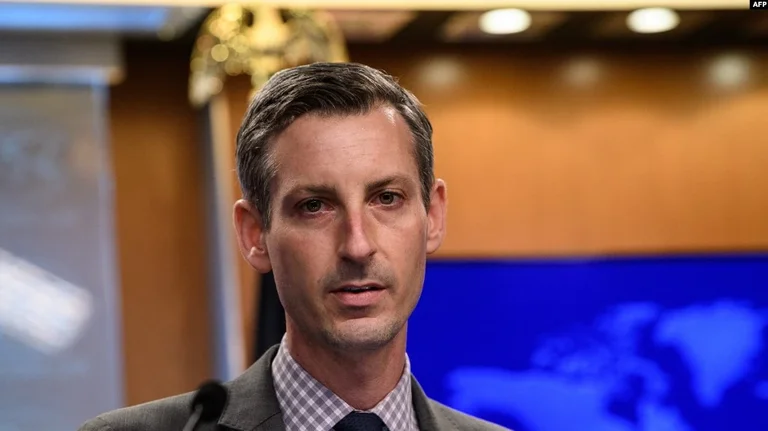
(5 years ago)The United States remains committed to supporting Western Balkan countries on their European integration path and membership in key European and Adriatic institutions, State Department spokesman Ned Price says in a statement, the Voice of America broadcasts. In it, the spokesman stresses that Washington continues to work with [...] countries.
In it, the spokesman underlines that Washington continues to work with the countries of the region and its European partners to advance reforms in governance, the rule of law, as well as anti-corruption efforts, as well as to support independent media and an energetic civil society that will strengthen the region's European prospects and advance long-term goals for a full, free and peaceful Europe.
“We are committed to helping Western Balkan countries deepen their economic partnerships, achieve climate goals, resist energy manipulations from Russia by developing a diverse system of clean energy resources, and fight corruption and organised crime. We also want to help the region towards prosperity and economic growth, while protecting its infrastructure and industries from China's key practices,” is said in the statement.
The declaration also pauses in partnerships in the field of defence and security in space with the countries of the region, “including the newest NATO members, Montenegro and North Macedonia”. The spokesman further highlights the United States' intentions to deepen this cooperation through training, military maneuvers, joint missions, and procurement.
“Hail the progress Albania and Northern Macedonia have made in reforms of critical importance and continue to support the opening of EU membership negotiations with the two countries in June”.
The statement further follows that the “United States remains ready to support efforts for a binding, inclusive agreement on normalising relations between Kosovo and Serbia, based on mutual recognition, which serves as the foundation for sustainable co-operation and prosperity”. In the document, spokesperson Price expresses the United States' support for dialogue with the EU's mediation and calls on the parties to resume in the process with a spirit of urgent need to address technical and political topics. “We will work with Serbia and Kosovo to implement Washington's commitments in support of the goals of full normalisation,” said in the statement.
spokesperson Price adds that the US is working with the international community to support Bosnia and Herzegovina's continued reforms, including electoral reforms, which will bring EU membership candidate status.
The Office of the High Representative for Bosnia and Herzegovina, established 25 years ago through the Dayton Agreement, has made a major contribution to peace and stability in this country, the statement said. “We continue to support the key role of the High Representative and his efforts on the 5+2 agenda (with 5+2 objectives), emphasising even more on anti-corruption as the key to strengthening rule of law”.
We have seen “Sic, the recent unnecessary speculation of border change in the Balkans on the basis of ethnic lines threaten to bring instability to the region and wake up the echo of previous tensions. A stable, prosperous future for the Western Balkans should be based on good governance, rule of law, multiethnic democracy and respect for human rights and fundamental freedoms,”, says the US State Department spokesman Ned Price's statement.
For more than a week now, the media in the region, but even wider, have written about ideas about changing the borders of countries in the Balkan region as opportunities to resolve the remaining issues as unresolved by the process of the breakup of the former Yugoslavia.
Media in Bosnia and Herzegovina and Slovenia have written that for these ideas Slovenian Prime Minister Janez Jansha, whose country soon takes over the rotating EU chairmanship, had handed over a “non paper” with this idea.
But, in the EU, they have said several times that “has not seen such a letter”.
Some EU states, mostly Germany, have expressed opposition to such ideas, calling them dangerous. / VoA











