 42 minutes ago
Very slowly: For three weeks only over 12,000 vaccines in Kosovo
Periskopi(5 years ago)
(5 years ago)It's about three weeks since the anti-inoculation started. COVID-19 in Kosovo, with 24 thousand doses of AstraZeneca vaccine that have been available so far, only 12,000 people have been vaccinated. As the Ministry of Health estimates that this process is going extremely well, there are others sharing [...]
In a response to Kosova Preess from the Ministry of Health have stated that the vaccine is going according to the State Plan for Vacsim. They say there is no need for haste.
The vaccine process is going completely according to the State Vaccination Plan and extremely well. Those who consider it slow are all on the sidelines of the event, and are certainly not familiar with the vaccine plan and comment as if Kosovo had 240 000 doses available, not 24 000. There is no hurry for the process to go wrong, as dos management is taking place in co-operation with these groups. Over 12,000 people have been vaccinated, while within a few days this phase is carried out because from tomorrow the vaccine of 75-79-year-old people with chronic diseases that are more of a group than those that have been vaccinated thus far” is said in a health ministry response.
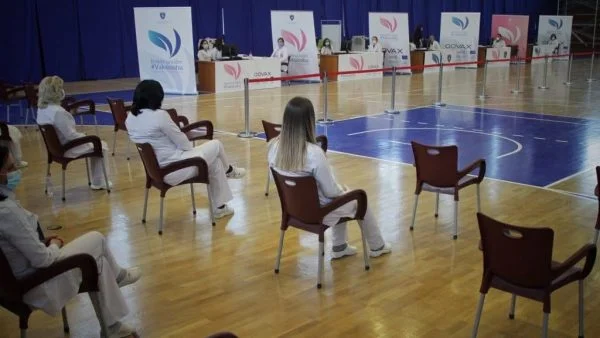
Only at the main vaccine centre in the “1 October” in Pristina on March 30th, when the inoculation of health professionals and then of persons over 80 years of age began, and now when there is also the inoculation of patients with a total cials have been vaccinated over 4 thousand people.
So has announced the co-ordinator of this centre, Niman Bardha, who for Kosova Prees, said the plan has been that the distribution of the ship vaccine doses. - CO VID in this centre ends in about a week.
According to him, this centre has the capacity to vaccinate up to 1,000 people per day, as it says medical teams are currently waiting to vaccinate categories that have been called for inoculation.
The total “in downtown 1 October has exceeded 40,000 people vaccinated despite their profiles and professions. The work plan has been very dynamic and given as you see this space that we have available we've always been prepared for the flow of people from 750 to 1000 people a day and we've had so many teams ready, even if we had that flow within an official time schedule between 0800 p.m. and 19:30 we would certainly have been very successful. As for the part of the center we're talking about, it's been a very early time to close up as a process, within five or six days, but it didn't happen that way without our fault because you saw that every day we were here because medical teams have been waiting here for who's coming to be vaccinated and we're looking at and we're hoping that maybe we're conscious and maybe quickly shut down the vaccine process, Bardley stressed.
The entire process of vaccinating against the Coronervirus, which has now started nearly 3 weeks in Kosovo, is considering it slow, Besim Kodra from the Association of Patients. He says medical team preparations have not been missed.
“E has followed the vaccine process and we have little vaccines, but the vaccine is going too slowly, which, therefore, if we had more vaccines with this trend we couldn't vaccinate more citizens. There's a huge mobilization of the vaccination teams, I don't know why there's such a slow trend, but those reasons have to be highlighted and resolved”, Kodra stressed.
Even for the research specialist on global health policies, Hannah Xhemajli, the vaccine process is a bit slow. She argues that the priority in this first phase of vaccination has had health professionals, and their transport has gone through some impasses.
Xhemajli says that he must start a self - awareness campaign for vaccination as soon as possible, even requiring greater mobilization with the arrival of other vaccines.
The process is going a little slower than planned, but because the first round of vaccination is to the medical staff their arrival and carrying them into October 1st hall, there's been some impasses, but in general, people are vaccinating even if it takes another week than planned, I believe it's okay. I prefer all people to be vaccinated because the risk is extremely minimal compared to the benefits resulting from the vaccine. The more vaccines come in, the more groups it takes, like furniture, in various locations, which have to deal with vaccines, I believe they've taken this into account because with the arrival of the new contingent, other generations of the population --” -- she stressed.
And Shemsedin Dresey, a member of the Parliamentary Commission for Health, says that if it continues at this rate of vaccine, it's going to be the distribution of the vaccine when we have big doses.
There's a lot of what you want there because we've really had our vaccination process. We're working on small doses of vaccination when we get that 100 thousand doses of what do we do? If we're going to continue with such a distribution stop and get a vaccine we're really going to have trouble distributing it. I think that Kosovo has the capacity to increase the capacity of vaccine in the country and to be more efficient in protecting citizens. The strategy regarding the number of teams that will work on the ground, whether at the level of the capital or at the state level, is much that can be accelerated there in the process of taking the vaccine”, Dresaj said.
On March 28th, Kosovo has accepted the first 24 thousand doses of vaccine against COVID-19. These doses of AstraZenza vaccine were donated to Kosovo citizens by COVAX. And those who had a priority to vaccinate were health professionals, then citizens over 80 and chronically ill. The first to receive the dose of AstraZenza vaccine was Kosovo Prime Minister Albin Kurti.











