 3 hours ago
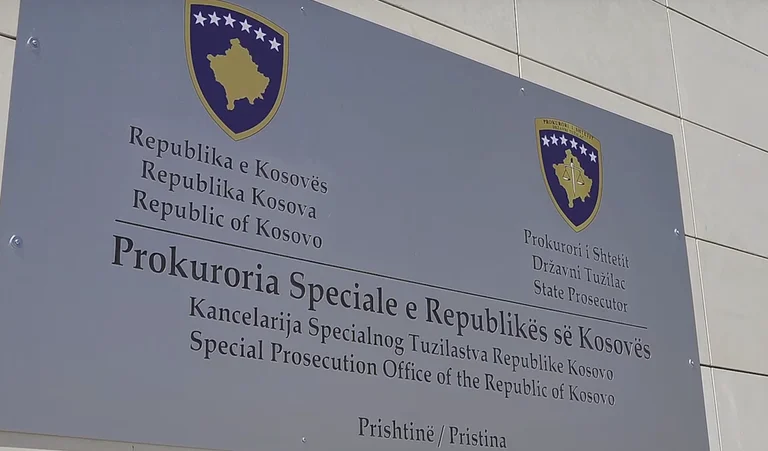
Kosovo top war crimes investigation, but only four special prosecutors
Periskopi(5 years ago)
(5 years ago)Serious state access is being sought for war crimes investigation. Kosovo is claiming to investigate these crimes, but there are only four special prosecutors who do not deal only with these cases. Thousands of women and men have experienced crime in various forms by Serbs, the latter are rarely being tried. Moreover, [...]
Thousands of women and men have experienced crime in various forms by Serbs, the latter are rarely being tried. Moreover, many of the victims are dying, and the evidence is being exhumed with them. The state of Kosovo is said to have offered full amnesty to all perpetrators of war crimes that were committed in the last war. While, the current government is pledging that it will work on increasing the number of prosecutors.
Since 2014, when Kosovo's competencies for the treatment of war crimes were handed over to Kosovo, and until 2018, Kosovo had only one war crimes prosecutor. While nothing is better yet.
The chairman of the Fund for Humanitarian Law in Kosovo, Bekim Blakaj, says the Special Prosecutor's capacities in the War Crimes Department are not enough. According to him, with only four special prosecutors hard to investigate crimes.
So far there are four special prosecutors investigating war crimes. I believe their numbers should be increased and not only the number of prosecutors, but greater resources should be shared in empowering this war crimes department. However, it is not the only problem in the number of prosecutors, the biggest challenge of investigating war crimes is the lack of co-operation between the Special Prosecutor for War Crimes in Kosovo and Serbian. The fact is that the overwhelming majority of those who have committed war crimes in Kosovo do not live in Kosovo and cannot be seized by Kosovo prosecution organs”, he points out.
Consider the large number of crimes, Blakaj for Kosova Prees, says it is not easy to prosecute aggressors. According to him, judgment is not enough in the absence of the rights of the victims.
“should be empowered both with staff and professionally, respectively, the prosecution and the court. However, that is not enough until such cooperation exists. The government now, even in the past, has taken action in directing opening the possibility of being tried in absentia for those who committed crimes during the war. However, I believe even this in the absence of judgments will not solve this problem, because victims still have the right to respond to justice and serve the sentence of”, he adds.
Similarly, the director of the Kosovo Institute for Justice, Ehat Miftaraj, who says of Kosova Prees, that with such small numbers of prosecutors, Kosovo does not show it is aimed at investigating war crimes.
Kosovo's non-actional state has offered almost full amnesty to all perpetrators of war crimes that have occurred in the last war. Unfortunately, even in the last war, we're not seeing another approach and a political will to address this with concrete actions. We have been bombarded with political statements for 20 years how important it is to condemn war crimes, but we are not seeing a concrete action. With three prosecutors in the Special Prosecutor's Office, who prosecutors besides war crimes deal with even other cases, it is not sufficient evidence that Kosovo has the intention to investigate war crime”, Miftaraj reports.
According to Miftaw, only in the archive that has the Council for the Protection of Human Rights and Freedoms has records, reports and extraordinary information that testify to war crimes.
In this regard, Justice Minister Albulen Haxhiu has stated that addressing war crimes is a priority of the government. She herself has acknowledged that with this number of prosecutors it is impossible to address them.
There are only four prosecutors in the Special Prosecutor's Office dealing with war crimes cases. I am in constant communication to find a solution to increase the number of special prosecutors in relation to addressing war crimes. I think that war crimes are very sensitive, there are a lot of files and it's impossible for the same to be addressed only to four prosecutors. It is not enough to have only prosecutors but also professional co-workers and special prosecutorial experts”, she has said.
The director of the Kosovar Centre for the rehabilitation of Torture Survivors Feride Rushiti raises concern that many victims are dying, and evidence is being buried with them. She says Kosovo has been delayed in terms of the strategy for punishing war crimes.
The fact that we've only got a very small number of penalties, it says it wasn't working at all in this direction. It wasn't a priority of previous institutions at all, unfortunately. Now is the time and moment to work with priority, and the fact that we've only had three prosecutors shows enough how many of these prosecutors have defeated”, she adds.
It shows the number of subjects being investigated in the Special Prosecutor of Victims of Sexual Violence.
There may be more to it. Some may not have been able to create at all, lacking information. However, there must be co-operation and we have established a co-operation with the Special Prosecutor for War Crimes, as a number of women and men who have experienced sexual violence continue to come to organisations and receive service”, she reports about Kosovas.
Kosovo Preress has tried to receive answers from special prosecutor Drita Hajdari about war crimes charges, but the same has not been answered.
Kosovo's Special Prosecutor has filed a war crimes indictment against 39 people by June 2020.
From October 1999 to June 2020, all 40 people have been sentenced by UNMIK judges EULEX and locals, with convictions of the absolute form. Of them 35 are Albanians and four Serbs.
By contrast, Croatia and Bosnia and Herzegovina have adopted state strategies for handling war crimes, providing human resources to address war crimes in these two states. Croatia has been investigating, prosecuting and condemning approximately 1,000 people who have committed war crimes.











