2 hours ago
By International Criminal Tribunal for the former Yugoslavia to Special: Roading KLA in courts
Periskopi(5 years ago)
(5 years ago)A long article published at the Institute for Global Threats and Democracy Studies, known as IGTDS, has dedicated itself to the establishment of the Special Court of Kosovo in The Hague, Dick Marty's notorious report and a chronology of all events relating to the functioning of this court, including the allegations [...]
A long article published at the Institute for Global Threats and Studies of Democracy, known as the IGTDS, has been dedicated to the establishment of the Kosovo Special Court by headquarters in The Hague, Dick Marty's notorious report, and a chronology of all events relating to the functioning of this tribunal, including the charges of former KLA commanders being held in The Hague. A brief but accurate look is also given by former British EU Minister Dennis McShane, who says there is no evidence or evidence for former President Thaci to continue being held at The Hague.
This is the analysis released by the Institute for Global Threats and the Studies of Democracy:
Kosovo's Specialised Chambers and the Kosovo Prosecutor's Office in The Hague were created at the insistence of the international community through relevant constitutional changes from the Kosovo Assembly. The Special Court, as it is known in Kosovo, is provisional and, although part of the judiciary in Kosovo, it functions independently and is financed by the European Union.
Its creation comes as a result of a 2011 Council of Europe report in which Swiss Senator Dick Marty spoke of alleged crimes committed by KLA members against ethnic minorities and political opponents from January 1998 to December 2000. Dick Marty's report accuses Kosovo political leaders of organ trafficking and other crimes committed in Kosovo and Albania. This had severely damaged Albania's image and future from a geopolitical perspective, as a NATO member, and as a contender for eventual membership in the European Union, writes IGTDS.
The evidence presented by Marty is also very controversial and not final. Several years before the report, a wiretapping of a alleged member of the Serbian secret service was published in Kosovo, trying to buy the services of a Kosovo Albanian to testify about the organ trafficking scandal for the same court. This scandal was stopped by Kosovo police, but trying to buy witnesses is a major problem in proving the truths.
IGTDS writes that the investigation of Swiss politician Dick Marty on organ trafficking and other crimes in Kosovo and Albania was not finding evidence even after several of his trips to the region. EULEX war crimes investigators also told Martyt that the charges against authorities were a “fairy tale”. Marty, known for his “ures in CIA secret prisons in Europe, is also known to have opposed Kosovo's independence and is now co-operating with Serbia in efforts to undermine Kosovo's citizenship. Dennis McSean, a former United Kingdom minister of the EU, says in a text written in “Open Democracy” that Dick Marty's “raport to the Council of Europe reflects the unfortunate politicisation of this body from Russia since its membership in 1995. Kosovo politics is not clean, but there is no evidence of organ trafficking on Thaci's part. And Marty's judgment is seen to be imposed by his anti-American instincts”. McShane also says that “does not have a single name or a single witness for claims that Thaci was involved in trafficking human organs from victims killed”.
That such disgusting practices have occurred and occur elsewhere in the world, there is no doubt. But Marty cannot connect Thaci directly to organ trafficking, even though the noisy title of his report: “The illegal trafficking of human organs in Kosovo” has been created to maximize headlines. The report was initiated by Konstantin Kosachev and Mikhail Margelov, Russian Eurodeputs along with Milos Aligrudic, Serbia deputy Yeevhen Marmazov from the Ukrainian communist party and Eurodeput. Other MPs attended various European Parliament parliamentary groups.
Furthermore, IGTDS writes that in 2015, Kosovo was moved to believe that the United Nations will establish an international court to investigate Kosovo on the charges. Due to fears of Russian influence on the UN Security Council, the Kosovo Assembly in 2015 voted in favour of establishing a Special Court and considered its establishment to be “a challenge Kosovo must overcome”. It is clear that all of this was created by tremendous pressure exerted by diplomatic representatives on Kosovo institutions, demanding from the Kosovo Parliament to establish its Special Court, which will see the crimes of an ethnicity only in the context of so many war crimes unprecedented by the International Criminal Tribunal for the former Yugoslavia and other courts. Opposition political parties rejected the establishment of the Special Court on the pretext that they were not against a war crimes tribunal, but demanded that it be comprehensive and not just to judge the Albanian side.
Immediately after the war in Kosovo, a justice system was built by the UNMIK administration, a fragile and dysfunctional system. U n The NMIC also did not approve of the practice of trials in absentia, so most of the war crimes indictees in Kosovo, who were Serbs and managed to leave in 1999, went free. This disabled justice system of Kosovo to deal with war crimes leads to the distrust of Kosovo's people in the justice system.
The International Criminal Tribunal for the former Yugoslavia (ICTY) was established 15 years ago with UN Security Council Resolution 808. Thus, the Tribunal for the former Yugoslavia was a United Nations organ. While, the Kosovo Criminal Court is a body attached to the justice system in Kosovo. Kosovo's Special Court was created with a constitutional amendment and with a law voted in the Kosovo Assembly, which makes it an abnormal part of the justice system.
The Kosovo Special Court institutions are a unique government project, which is supported by other important states and funded entirely by the EU. No court member is Albanian, not even at the Kosovo Special Court's offices in Kosovo, though rooms are part of the justice system in Kosovo and are attached to the Constitutional Court, the Court of Appeals, the Supreme Court. Judges appointed by EULEX work on them. The specialised prosecutor with the office in The Hague is independent of the rooms and has his own police, which has equal rights with the Kosovo Police, but does not allow Kosovo Police to be involved in special court cases. No Kosovo Albanian works for the tribunal, while the court employs Serbs, writes IGTDS.
The Special Court for Kosovo's establishment is the fourth attempt to try Kosovo Liberation Army crimes. From 2019 until now, about 250 former KLA soldiers traveled to The Hague to be questioned by Kosovo's Special Chambers and the Special Prosecutor's Office.
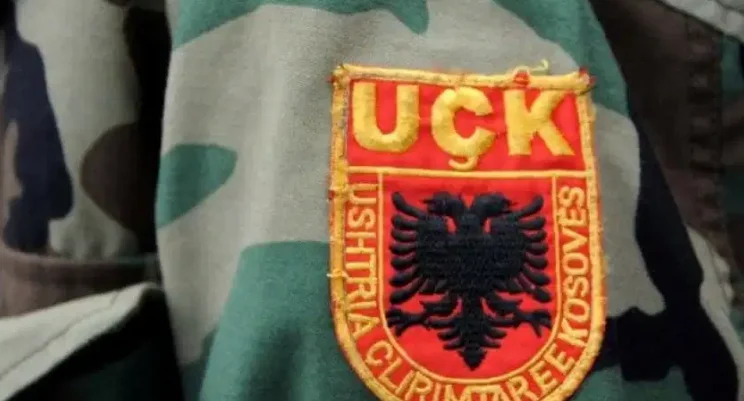
U n CK, from ICTY to Special Court
As a military formation, The KLA was created mainly by low-class, unemployed and rural people, but very soon gained support from the Kosovo Albanian population's move in their efforts to protect villages that were attacked by Serb forces.
After a decade of resistance to the peaceful movement in November 1993, a group of people who gathered around the idea of the liberation of Kosovo through armed resistance against Serbia called it the Kosovo Liberation Army. After just a few years, this group became the best-known guerrilla to co-operate later with the North Atlantic Treaty Organisation (NATO) during the bombing campaign against Yugoslav military targets and to protect the civilian population from Serb forces.
However, a formation of the guerrilla was never thought to be involved in a frontal war with the Serbian military force. Commander-in-chief NATO, General Wesley Clark, in his book “conducting a modern war” (2001), said: “International Community had no idea about The KLA and neither were they”, but after NATO launched its attacks against Yugoslavia, The KLA was often providing land positioning coordinates for bombing.
After the threat of humanitarian crisis with refugees and mass killings in 1999, NATO intervened and ended Serbian military rule over Kosovo. In June 1999, Kosovo came under UN administration and the large civilian and military presence was responsible for the security and rule of law in Kosovo. The KLA signed the demilitarisation and demobilisation agreement with the UN shortly after the deployment of NATO forces in Kosovo.
Next, I GTDS writes that originally under UN Resolution 1244, the International Criminal Tribunal for the former Yugoslavia (ICTY) was created to investigate all crimes committed in Kosovo. Following several charges of top Serbian state figures, such as Milosevic, Shainovic and others from the political elite, I The CTY indicted several military figures in Serbia as well. The ICTY also indicted several KLA figures. More evidently, former Prime Minister Ramush Haradinaj and Fatmir Limaj, a KLA commander. Limaj was acquitted in 2007 and Haradinaj in 2012. Within the country, in Kosovo, for nearly a decade, U n NMIK held the ties of Kosovo justice sector. In 2001, U n The NMIC issued a regulation that war crimes judgments cannot be held in absentia, thus closing a chapter of Kosovo war crimes treatment for crimes committed by Serbs who largely fled after NATO intervention. That made them. U n NMIC to continue on charges of crimes and war crimes against Albanians, respectively, against the KLA leadership for a while. Local prosecutors, who were paid by the UN, investigated every case for war crimes in Kosovo and therefore prosecuted hundreds of cases. Some of these cases were marked by procedural errors, which led to massive distrust in the UNMIK-led justice system.
When the first submission of charges against the KLA leadership surfaced in the late 2000s, journalistic investigations were able to track an attempt to buy witness testimony from the Serbian secret service in Kosovo, but this was not a recent development. At that time, Media in Kosovo reported it in public. But this was not a final development. Carla Del Ponte, a former ICTY prosecutor in Limaj and Haradinaj issues after withdrawing from the ICTY, published a book, originally in Italian, where he pressed charges for the Kosovo Liberation Army as the mafia that smuggled and trafficking organs. She had doubts and was unable to prove them at the court of justice, but this did not prevent her from writing a book on such charges. Dick Marty took these charges seriously under the sponsorship of Konstantin Kosachev and Mikhail Margelov to investigate “organ trafficking by the Kosovo Liberation Army” in Albania in the so-called “The Yellow House”, where such operations are supposed to have taken place. Kosachev is known to be a close ally of Leonid Slutsky, chairman of the Committee of State Weddings for International Affairs in the Russian Federation.
Experts warn of the inability to make such actions happen under such conditions. A forensics expert from Croatia, Miljenko Doric, once said that for each organ transplant, there is a demand for high-level tests lasting months, and their compliance is a real problem. You can't take one organ from one person and hook it up with another like it was a piece of car. There are also some conditions in cars, in production, in the type of car, in the year of their production, and in other factors that determine their adaptability.
In general, what the ICTY could not argue with and what went through the ICTY's filter as inexplicable was taken by the Special Court with Russian prodding to issue charges for the leadership of the Kosovo Liberation Army. Both Carla Del Ponte's book and Dick Marty's report, appeared in public before preparing any charges that make the public wonder about its purpose. If anyone has evidence, he goes to court in any court. If anyone has no evidence, writes a report denying the appointment of any source, denies speaking to the media, denies any transparency, accountability, or responsibility to explain the report as Dick Marty.
This Attitude The Institute for Global Threats and Democracy Studies has been prepared by analyst Arbesa Hoxha-Dobrunaj, who is coauthor of reports on journalism.