 2 hours ago
Gervala visit to Greece warned: Kosovo optimistic for recognition
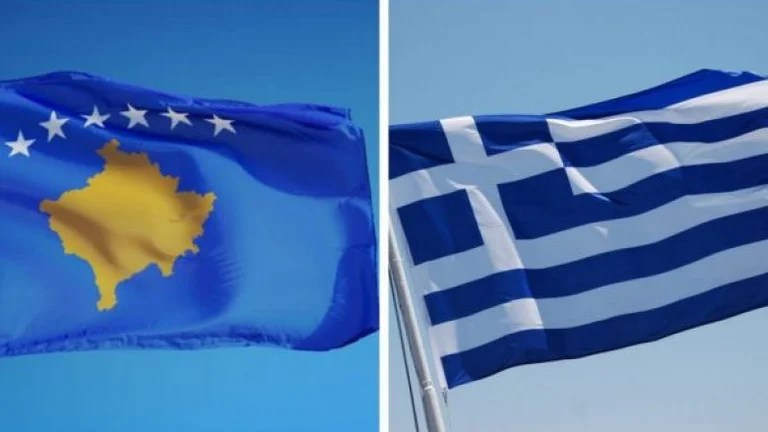
Periskopi(5 years ago)
(5 years ago)Kosovo Foreign Affairs and Diaspore Minister Donika Grovalla has accepted Greece's invitation, formally to visit this state, confirmed by the MPJD. This minister said that Gervala would be happy to respond to this invitation, but they did not show when this visit might occur. Greece is one of five states [...]
This minister said that Gervala would be happy to respond to this invitation, but they did not show when this visit might occur.
Greece is one of five European Union states that have not yet recognised Kosovo, but this state has its own liaison office in Pristina. Besides Greece, Kosovo independence has not recognised even EU members: Slovakia, Cyprus, Romania and Spain.
The invitation for the Gervala visa in official Athens was made through the head of the Greek Liaison Office in Kosovo, Chryssoula Alifer, during a meeting she had on 15 April with Kosovo Prime Minister Albin Kurtin.
At this meeting, Kurti has asked Alifer to join the states that have recognised Kosovo's independence, but according to the official Athens stance, which has also been published on the site of the Liaison Office in Pristina, the issue of recognition depends on the result of dialogue between Kosovo and Serbia.
Kosovo's Ministry of Foreign Affairs and Diaspore states that Pristina and official Athens already have good bilateral relations and adds that “Kosovo is very interested in deepening inter-institutional co-operation with Greece”.
“Kosovo is committed to strengthening co-operation in the future and in order to result in recognition by Greece, as an important state for us in the EU and in the region”, the MPJD said.
The MPJD also said that Kosovo is optimistic about the issue, given the strengthening of bilateral relations between the two countries.
Moreover, we are working on deepening bilateral relations in the field of economy, culture, but also in other areas, which are important for both countries”, the ministry said.
On the website of the Greek Liaison Office in Kosovo, it is said that the Greek “policy is inspired by a sincere will to build an environment of peace and prosperity for all peoples in the region, respecting human rights and fundamental freedoms”.
Meanwhile, in terms of Greece's political stance on Kosovo, it is said that “fully supports dialogue between Pristina and Belgrade, under EU mediation, the process that has given a considerable impetus to the European course of both countries”, concluding that this course, Greece promotes it for the Western Balkans as a whole.
Kosovo Government spokesman Progress Kryeziu has not shown exactly whether Kosovo authorities will take any concrete steps to convince the five EU member states, which do not recognise Kosovo, to do so.
As for relations between Pristina and official Athens, Kryeziu stressed that Greece has supported Kosovo on membership in international organisations, as well as supports the decision on visa liberalisation and Kosovo's European integration.
“We believe this friendly approach should result in Greece's association with other EU states that have recognised Kosovo”, Kryeziu said.
International Relations Professor Africa Hoti believes there is a great opportunity for Greece soon to recognise Kosovo, and he estimates that this state has not done so until now because of the problems it has with Cyprus.
Hoti emphasises that it is very important for Kosovo at this time to ensure recognition by one of the five EU states, which still do not recognise Kosovo's independence.
“From these five states, I think Greece will be the first to recognise Kosovo”, Hoti said.
He said Kosovo and Greece already have good relations, adding that the most problematic “is Spain, which also does not recognise Kosovo's independence.
The “would have to be done more on this issue, especially when it comes to Spain”, he said.
On the other hand, Lulzim Peci, former diplomats and at the same time director of the Kosovar Institute for Policy Research and Development KIPRED, believes that Kosovo can do nothing to influence Greece, Romania, Slovakia, Cyprus and Spain's decision to recognise Kosovo.
The policies of these states, Peci says, depend on the result of dialogue between Kosovo and Serbia, which has been under EU mediation in Brussels since 2011.
“From these states, the closest to recognising Kosovo are Greece, Romania and Slovakia, meanwhile, Spain and Cyprus are far away. This position depends on the result of dialogue (between Kosovo and Serbia). Whether there will be an exclusive recognition of Kosovo or a comprehensive agreement between Pristina and Belgrade, which would include recognition but not in the form of explosives, then the position of these states will change”, Peci points out.
He says Kosovo's EU and NATO membership path has been blocked, precisely because the five states of the European bloc still do not recognise Kosovo's independence.
“Kosovo could so far be close enough to NATO membership, and that would mean the end of Russia's influence in the Balkans. Euro-Atlantic integration is not possible, and no important step can be made in that sense”, says Peci, adding that Kosovo's status is a European problem and that is why Kosovo has trouble fully integrated into the European community.
So far, Kosovo has recognised 117 states and the latest recognition came from Israel in February 2021. The establishment of diplomatic relations between Kosovo and Israel came as a result of Washington's Agreement on normalising economic relations between Pristina and Belgrade, which was signed on 4 September, 2020 at the White House, in the presence of then US President Donald Trump.
Prior to that, Kosovo was recognised by Barbados in 2018, but in that period, official Belgrade led an active campaign to attract recognitions of Kosovo's independence. Serbia claims Ghana, Lesto, Liberia, Guinea-Bissau have drawn recognition of Kosovo. But, on the list of informed states published on the website of the Ministry of Foreign Affairs and Diaspora, these states still figure as countries that have recognised Kosovo.
Under the Washington Agreement, Serbia has pledged to suspend for a year the campaign to attract recognitions of Kosovo's independence, meanwhile, Kosovo has pledged that it will not seek membership in international organisations, as well as over a one-year period. / REL/











