2 hours ago
Gervailla at the UN urges Serbia to accept crimes in Kosovo: Then we'll talk about dialogue

Periskopi(5 years ago)
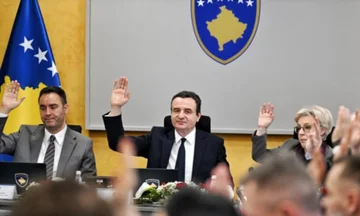
(5 years ago)Kosovo Foreign Minister Donika Grovalla has spoken at the UN Security Council meeting. She has initially talked about the new government, Kurti 2 and has also indicated that Kosovo is awaiting a future without corruption. Furthermore, she has spoken of changes that are expected to occur [...]
Kosovo Foreign Minister Donika Grovalla has spoken at the UN Security Council meeting.
She has initially talked about the new government, Kurti 2 and has also indicated that Kosovo is awaiting a future without corruption.
Furthermore, she has also talked about changes expected to occur in Kosovo by the government led by Kurti, but has also spoken of the crimes Serbia has committed in Kosovo and presented its views regarding Kosovo dialogue to Serbia.
Gervala has mentioned war victims in Kosovo. She has said that Kosovo has deputy head of the Parliament (Sanda Bogujevci), who has survived a massacre in her family and also mentioned Vasfije Krasniqi-Goodman as a woman violated during the war that has become the voice of 20 thousand women raped in Kosovo.
Also, Gervala has mentioned the crimes Serbia has committed against the civilian population and has demanded from Serbia that criminals be brought to justice and that Serbia today make the distinction from Serbia and the past that has caused Balkan wars.
It has asked Serbia to accept its genocide past so that dialogue, normalisation of relations and reconciliation between Kosovo and Serbia can be made possible.
You can read a portion of her talk below:
First, I'll promise to be much shorter than my colleague. For the first time in any Balkan country, the majority of voters have voted to break free from corruption and crime. We are on a journey to fulfill the will and requirements of our people to make our new country fully known and respected members of the United Nations. As foreign minister, Kosovo's deputy prime minister, let me be addressed in all sincerity, you can refer to the reports later.
The approach of the government is quite clear that Kosovo like all other countries is fighting pandemic and I have to thank our friends and we are preparing for measures we will implement and deal with a series of issues that will help us leave a conscripted era, rule of law instead of corruption.
We have fought for these changes for years, within parties, NGOs, but also as private citizens, and citizens have given us the trust of this historic change. Kosovo is focused on integration into the European Union and NATO. For many of us it's joy because we try to be UN members in the near future because we are together for the common future on this fragile planet. We are together with the Greeks the two oldest cultures in Europe, we are a country that is not afraid and very willing to enter into talks even with those responsible for most of the conflicts in Bosnia, Kosovo and elsewhere.
This new Kosovo government will find people with courage, open minds, international experience that are not afraid to address the most important issues. We are in favour of reconciliation even though we have many people with frightening confrontations with Serbia. For example, our prime minister has been deemed a student in a political assembly by the Serbian authoritarian regime and has later been mistreated in Serbian prisons.
The deputy head of the Kosovo Assembly has survived 13 years of surviving from a massacre of Serb forces against civilians, where her entire family had been killed, that innocent girl had been found with 16 barely surviving wounds. One of our deputies with the largest vote in Kosovo has been raped by Serbian forces and taken the burden of talking about these crimes, it gives the courage to 20,000 rape victims, and none of the Serb rapists has been brought to justice.
Current report of UNMIK touches a topic that is one of the most important topics, each of us, has a mother, each of us, I am a mother, there is nothing in this world that is more painful, more terrible and more unbearable than losing a child. I want you to listen, the mothers of Gjakova who have lost their children innocent of a bloody Serb regime are still in pain but remain open and do not give up every year and every day we ask to tell you where their children are.
So how is it that Serbia has no idea about these mothers, their children, it's important to point out here, we're not talking about events of the 19th century, but war crimes, we're not talking about World War I or World War II, we're talking, so it's living memory, and the victims that have survived are still mostly alive. Even the perpetrators of these unreasonable acts that have caused more than 13 thousand victims in a few months are still alive, and they still enjoy freedom and are proudly mentioned. Now you see the figures, these figures say there are 2.6 million Americans killed in less than a year, 1.6 million Russians killed less than a year, 11.4 million Chinese people killed less than a year. Serbia has declined that the biggest crimes against humanity in Europe have been committed on behalf of major Serbia, and criminals are still praised and refuse to co-operate with international institutions because war criminals still have seats in Serbia's Parliament.
It cannot simply be said, because we are talking about the most basic values of humanity and our country that will never be put to command those who committed those crimes, and should not be mentioned, Serbia must face its past and become a civilized and European nation. Serbia has gone through a dark period, a medieval thinker turned from the past, and what has led Serbia to racism and fascism in the late 1990s.
We are fully convinced that when Serbia accepts these facts, if it addresses its dangerous past destabilisation and when it stops from intervention in neighbouring countries then it will have the potential to stabilise its behaviour and become a normal country and that its neighbours do not consider it a time bomb. When all of this has been achieved, Serbia will probably become a complicated, but not dangerous country, and then we can normalise relations with Serbia. But we are small but special, we are small, but we stand upright, we have trusted friends, and we are trustworthy to them.
My father, dissident, intellectual, musician, journalist has been killed by the Belgrade regime in Germany, where he fled from the Belgrade regime. It is not about Serbs in general, but Serbia must make this distinction, bringing war criminals to justice, fighting fascism, sitting at the table and speaking seriously, not just as a bilateral relationship but as calm for the entire Balkans. As soon as Serbia accepts the reality of independent Kosovo, we will get out of the situation. We remain open despite the damage Serbia has caused us, reach out and begin a new era.