 an hour ago
Avoidance of Final Dialogue
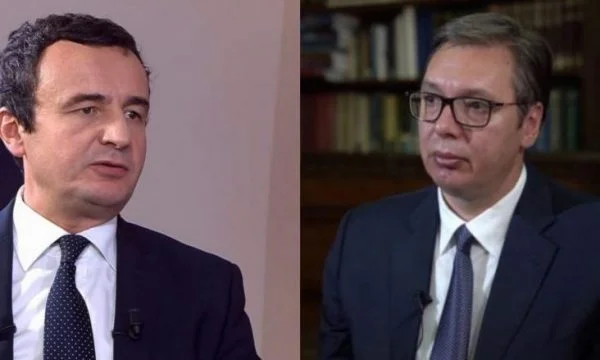
Periskopi(5 years ago)
(5 years ago)The United States of America and Germany are co-ordinating positions for the process of dialogue in Brussels between Kosovo and Serbia, assess connoisseurs of political developments, Donika Emini and Bemer Pazi. According to them, in favor of this co-ordination is the letter of the President of the United States of America, Joe Biden for Kosovo President, [...]
According to them, in favor of this co-ordination is the letter of the President of the United States of America, Joe Biden for Kosovo President Vjosa Osmani, but also visit by Germany's Foreign Minister Heiko Maas to Pristina and Belgrade.
In the letter US President Biden sent to Kosovo President Osmani on April 20th, it has been said that the US supports reaching a comprehensive agreement, which “would focus on mutual recognition”, but that “for achieving that goal, requires tough flexibility and compromise”.
German Foreign Minister Heiko Maas, who visited Pristina on April 22nd, already one day later even Belgrade, has stressed that Germany offers support for Kosovo-Kosovo dialogue. Serbia and that one of the elements of the agreement will be recognition of Kosovo's citizenship. However, he has demanded that “have readiness on both sides to find ways to compromise”.
It is important that this dialogue not be held solely for the sake of dialogue, there must be results. Germany is willing to assist in this regard”, Mass has stated.
Amy: US and Germany With Various Access to Compromise
Donika Emini, executive director of the CaviKos platform, tells Radio Free Europe that it takes into account the existence of a co-ordination at the level of Kosovo strategic partners, in relation to dialogue, and the legitimacy the Government of Kosovo has within the country, this one has the opportunity to use for good these circumstances. But, according to her, the Government of Kosovo, claiming that dialogue is not a priority, has built a revolution against this process and that could bring problems to it. For that very reason, I sat at the negotiating table in Brussels with Serbia's president, Aleksandar Vuciq, will be the first compromise for Kosovo Prime Minister Albin Kurti, as well as the review of the resulting agreements, but also a final agreement.
The “is the Association Agreement (of Serb majority municipalities), which will be the biggest problem. I think it refers to exactly (US President Joe) Biden. But there are the compromises that Germany has mentioned. Both countries have nonconventional access to Kosovo, because one ( The US supports Association, meanwhile, Germany has come with other models, such as autonomy (for northern Kosovo), South Tyrol, both Germanys. It means different models of the mode have circulated what the final agreement will look like on the political side of”, Amy stressed.
She added that if Prime Minister Kurti's government does not like the options proposed by both partner countries, then there should be a reasonable counterproposal and that can function rather than the red <x0lines, which it has so far set”, which, according to her, have been false.
Good luck: Association, Acceptable Bad Solution
Gjerman Pacarizi, professor at the Journalism Department at the University of Pristina, talking about Radio Free Europe, stresses that developments related to dialogue warn the possibility that this process is entering the final phase, where a solution is required and compromise is required. According to him, there will hardly be a solution that would end with mutual recognition, without compromise.
As Pajarizi says, the requirement for compromise against Kosovo is aimed at functioning the Brussels Agreement for Association of Serb-run municipalities. But, according to him, at the negotiating table, Serbia is expected to apply for additional rights to Serbs in Kosovo, for special status for the Serbian Orthodox Church and other demands that make Kosovo's decision and the government of Prime Minister Albin Kurti much more difficult. The latter, according to him, is now committed more than ten years precisely against these issues that might be sought as compromise by Kosovo, but which, in fact, by Western partners are seen as opportunities for obstructing ideas and trends for partitioning Kosovo.
EU diplomacy chief Josep Borrell and EU envoy for Kosovo-Serbia dialogue Miroslav
As Pajarizi says, Kosovo will be forced to compromise, but the only compromise that may seem acceptable is the formation of association, according to the 2013 Brussels Agreement, but with remarks the Constitutional Court of Kosovo has made about it.
“is not the best solution. It's a very bad choice, but it's a solution, which may be accepted. In the meantime, if it is passed on to other demands, such as that of specific status of the Serbian Orthodox Church, as well as other issues being discussed or another status of a Serbian entity within Kosovo, these would be so harmful that it would not be worth the rent and could not be reasoned even with recognition of Kosovo by Serbia and with the complete consolidation of Kosovo's constitutional citizenship, Pazi stressed.
He added that the eventual compromise to Serbia's demands, besides association, would make Kosovo fragile, vulnerable and vulnerable to any action and Serbia's will.
“parts buy time” for negotiating position
Government officials of Kosovo on April 21st have declared that this government will work on avoiding compromises that could be presented in the dialogue process with Serbia for normalising reports between the two states. A day later, Kosovo President Vjosa Osmani, after meeting with German Foreign Minister Heiko Maas, has said the dialogue between Kosovo and Serbia needs resumption and no continuation.
On the other hand, Serbian President Aleksandar Vuciq, also after meeting with German diplomatic chief on April 23rd in Belgrade, has declared Serbia ready for continuing dialogue with Pristina and wants to reach a compromise solution.
He has requested that the provisional agreements of Brussels be implemented, and in particular that for forming association.
Vuciq stressed that “Serbia is not looking for reason to fail to reach Resolution”.
But, connoisseurs of political developments, Emini and Pajarizi, estimate that both sides -- Kosovo and Serbia -- are currently making efforts to avoid or drag on into dialogue.
Donika Emine estimates that the Government of Kosovo, despite the formal declaration that it is ready for dialogue, has not provided serious positive signals to something like that.
I've never seen anything like it before. We have an appointed person, in some way, as is the first Deputy Prime Minister (Besnik Bislimi), who is dealing with dialogue. However, claiming they don't have any documents from the ongoing dialogue. They're looking like they're trying to buy out time, they're looking like they're not ready, and they're looking like they're already putting a negotiating position on Kosovo, which is very negative for a country like Kosovo, which is challenged by a country like Serbia, which, especially recently, has exceeded even the geopolitical powers it has had so far”, Amyni stressed.
Trying to make choices to avoid dialogue?
Professor Pajarizi also estimates that the dialogue is already in the phase of compromises on the sides. In his view, however, they should not be willing to compromise, and they are making the last effort to drag the process back and gain time, hoping for a more favorable climate for them. As for the Kosovo side, according to him, Prime Minister Kurti has made intelligent actions to approach dialogue “to negotiate technical issues” in order to gain time. But, Parisi does not rule out the possibility of developments in Kosovo taking the next turn.
The moment the dialogue enters the phase where no one could avoid discussion of compromises, I'm not saying that compromises will be accepted, but, as soon as it's achieved at that stage, the elections can be provoked, as an exit strategy. This, since I'm not seeing another strategy built by Mr. Kurti, in case his strategy doesn't work, that through technical discussions, push the inevitable moment when there should be an agreement or that he should give up the” agreement, Pajarizi stressed.
European Union sources in Brussels have confirmed that Kosovo Prime Minister Albin Kurti is expected from 28 April to 30 April to complete his first visit to Brussels since taking the lead in the executive. Government officials in Kosovo have confirmed this visit.
The same week, but not at the same time, Serbia's president, Aleksandar Vuciq, is expected to remain in Brussels.
Both will have meetings with top European Union institutions officials.
According to diplomatic sources in Brussels, the EU would like the first Kurti-Wuchic meeting to be realised as soon as possible, but such a meeting is expected to take place sometime in May.











