 4 hours ago
Vuciq: I will continue work towards delegation of Kosovo independence
Periskopi(5 years ago)
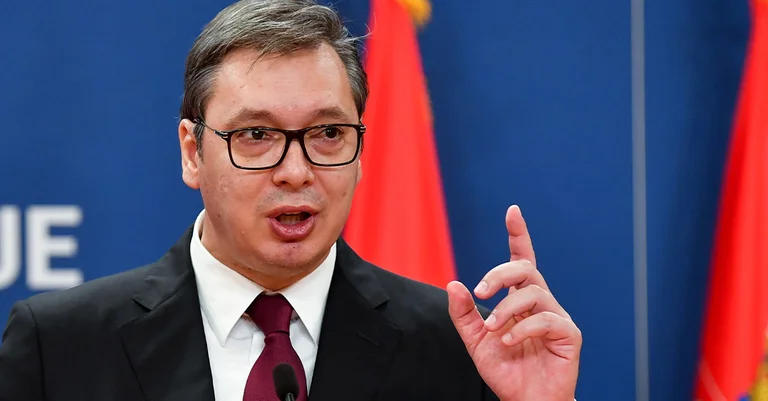
(5 years ago)Serbian President Aleksandar Vuciq has announced on Friday that he will continue working towards “delegating Kosovo's independence”. Vuciq has made these statements while commenting on the European Parliament's report (PE) on Serbia's progress towards accession to the European Union, adopted the previous day. The Serbian president has considered the report [...]
Serbian President Aleksandar Vuciq has declared on Friday that he will continue working towards “deregulation of Kosovo's independence”.
Vuciq has made these statements while commenting on the European Parliament's report (PE) on Serbia's progress towards accession to the European Union, adopted the previous day.
The Serbian president has considered the report as “the naked lie”, adding that the European bloc's deputies have “lost in time and space”.
“They appear to have read a report from 2011 and not from 2021,” has told Serbian President journalists during a visit to the Shabac city district.
In this report, members of the European Parliament have warned that normalising Serbia's relations with Kosovo, and true respect for fundamental rights in this country, is essential to determining the pace of accession negotiations with the European Union.
Regarding the part of the report in which the EP has expressed concern for the <x0fusad to delegate Kosovo's independence”, Vuciq said he is proud of this and that he will continue to work on delegateing Kosovo's independence “in spite of the European Parliament”.
Commenting on parts of the EP report, which cites “the lack of medical equipment” for the fight against the coronary pandemic and insufficient doctors' expertise in Serbia, Vuciq said European MPs “have said everything about themselves only” when they approved that document.
We test more than 80 percent of the EU countries and they condemn us”, he declared.
Concerns have also been voiced in the report about the functioning of Serbia's new Parliament, which has no parliamentary opposition.
European MPs have reiterated the importance of linking Serbia with the common EU foreign and security policy, given that Serbia's level of compatibility is currently the lowest in the region.
Serbia has been asked for results <x0back”, including effective investigations into key areas such as judiciary, freedom of expression, fighting corruption and organised crime.
Among other things, it has been mentioned that media freedom is deteriorating and that the use of offensive language, intimidation and even hate speech is growing against members of the parliamentary opposition, independent intellectuals, nongovernmental organisations, journalists, influential individuals and members of the ruling parties.
Among other issues, MEPs have welcomed the progress Serbia has made in developing a functional market economy and have encouraged the Serbian Government to pursue structural reforms in this area.











