 7 hours ago
How is the State pursuing the happiness of the people before economic development?
Periskopi(5 years ago)
(5 years ago)Butan [Bhutan] is a kingdom in the Himalayas best known for its concept of “Bruto National Happiness” [GNH]. But what is GNH? And are the people of Butan the happiest of the worlds? GNH as a philosophy of development in Butan dates back to 1972, when the fourth king, Jigme [...]
The GNH as a philosophy of development in Butan dates back to 1972, when the fourth king, Jigme Sighye Wangchuk, announced that Butan would follow <x0-cymour” on its path to development, instead of measuring progress only through growth in the local Bruto-Produlent. [ GDP].
Precious in Butan for many progressive actions as king, this visionary leader had realized that GDP did not consider the ultimate purpose of every human being: happiness, writes Periscope.
What does that mean?
John Lennon sums up the concept, and tensions behind him, so beautiful. He wrote: When I was five, my mother always told me that happiness was the key to life. When I went to school, I was asked what I wanted to be when I grew up, and I wrote “happily” They told me I understood the question, and I told them they understood life. ”
Of course, “Happiness” is a challenging achievement to understand, let alone measure. Since the 1970s, it has been a long way for GNH to go from the development philosophy to the key component of Butan's development strategy that tried to build balance between the four fundamental pillars of GNH: sustainable socioeconomic development; environmental protection; conservation and promotion of culture; and good governance.
Few lessons on how Butan and one of the world's smallest economies has witnessed leadership.
Four Lessons From Butan
Good governance: In 2001, the same king who came up with the concept of Bruto-Nuture National initiated the process of drafting the constitution that would result in giving power to the people. The king had stressed that the constitution should promote and protect the current and future welfare of the people and the country; to ensure that Butan has a political system that offers peace and stability, while strengthening the country's security and sovereignty. Despite protests by the population, who were happy with their royal leadership, the king stressed that it was unwise to leave such a small, vulnerable place in the hands of one leader, chosen from the east and not from the credit. The constitution led to the announcement of parliamentary democracy, with the first elections held in 2008.
2. Environmental Protection: Butan's constitution also envisions unprecedented environmental measures, with demands such as the need to preserve 62% of the country's forest at all times. Currently, the scale is 72%. Even in the Paris agreement, Butan had announced that he intended to remain a land free of carbon.
Butan is home to a multidivers ecosystem, ranked among top 10 countries in the world with the largest density of species and known as a hot-pot biodiversity.
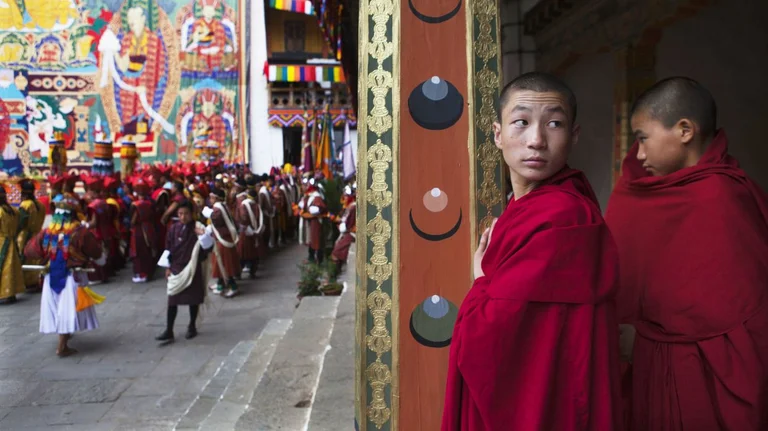
3. Saving and promoting culture: Situated between giant countries like China in the north and India in the South, the fact that this country is a state is amazing fact in itself. The high mountains pass through deep valleys that have helped to preserve the state, but so do the creation of isolated communities that have developed their cultures, identity, and language. Butan has more than 20 languages throughout the country.
4. Sustainable and equal socio-economic development: The National Tourism Committee has an explosive role in ensuring that all politics in the country undergo such a test that balances the effort for economic development. This commission monitors all government spending.
But as a result of these economic policies, are Butan's people really the happiest people in the world?
The author says that this is a very challenging question.
I've met many learned individuals in Butan, but I've also met people who had difficulty providing their well-being. What's common to the people of Butan is that they all place great importance on “times” take time to think, time for family, time to breathe. This time assessment, reflection, and ability to pause is something that many Western cultures have lost.” writes Antonia Gawel for BTH, the Periscope broadcast.
However, things are changing. The arrival of television in Butan has complicated issues, it goes on. While the early people were already isolated, they are increasingly exposed to the luxury of the rest of the world, and of course the desire for “more” has even reached Butan.
As in many cultures built in a livelihood just to stay alive, as was the case with Butan, the change from traditional practices combined with urban migration is putting pressure on the state to manage unemployment and its consequences.
Although Butan is not a country without any trouble, what he has done to follow a more balanced path to economic development is not only obvious but also can serve other states worldwide.











