 3 hours ago
There is no presidential pardon for Thaci if convicted, no referendum on Union”
Periskopi(5 years ago)
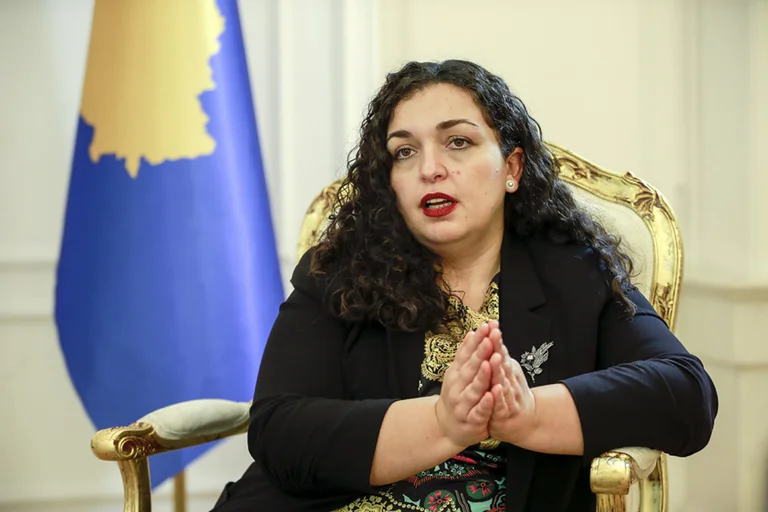
(5 years ago)Vjosa Osmani has been invited today to the BBC's HRDtalk in a 23-minute long interview, and in which she found herself often in a very difficult position she was introduced as a task commissioner who could become Kosovo's new president within weeks. Can Kosovo [...]
She was introduced as a task manager who could become Kosovo's new president within weeks.
Can Kosovo expel the ghosts of the past? It was the main theme in the interview Periscope has translated for its readers from the English language.
The first question the journalist posed was where she differed from the old Kosovo politicians, but Mrs. Ousmane was by no means relaxed.
It has cited the anti-corruption platform, and the conspiracy in maintaining the positions it has had with Kurt in two decades.
In fact, this consistency may be questionable when it is known that Vetevendosje has erased the communiques from its official website.
She has also been asked how she would vote in the referendum for the Union with Albania, and would support Thaci's detention if convicted by the Special Court.
Total interview:
BBC:
In what form would you say you are different from the old [Kosovo politicians'] guard?
VO:
In many ways, in fact, I've been a part of politics for quite some time. I started [a career] very early, when I was 17 years old, so it's been more than twenty years. I was never part of the Executive So I've never had executive powers in the decisions that were made.
But I think that [changing with others] initially concerns the political platform we competed with with the incoming prime minister [Curt] based on our anti-corruption platform... There are many reasons, but it is practically based on the consistency we have shown in politics for the last two decades that have convinced Kosovo citizens to give us dominant support. This shows that a new political generation, not in age but in mind, will finally give the people of Kosovo the opportunity to find their perspective in the country and not get out.
BBC:
You mentioned that people are leaving Kosovo... why do you think Kosovo's independence dream turned into so bad for so many people in your country?
VO:
Independence was not just a dream. It is the actual reality and Kosovo will stay. We will remain an independent and sovereign state. However, it is clear that the expectations of the people regarding employment and justice were higher than what was offered so that these expectations were disappointed in many ways. As I said, one of the main problems in our country was crime and corruption, which we intend to stop through concrete shares in the future government, but at the same time I believe is also setting the example by the country's leadership. So 1 ) we'll lead through our example, show that we're incorruptible, that we don't compromise and that we'll bring in meritocracy. 2 ) bringing education and employment to young people based on meritocracy.
BBC:
But, Mrs. President, why should young Kosovars trust you? Because, frankly, you, despite your youth, were in politics for a long time. You were chief of the president's staff [Sidiu] more than ten years ago. So you're internal, insemble, you're not really an outside, an external. You've compromised your career.
VO:
But I've made compromises that were in the interest of the country and in the interest of the people and never the opposite. And the people of Kosovo know that is why they even voted on me and Mr. Kurt on our joint list. As I highlighted earlier, I have never had executive power in decision-making over the past two decades. When I was there, I had an advisory role... Being in politics does not always mean having a role in what happened.
BBC:
Now you're presenting a clear solution between the old guard that you say was corrupt and the new generation you say is rich. But do you think things are more complicated? But, do you not think that the people you are now calling corrupt, many in Kosovo considered the “heroes of the liberation of Kosovo”? What you're saying is that these people who were held heroes for so long were they actually deceptive?
VO:
No, that's not the kind of language I used. Actually, I don't speak with absoluteism. On the contrary, I think that every politician in Kosovo has the right and wrong decisions in a career. What I'm trying to say is there's been a lot of wrong decisions in the past. I haven't used the term <x0-> fraud” but there have been many wrong decisions that put the country in the wrong direction and that made the youth lose hope. So, for that reason, the country had a new beginning that we're offering. The term “states seized” has not been used by us in Kosovo for the first time since it was used by the European Union for its enlargement strategy... What I'm saying about the present period is not about what these leaders did in wartime.
BBC:
...as you know better than me, your predecessor Hashim Thaci is now in The Hague facing very serious war crimes charges along with other senior KLA figures. Do you support that process?
VO:
Justice will not be established until Serbia hands over criminals who committed crimes and atrocities against the people of Kosovo. This is a truth that no one can deny... so justice will be put in place, apologise and make sure those who committed those crimes are brought to justice...
But there can be no equality between what Serbia has done and what some individuals may have done after the war.
BBC:
Mrs. President, let the Serbs speak for themselves, because they have their representatives on this programme. You are the president of Kosovo and the question for you is simple: If Hashim Thaci is found guilty of these serious crimes would you support his imprisonment for a very long time?
VO:
First I have to talk about the crimes committed by Serbia because they are committed to the people I represent... I have to talk about those people of Kosovo, all those families...
I cannot speak hypothetically, what would be the final verdict when we know that Kosovo...
BBC:
If convicted, would you support the long - standing decision? Or since you're president you'd offer a presidential apology.
VO:
International law does not allow the presidential pardon for the kind of crimes you mentioned. But the answer is very simple. The Kosovo Parliament has long since given answers, in 2014 and in 2014, when we have recognised the jurisdiction of the Special Chambers. We've known in part, but completely [even in terms of punishments].
BBC:
The European Union has said very clearly that for Kosovo to be on the road to EU integration, there must be not only continued dialogue but also peace between Kosovo and Serbia. Your ally, Prime Minister Albin Kurti, has said that continuing dialogue and seeking peace with Serbia is not among his top priorities. He has made it appear he is not interested in continuing dialogue with Serbia?
VO:
He has never said he is not interested in continuing dialogue with Serbia. But the people of Kosovo have entrusted us with a platform based on employment and justice... This will be our priorities. That doesn't mean we won't focus on dialogue. Kosovo has extended the hand of co-operation for Serbia, even though they have never apologized.
But justice like any other nation in the world is a prerequisite for peace. When we sit at the negotiating table, we will seek justice for all the victims.
BBC:
Are you disappointed with the EU. Five member states have not recognised you as an independent state. And you still don't have visa liberalisation.
VO:
We've filled all the criteria for visa liberalisation. When it comes to the five countries that haven't met us, we'll try to melt the ice because there's no reason. There is no similarity between Kosovo and contested territories. We will not give up to strengthen Kosovo's citizenship.
BBC:
You are talking about citizenship and independence, but your ally, Albin Kurti, a few days after winning the elections, was asked if he would back a referendum for joining Albania and he said yes. If you're a partner, it seems you're not on your way to strengthening citizenship, but on your way to joining Albania.
VO:
We have been clear that we are in partnership to strengthen Kosovo's citizenship. And I've been very clear that I believe in the independence of Kosovo. Mr. Kurt and I have also clearly responded to the Kosovo Constitution.
BBC:
How would you vote if there was a referendum to join Albania?
VO:
I will not answer because under our Constitution there can be no referendum and the constitution will never be changed. In the current political context, I strongly believe in Kosovo's freedom and independence. My answer is “Kosovo is here. Kosovo is forever. ” /BBC/ PERISCOP











