 5 hours ago
Key diplomatic situation establishing Kosovo Embassy in Jerusalem
Periskopi(5 years ago)
(5 years ago)Kosovo has signed an agreement at the White House on the deployment of the Kosovo Embassy in Jerusalem, but that is opposed by the EU, the League of Arab Countries and Turkey. The establishment of diplomatic relations between Kosovo and Israel, where Kosovo's pledge to open its embassy in Jerusalem is focused on a debate [...]
Kosovo has signed an agreement at the White House on the deployment of the Kosovo Embassy in Jerusalem, but that is opposed by the EU, the League of Arab Countries and Turkey.
Establishing diplomatic relations between Kosovo and Israel, where the focus is on Kosovo's pledge to open its embassy in Jerusalem has sparked a debate in Kosovo, whether the embassy should be opened or not. Kosovo has signed an agreement at the White House for the deployment of its embassy in Jerusalem, but that step met in opposition to the European Union, the League of Arab Countries and Turkey. Kosovo was asked not to place the embassy in Jerusalem.
Kosovo President Vjosa Osmani's duty has said the new Kosovo government will be co-ordinated for any action with the new US presidential administration, Joe Biden. “We will coordinate any diplomatic action with the US and the Biden Administration, there is our Jerusalem”, Vjosa Osmani has said.
Willing and Order Letters
Israeli Prime Minister Benjamin Netanyahu, after the general elections in Kosovo and the victory of Albin Kurti's Vetevendosje movement, wrote a letter of congratulations, which also addresses Kurti, who is expected to form Kosovo's government that “in Israel expects together in Jerusalem to assure the Kosovo Embassy”.
But after winning the Vetevendosje Movement in early parliamentary elections, Turkey's president, Recep Tayip Erdogan, wrote to Recep Tayip Erdogan, who said that “is happy to learn his stance “for reevaluating the pledge” for the opening of the Kosovo Embassy in Jerusalem, in the event of the Vetevendosje Movement's coming to government”. Erdogan has ordered Kurti that “be useful in avoiding such a step that could cause major damage to Kosovo”. Vetevendosje Movement leader Albin Kurti has been sending letters to Turkey's president, Recep Tayip Erdogan and Israeli Prime Minister Benjamin Netanyahu, in which he has pledged to deepen co-operation when forming the new government in Kosovo, but on no letter note, he does not mention whether he will open the embassy in Jerusalem at Netanyya's request or not open it at Erdogan's request, writes DW.
VV still waits
At a March 1st meeting between Vetevendosje leader and Turkish Ambassador to Pristina Kaır Sarkar, Albin Kurti, warned that he will consider the issue, in which city the Kosovo Embassy will be located at Tel Aviv or Jerusalem, but added that “for this will also be seen the government documentation at the exit”. Movement spokesman Vetevendosje Perparation Kryeziu says Albin Kurti's statements concerning the government's outgoing pledges for the deployment of the Kosovo Embassy in Jerusalem have been consistent. “Regarding the embassy's location, Mr. Kurti has been correct, consistent and transparent in his positions, saying it is an issue to be addressed by the new government after the government's documentation in office has been consulted. This is an important move ahead of a government decision on the matter”, spokesman Kryeziu has said.
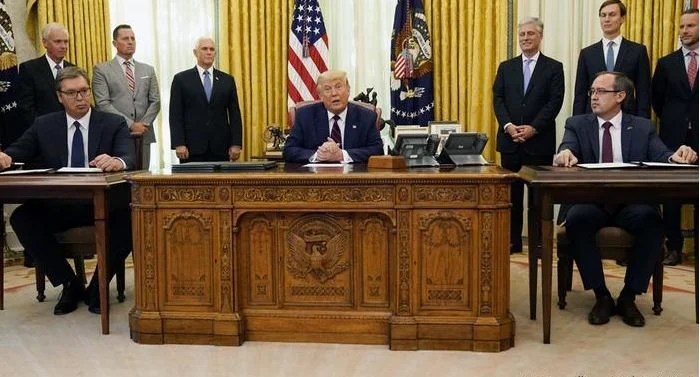
The opening of the Kosovo Embassy in Jerusalem is envisioned in the September 4th 2020 agreement, when Kosovo and Serbia signed two documents for normalising economic reports in the presence of then-American President Donald Trump at the White House. Shortly after that agreement, the European Union expressed concern at Kosovo's pledge to deploy the embassy to Jerusalem. “Since Kosovo and Serbia have defined European integration as strategic priority, the European Union expects both sides to act in harmony with this commitment not to undermine their European future. Serbia is already negotiating this membership and is expected to harmonise its policy with those of the European Union”, EU spokesman Peter Stano said. The European Union on February 2nd of this year a day after the establishment of diplomatic relations between Kosovo and Israel, and where it was told that the Kosovo Embassy will be located in Jerusalem, expressed regret at Kosovo's decision, the fact that Jerusalem considers the EU with an unresolved status.
Hoti: States Must Respect Signed Agreements
International relations recognisers, meanwhile, say that according to diplomatic and consular law, under international public law, defining the locations of foreign diplomatic representatives is the exclusive constitutional and sovereign right of the state that accepts them. Africa Hoti professor of international law at the University of Pristina says the opening of the Kosovo Embassy in Jerusalem has had public pledges signed by the legitimate Kosovo authorities. Now there's only living through the embassy's deployment, because states must stick to signed agreements, says Hoti.
“Kurti must respond to Israel's prime minister's invitation depending on the position he builds for foreign policy. It is almost as a fundamental principle that agreements should be respected. And on this basis we already have a trilateral agreement with Israel and the United States, and the same should either be respected or eventually the procedure for changing it should be initiated. If there is no initiative, then international agreements should be implemented”, says Hoti.
Shasha: “No one wants to be “
Another international relations connoisseur, Demush Shasha from the Institute for European Policy, EPIK told the DW, recognition of Kosovo's independence by Israel must be highly praised, but the wrong decision is to place the embassy in Jerusalem. “No one wants to be “black” Such an act is in flagrant violation of international law and represents the undermine of the negotiation process between Palestine and Israel. This is particularly harmful in Kosovo's case, since Kosovo as a state aimed at joining the UN is making serious violations of the UN's most important international standards”, says Shasha. According to him, the world's “rejection of their embassies in Jerusalem reflects the 50-year-old international consensus to leave this negotiation issue between the” parties. “Now, the decision to establish diplomatic relations has been taken. It is extremely difficult for that decision to withdraw, even though such examples exist in Paraguay's case. However, I consider that Israel's recognition has not been secured by Kosovo representatives, but by international friends of Kosovo. Therefore, the new government must develop a close dialogue with the US and the EU with the aim of agreeing to the fate of the Kosovo Embassy in Israel”, Demush Shasha says. According to him, whenever it comes to assuming international obligations, Kosovo representatives and institutions must in advance make sure they have the support of the entire political spectrum in Kosovo in order to live up to international obligations.











