5 hours ago
Citizens applying for legalization otherwise face collapse of construction
Periskopi(5 years ago)
(5 years ago)Citizens of the Republic of Kosovo should apply as soon as possible for legalising their construction, otherwise they automatically risk building their facilities. So it was said at the Virtual Forum for Legalisation of Without Permission Construction organised by the American Economic Oda of Kosovo. It was said there is great potential lost [...]
There it was said to be great lost economic potential from the inability to exploit legalised property, while it was stressed that once legalised and recorded in the cadastre, construction without permission enters official economic circulation and can be used to facilitate access to finance and economic growth by positively impacting the country's economic development.
Avni Ahmeti from the Kosovo Cadastral Agency said an unlegised property cannot be registered in the cadastra.
As a result of reforms undertaken by this agency, Ahmeti said they have managed to avoid bureaucratic procedures, while inviting public institutions to act in line with these legal frameworks in force.
He also mentioned the benefits of the legalisation process.
The key “at this stage is the application for legalisation of the object, then technical and property issues can yoke with a future phase. But if you don't automatically apply now you risk the construction you've built to ruin... A legalized and registered property in the cadastre may be part of the mortgage, a legalised and registered property in the cadastre can be sold and bought, the heir may be left with a swimming act, but also for a property for which we apply for legalisation we ensure the failure of that object. So I encourage all citizens to seize this opportunity, this option does not come twice”, he said.
For construction in public areas, he made it known that even these cases should apply for legalisation, while adding that this has come as a result of mismanagement of institutions, while for a time they will be on the list of expectations.
Department of Spahiu's Department for Space Planning, Construction and Banning Director Servet Spahiu said in the last six months there is an increase in citizens' interest in legalisation.
He announced that by February on the legalisation application database 3 thousand applications have been recorded, while adding that this number could already be brought in about 5,000.
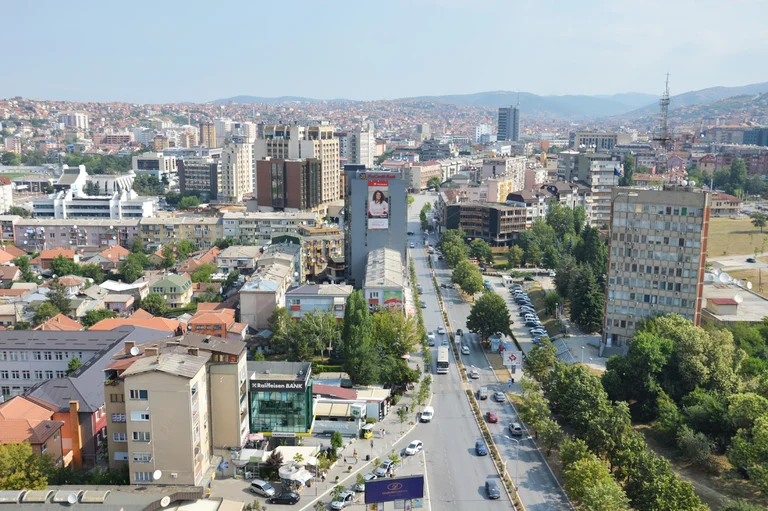
He said the municipality of Pristina and Gracanica have managed to have 465 finalised legalisations, while adding that their value amounts to 72m euros to 96m euros, which can be returned to the market and used.
By February they're on the record on a 3 thousand applications legalisation database... Of these 3 thousand apps that are, according to the latest data, it turns out there are 800 construction certificates and that are registered in the cadastre and carried out all the procedures, owners received their legalisation certificate and property registration. While the rest of them, they can be in procedure, or they can be on the waiting list”, he said.
The director of Urbanisation in the Pristina municipality, Ardian Oluri, said the legalisation process is not entirely in line with the practice of functioning administrative bodies, for which they are committed to together with the Kosovo Cadastral Agency to overcome challenges.
He announced that the Pristina municipality has divided into two categories objects that will apply for legalisation, while adding that the tax for the first category is 1 euros, while for the second, 2 euros.
“We started treating first category objects initially because the largest number of non-licensed objects falls into this category, but also considering that the process of treating these objects is simpler, in order for the process to start quickly and have quick results to send rapid messages to citizens, and then proceed to the second category, which is slightly more complex but is going well”, he said.
To facilitate this process, he said they have operationalised Applications for recording materials which are in the process of legalisation, which is the tool of municipalities for managing and treating subjects.
While the Executive Director of the American Economic Ode in Kosovo, Arrian Zeka, said it is huge is the enormous lost economic potential from the inability to exploit legalised property, as a mortgage for access to finance, for business and investment activities.
“Legal arguments, lack of regulatory plans, excessive red tape, but also lack of awareness concerning the importance of such a process have made wild construction take place on the side of Kosovo. Even the first attempts at treating illegal construction have not resulted in success because of bureaucratic procedures... Today the situation is different... Legalisation procedures are easier. Doing such a process brings many dimensional benefits to citizens and businesses, starting with unhindered use of property rights but also putting these properties into the function of economic development. It's hugely lost economic potential from the inability to exploit legalised property, as a mortgage for access to finance, business activities and investment”, he said.
By law legalisation, a property is considered legalised only when it is registered in the cadastre.
In cases where an construction company has been extinguished or changed its name, entity owners can apply for legalisation of the object.
Objects built until 2004 and social cases are tax-free, which the municipality takes over. While the first category pays tax of 1 euro per square metre, the second category pays taxes of 2 euros per square metre.
The total number of legalised and registered constructions in the municipality of Pristina and Gracanica by February 2021 is 456, objects worth 72.6m euros to 96.6m euros.