 3 hours ago
96 years from the murder of Bajram Curri
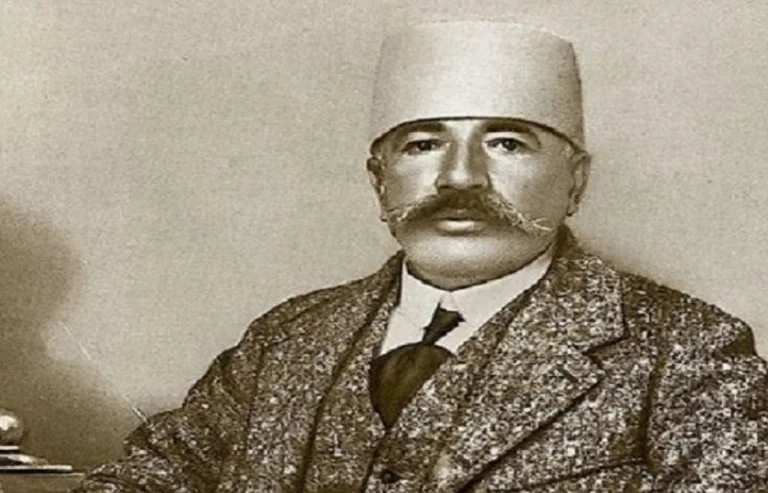
Periskopi(5 years ago)
(5 years ago)Today, 96 years of killing the people's hero, Bajram Curri, is served by Ahmet Zogu's army. Bajram Curri was a popular, military leader, senator of the National Council of Albania Senate from 27 March 1920 to 20 December 1920. On March 29, 1925, Bajram [...] was killed in a cave in the dragon's Deep.
Today, 96 years of killing the people's hero, Bajram Curri, is served by Ahmet Zogu's army. Bajram Curri was a popular, military leader, senator of the National Council of Albania Senate from 27 March 1920 to 20 December 1920.
On March 29th 1925, one of the activists of the Albanian National Movement was killed in a cave in the Dragobi's Deep. Although 96 years have passed, there are still discussions and controversy over the circumstances in which his life ended. Meanwhile, the causes Bajram Currin led to this tragic outcome are recorded in the archives of the Albanian state, a portion of which, for various reasons, has not yet been made public.
He was led by ideas from the Albanian League of Prizren, which he experienced very close as a period, with the killing of the tokat, Shaqir aga. The house of Gjakova Curres has been a god, named after this title, of Krasniça. The title to Bajram was carried out by the family. Because of his father's resistance to Turkish troops in 1860 in the highlands of Krasniqi, Mahmud Pasha is forced to withdraw to Gjakova, where he listed several members of his family and the country's principal to be imprisoned in Krusha the Great, village in the municipality of Rahovec.
A prisoner here was born in 1862 Bajram Curri. After six months Sultan Abdel Hazi decides to free Kosovars. Because Bajram was eventually heard as the voice in his province, as opposed to the Kryeziu Bellers, a gendarmerie commander elected captain in Prizren, later major in Pristina, and eventually Colonel (allajbeg) in Skopje, where he had the gendarmerie of all of Kosovo's Villajet. It was one of the organisers of the 1899-1900 Albanian Pec League. The leader of the anti-imperialist movement in Kosovo and one of the leading leaders of the July 1908 Ferizaj Meeting, where he backed the requirement for establishing the constitution.
He helped establish Albanian clubs and schools in Kosovo, defended the Albanian language alphabet established at the Monastery Congress. The deputy head of Skopje's “Union” from 1908. He helped the armed revolt of the Mountain of the Overwhelm of 1911 put strong resistance to Ottoman armies in the Qafa, Morina.
In May 1912, he joined Junik's meeting decisions, participated in the general armed uprising, was perceived as one of the talented popular commanders who broke up Ottoman armies in Prush's Qafa in July 1912, and in Kosovo's field. Together with Hasan Pristina, Isa Boletin, Idriz Sefer and Riza do Gjakova at the helm of the rebel forces entered Skopje. Impressive in Skopje's entry is the general commitment that was decided not to violate the order and comfort of citizens.
After 1912, he worked in Kosovo to protect the independent Albanian state. Bajram Curri disagreed with the unfair decisions of the 1913 London Conference that left out the borders of the Albanian state of Kosovo and other Albanian countries and fought for their union with the country. In 1913 it was one of the leaders of the armed popular uprising in Kosovo against the Serbian-Montenegrin elector. In 1914 he participated in the fight against the antinational and separatist actions of the Middle Albania Revolution in Durres. Once the Austrian armies enter Gjakova in 1916, it goes to the ground where it is interested in order and tranquillity and educational development.
In 1918 he was elected member of the “National Protection of Kosovo” and became one of his main leaders. In charge of this Committee, he sent a protest to the Peace Conference in Paris (1919), in which he demanded that Albania's rights be recognised and that the Albanian population in Kosovo be granted the right to freely express national aspirations. At the Lushnje Congress, he was elected a member of the National Council, who appointed him minister without a government portfolio and commander general of the armed forces.
He led military actions to suppress the movement and sad. Through its influence, it enables the state to send out new promising state scholarships, such as Rexhep Krasniqi, the Jevvat Kortsha of Chris Maloki. It was against strengthening Ahmet Zogu's positions in the Albanian state, which opposed him from the start. In support of the Tirana government, it co-operates in the reconciliation of the situation in the Mirsday Revolution. In December 1921, the commander-in-chief of the armed forces was appointed to the several-day government of Hasan Pristina. After taking power from Ahmet Zogu was deployed in Krasnice from where he continued the war in the Gulf of the North Mountains against the demulsion measures Serbian-Montenegrins had taken. He participated in the March 1922 March movement against Ahmet Zogu, along with Elezilsuf Rudew and M. Crewe named “He established a free zone in the Burakova Mountain (Tropoja) where he threatened the Tirana government and collaborated with the issue of Azem Galica fighting in Kosovo for national liberation.
It was one of the main leaders of the revolutionary democratic forces that defeated the bird's departments and paves the way for the June 1924 Movement's victory. In the fall of 1924, he went to Geneva to present to the League of Nations the issue of the rights of the Kosovo Albanian population severely oppressed by the Serb people. He continued the fight against domestic reactions and Serbian chauvinists even after the June Movement's crackdown.
Today we're bringing a picture of them lying just moments after he died. It has not yet been studied (as far as we are concerned), who is the author of the photograph, and who has a camera in the Dragobian cave when Bajram Curri fired it on himself, but this picture is worth a thousand words and should be valued as historical and valuable material.
In an interview several years ago, Nehat Zherka from Gjakova speaks of his grandfather photographer and the negatives of the preserved films, where Ahmet Zherka has fixed these images on the celloid of Bajram Curri just moments after the assassination. But that fact remains undiscovered.
Nehat's grandfather Ahmet Zherka is considered one of Kosovo's first photographers who with his camera have made many personalities forever, but also important events.
In one of the undeveloped negatives sometimes tells of a man who, according to Nehat, is murdered Bajram Curri.
However, it is left for historians to explore more in the generation of Bajram Currie, “Hero of Vegelia” as the people have named it.











