 3 hours ago
wanderers, unresolved problems, even though millions of euros were spent
Periskopi(5 years ago)
(5 years ago)The wandering dogs continue to be one of the permanent problems facing Pristina, but also other cities in Kosovo. Millions of euros have been spent by the government and Kosovo municipalities for the treatment of stray dogs, but without any success. Every night, citizens who pass through the Pristina University Court are facing [...]
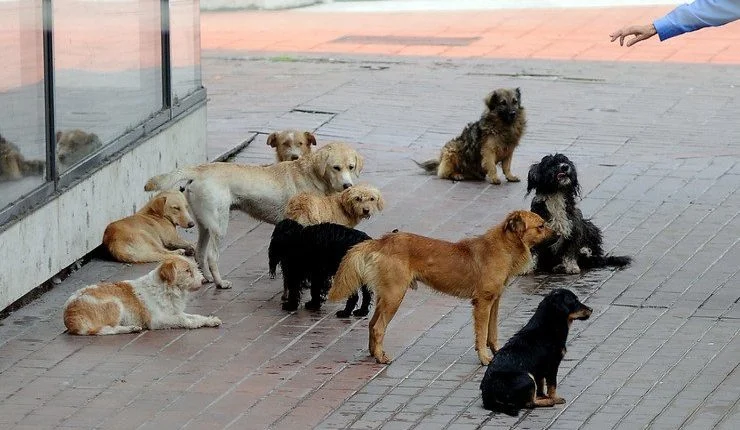
The wandering dogs continue to be one of the permanent problems facing Pristina, but also other cities in Kosovo. Millions of euros have been spent by the government and Kosovo municipalities for the treatment of stray dogs, but without any success.
Every night, citizens who pass through the Pristina University Court are facing wandering dogs.
And the danger from the large number of dogs on the streets was also mentioned in a cableogram issued by the American Embassy in Kosovo.
Among other things, it was said that the Embassy's “staff is endangered by the attacks of stray dogs when they are hungry”.
International media reported on the U.S. Embassy cable.
Not enough of the institutions for treatment have been made for wandering dogs you can meet in other parts of the city.
By 2017, dog treatment has made the Food and Veterinary Agency (AUV), which had received 1.3m euros from the then-led government of Ramush Haradinaj.
This institution had vaccinated and seized thousands of wanderers across the territory of Kosovo.
This number of 14,000 dogs, of course, has contributed to the decline of the number, but we've said that by separate means, it's not going to turn out as problematic, we're going to start a good initiative, but it has to be the municipalities that have to continue because it's legally defined by”, AW spokesman Lamir Thaci told Radio Free Europe.
According to him, municipalities have shown no willingness to do their legally defined work.
The law on veterinarians envisions that municipalities in accordance with procedures imposed by the Ministry of Agriculture, should register dogs, take annual vaccines against rage, catch dogs and street cats if necessary, and establish places for care of dogs and cats, as necessary.
At the Public Services Directorate in Pristina, they say they have never stopped with dog treatment, but the problem with wandering dogs continues to be the same, as there is no record of them.
Habib Qorri of this director says that proper dog treatment cannot be done with projects in short periods of time, but a domestic policy needs to be developed to improve the situation.
We've had a bite case, maybe just one case if it is, I don't say it's a small case, or it's a little bit of that. Our goal is for no citizen to feel particularly threatened by stray dogs. We're doing what the law allows us and what we can do, over and over. I'm still saying, until we're treated to larger size, the problem will still be”, he says.
Elza Ramadani, director of the Foundation for Animal Rights, says institutions in Kosovo have failed to properly treat stray dogs.
Some are seen with earrings that seem to be treated, cashed and sterilized, to prevent their breeding on the street, but some are not. Citizens do not know that these dogs come from the many abandons of irresponsible people they hold were once once free of dog on the street. Also, because they have nowhere to send him, there is no asylum in Kosovo, where the citizen can send his dog, so they end up on the road”, Ramadani says of the REL.
The Pristina municipality in late 2020 has signed contracts worth over 100,000 euros for the construction of a shelter for stray dogs in the village of Hajval in Pristina.
Only during 2020, not counting the month, according to the Kosovo Police, 28 cases of attacks by stray dogs have been reported.











