2 hours ago
Vaccines in Kosovo, nor on horizon
Periskopi(5 years ago)
(5 years ago)Delays in negotiations, nontransparents, as well as the political situation in Kosovo, are estimated to have contributed to the failure of anti-commercial vaccines in Kosovo, at the time when almost all states in the region have begun vaccinating. In Albania it has already begun reaching Pfizer vaccines almost every week, and in April, as the prime minister has warned, Eddie [...]
In Albania it has already begun reaching Pfizer's vaccine controls almost every week, while in April, as Prime Minister Edi Rama has warned, the first container of 360,000 doses of British company vaccine, AstraZeneca and Oxford University from “is expected to reach a friendly state of”.
Northern Macedonia has also begun vaccines with vaccines donated by Serbia, while Serbia has already enabled citizens themselves to choose between four vaccines and has vaccinated over a million people.
The vaccine has also begun in Montenegro and Bosnia and Herzegovina, as well as with vaccines donated by Serbia.
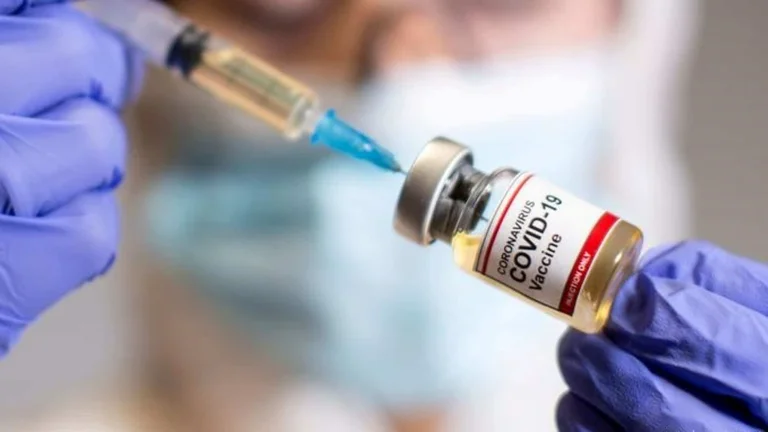
While some of these countries have made direct negotiations with companies to provide vaccines, Kosovo is awaiting AstraZenecia vaccine through the World Health Organisation programme, COVAX, which aims to distribute vaccines to poor countries.
On January 5th, in a Facebook post, incumbent Health Minister Armend Zemaj confirmed the security of 500,000 vaccines against COVID-19 from the Pfizer pharmaceutical company. But, from this company have repeatedly declared to Radio Free Europe that negotiations with Kosovo are still continuing.
At a meeting of the Committee for Co-ordination and assessment of the situation with COVIID-19, held on Monday, almost nothing was discussed when the vaccine would begin, except that Zemaj said that our “angation has been maximum for providing the vaccine in sufficient quantity for 75 percent of the population”, without hinting how far this process has been. He refused to answer REL questions after the meeting, on the issue.
Nasser Ramadani, director of the National Institute of Public Health, stated during this meeting that Kosovo is awaiting the first container of the AstraZeneca vaccine, which is expected to arrive under the COVAX programme.
Fatmire Mulhrama - Kollcaku, deputy chairman of the Vetevendosje Movement, which is also epidemiologist, told Radio Europe free Europe that the delays in reaching the vaccine against COVID-19 that causes Coronavirus are taking place because of the government's irresponsability and the proper failure to manage pandemic by the Ministry of Health.
Acting Health Minister Armend Zemaj had warned that in February, vaccines against - CO VID will be in Kosovo.
The minister is obliged to appear before citizens and declare when Kosovo will be supplied with vaccines and when citizens will be vaccinated. There is no way to escape this response because it has long been declared and praised that they are in the talks and are contracting, it has been said in a long time, but the vaccine is still missing”, said Mulhaja-Kulcaku.
Infectologist Ilir Tolaj tells Radio Free Europe, that the delay in providing the vaccine for Kosovo citizens is disturbing. According to him, this situation becomes more disturbing when developments and large-scale insurance of vaccines from countries in the region are seen.
All of this leaves the authorities' approach to providing the vaccine. On one side, we have had statements that vaccines have been secured, even having pre-conservate contracts for large numbers of vaccines up to 500 thousand, and in reality it is proving that none of these are true, which indicates a nontransparency and non-transparents of the authorities towards Kosovo citizens in general”, Tolaj said.
Tolaj considers Kosovo too late to start contacts and achieve contracts with relevant vaccine production companies. He says contacts had to start in the summer of 2020. This delay, according to Doctor Tolaj, has consequences.
“Vaxing as early as possible of the population, the beginning of the vaccine of danger groups, would surely contribute to the relief of the entire pandemic situation, which is the most endangered cases. At this moment there is a huge inconsistencies of Kosovo health authorities, which have practically left the job only in the hands of a mechanism, COVAX, which is also being criticised as unfunctional”, Tolaj said.
According to him, currently “does not have the will, nor do I believe the government's willing” in office to address the issue.
Bujar Vitija, editor-in-chief in the newspaper “Shneta”, who has also had difficulty getting information from the Health Ministry about the vaccine, says officials of this institution have politicised this process due to the election campaign in January, when vaccines have been declared.
The easier it is to get a response from Pfizer or COVAX than from the Health Ministry”, Vitija said.
AstraZenecsa and Oxford Anti-Cranobrus vaccine, Kosovo is expected to receive it for free through the World Health Organisation programme, COVAX, which aims to distribute vaccines to poor countries.
Kosovo expects to receive about 100800 doses of this vaccine from COVAX. / REL