 4 hours ago
Special Speaker concerned with Kosovo “increased implementation”
Periskopi(5 years ago)
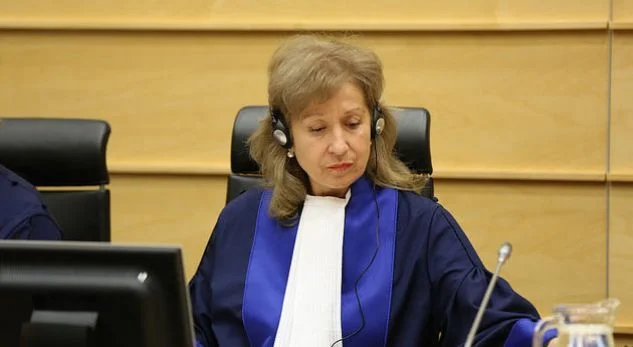
(5 years ago)The head of Specialised Chambers in The Hague, Ekaterina Trendafilova, says there are attempts to undermine the work of the Court, which is investigating alleged crimes committed by members of the Kosovo Liberation Army (UÇK) during 1998-2000. “Attempts to undermine our institutions (Spelled Rooms and the Specialised Prosecutor's Office) do not [...]
The head of Specialised Chambers in The Hague, Ekaterina Trendafilova, says there are attempts to undermine the work of the Court, which is investigating alleged crimes committed by members of the Kosovo Liberation Army (UÇK) during 1998-2000.
“Attempts to undermine our institutions (Res specialised Chambers and Prosecutor's Office) have not ceased and will likely grow in different forms, as judicial procedures --” are under way, Trendafilova was quoted as saying during a meeting with European Union diplomats on February 11th in The Hague. Radio Free Europe has seen the transcript of this meeting.
The head of the Special Court has said that under these efforts there have been calls for the Constitutional Court of Kosovo to review the April 2015 ruling, which paved the way for the establishment of specialised rooms and the Specialised Prosecutor's Office.
“Presistibly called for collecting signatures to change the Law on Specialised Chambers and Specialised Prosecutor's Office, which, while legally not possible, can have problematic consequences if taken into account by the Kosovo Government”, Trudafilova said.
“In particular, efforts can be made to amend the law that allows the forgiveness of those sentenced by the Specialised Chambers, or to displace its court or archive, or both, to Kosovo”, Trendafilova told European diplomats.
It has not been elaborate on who these efforts are being made and how these changes can be implemented.
This would certainly endanger the lives and security of people who have or will be willing to cooperate with us. Such changes, of course, would have a shocking effect on witnesses, who may not want to come forward from now on, thus making it impossible for the Specialised Prosecutor to proceed with his case”, she added.
During this meeting, which he confirmed for REL and the Specialised Chambers Media Office, Trendafilova has also raised concerns about the safety of witnesses who appear in prosecution.
It has urged European states to engage in a comprehensive co-operation agreement that would enable witnesses and shift to any European state as a safeguard clause.
Without these agreements, it will be very difficult if not impossible in some cases to ensure that the testimony can be given freely and without any fear. Co-operation is complex and can be required to freeze assets or even transfer persons assigned from their territory to the headquarters of Specialised Chambers in The Hague”, Trendafilova has said.
It has named it essential that the mandate of the Specialised Chambers and the Specialised Prosecutor's Office not change until its fulfillment.
Whatever difference is made with the EU only”, he said no.
At this meeting, Trendafilova has said judicial procedures are continuing on schedule with all measures imposed against COVID-19's pandemic.
Trandafilova has announced diplomats of the three cases the tribunal is currently dealing with: the Mustafa case, the Thaci case (including Kadri Veselini, Rexhep Selimi and Jakup Krasniqi and Hashim Thaci), and the Gucati/Haradinaj case.
Trandafilova has said that in the case Thaci is still not known when the judicial process will begin, due to the volume of the issue and the demand for additional time for preparation of the material. Meanwhile, the other two cases are in faster procedure. Judgment against Salih Mustafa is required to begin on March 1st.
Angela Greep, spokeswoman for Specialised Chambers, has said it was a meeting that happens twice a year, where the chairman “has summed up issues which have already been addressed in the public documents of the court”.
Kosovo silents
Free Europe Radio has sent questions to Kosovo's incumbent government, but has not received answers.
He didn't even get an answer from the presidency.
The Vetevendosje Movement, the winner of the February 14th elections, has also been contacted to take a stand regarding the concerns raised by the head of the Special Chambers, but by the time it is published, the subject has not responded.
But earlier, political leaders in Kosovo had tried to make changes to the mandate of the Specialised Chambers.
Initially, in December 2017, the political parties that were at the time in power -- the Democratic Party of Kosovo, the Alliance for the Future of Kosovo and the Social Democrat Initiative -- had initiated an initiative to break up the Law for Specialised Chambers and the Specialised Prosecutor's Office, but after international pressure, they had withdrawn.
Former Kosovo President Hashim Thaçi, against whom the indictment of war crimes and crimes against humanity was filed in November 2019, had written a letter to then-state Secretary of State Mike Pompeo that the purpose of Kosovo institutions has never been to have the whole court done in a third country, in this case in the Netherlands, and that “the creation of parallel institutions” will certainly not positively affect Kosovo's judicial system.
Pompeo had responded by saying that “the removal or damage to the working structure or location of the Special Chambers or Specialised Prosecutor, in any way, would seriously damage the credibility and international reputation of Kosovo”.
The American Embassy in Pristina has declined to comment on concerns raised by Trandafilova during meeting with American diplomats, saying that the Court should be asked about it in The Hague.
Otherwise, the American administration's stance is that it supports the tribunal's work and mandate at The Hague and requires all sides to work without interference by this institution of justice.
The Special Court, or officially called, the Specialised Chambers and the Specialised Prosecutor's Office, is part of Kosovo's judicial system, but with headquarters at The Hague. It investigates the alleged crimes of former Kosovo Liberation Army members against ethnic minorities and political rivals between January 1998 and December 2000, which are mentioned in the 2011 Council of Europe report, whose author is Swiss Senator Dick Marty.
The EU annually allocates about 40m euros for the work of the Special Court.











