3 hours ago
Selimi Special Lawyers: Remove the joint criminal enterprise from the indictment
Periskopi(5 years ago)
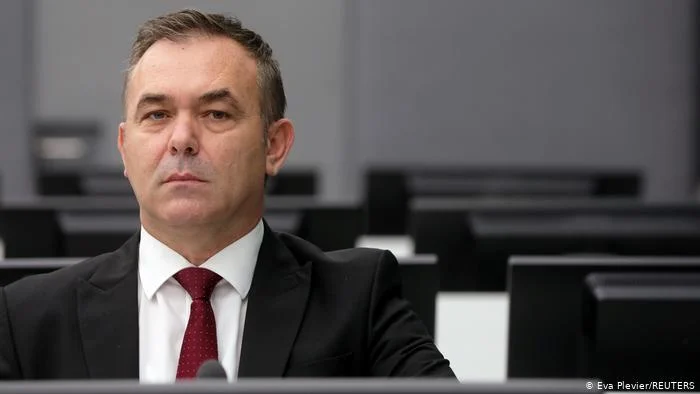
(5 years ago)The defence team of former KLA inspector General Rexhep Selimi has handed over to the Special Court a parachute through which it challenges Selimi's form of prosecution under what the Special is calling “joint criminal enterprise”. David Young and Geoffrey Roberts, Slymit lawyers, have said that the company [...]
David Young and Geoffrey Roberts, Slymit attorneys, have said the joint criminal company (NPK) is a construction created through a selective analysis of a limited number of issues after World War II and international conventions.
Both lawyers have also listed cases when using the term “joint criminal enterprise”.
“As recognized by the judge of the procedure, NPK, as applied in ad-hoc courts, has three distinct forms: A NPK I (the basic form) describes individual criminal responsibility when “all co-chairees,
acting in accordance with a common purpose, [and] possess the same criminal purpose [...] Although each of the participants can play a different role [indoors] NPK) “. b NPK II (systemic form) “is marked by the existence of an organised criminal system, especially in the case of concentration or detention camps”. c NPK III (enlarged form) describes individual criminal responsibility in the “situation that includes a common intention to commit a crime when one of the perpetrators commits an act which, although it is out of the common plan, is still natural and the predictable consequence of the effect of this goal is common”, said in the parliament.
In addition, Selimi's lawyers write that the joint criminal enterprise has not been part of the Kosovo or former Yugoslavia law in 1998, when it is claimed that Selimi has committed the crimes he is accused of.
The Law's “Article 6 (1) gives the DHSK jurisdiction for both international crimes covered by articles 12-16 and specific internal Kosovo criminal acts defined at Article 6 (2), though these are limited to criminal acts against justice administration. Article 12 of the Law predicts that the DHSK “will enforce international custom rights and Kosovo criminal law as long as it is in line with international customary rights, both as implemented at the time of the commission of crimes”, said further in the parliament.
They also say the NKP was neither part of the conventional nor customary international law in 1998.
No international binding convention for Kosovo includes the NKP. Therefore, there is no basis for implementing this form of responsibility”, said in the parliament handed over by Selim's lawyers.
Thus, Selimi's lawyers conclude that the Special Court cannot prosecute Vetevendosje Movement member under “joint criminal enterprise”.
“D The HSK, in line with the Kosovo Constitution and the known human rights, is prohibited from implementing the criminal law retroactively, including ways of responsibility that were not applicable and binding in Kosovo at the time of carrying out criminal acts allegedly committed. So the only forms of responsibility that Mr. Selimi could be prosecuted are what would have been applicable to him in March 1998 in Kosovo. That simply doesn't include NPK”, it says in the parachute.
Selimi's defence team is seeking from Prosecution Judge Nicolas Guillou to ensure that Special Court “has no jurisdiction over the responsibility of the joint criminal enterprise; and
to order the Specialised Prosecutor's Office to remove paragraphs 32-52 from the indictment as long as they concern joint criminal enterprise”.