 4 hours ago
Procedures for forming new Kosovo government
Periskopi(5 years ago)
(5 years ago)In Kosovo, the full voting count process that should then be certified by the CEC has not yet been completed. Kosovo now faces the formation of the government and quickly again another challenge of electing the president. The voting counting process coming from diaspora and conditional ones is still continuing, while for votes [...]
In Kosovo, the full voting count process that should then be certified by the CEC has not yet been completed. Kosovo now faces the formation of the government and quickly again another challenge of electing the president.
The process of counting votes by diaspora and conditional ones is still continuing, while for fair votes has already completed the counting process, even though some municipalities and polling stations according to the CEC will go to a recount due to technical errors.
Of the regular votes the Vetevendosje Movement has won 47.85 per cent of the vote. The Democratic Party of Kosovo, like the second party, has 17.4 per cent. The Democratic League of 13 percent and the AAK will be the smallest parliamentary group to 7.60 %. Out of 120 seats as long as parliament has them, 20 seats are reserved for minority parties, 10 of them only for Kosovo Serbs. Countries that remain empty as a result of the percentage of votes that go to parties that did not pass the five per cent threshold split parliamentary parties with a proportional system, depending on the percentage won.
The diaspora vote counting process could take several days. CEC officials say that by February 12th, 43.447 packages with external balloting have been reached. And this counting process can take up to ten days. The number of votes from the diaspora could be greater, as it is believed within a package could have more than one ballot sheet.
Coming Up to Process
But how will the process proceed now after the election ends. The vote counting process must initially complete. Then the Central Election Commission should make their certificate, following the eventual process of complaints the political parties may have or candidates that should be examined by the panel for complaints and parliaments.
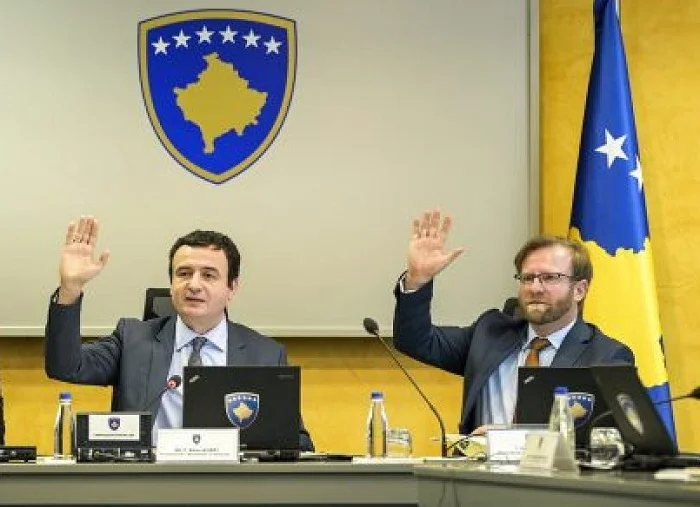
For the formation of the Kosovo government, at least 61 of the assembly's deputies are needed. But first the president of Kosovo must mandate the election winner to form the government. The first mandate has two weeks to secure the number of votes in parliament at least 61. If the first mandate fails to form the government within 15 days, then the president decrees another mandate, which has a legal deadline of only ten days for forming the new government. If even the second mandate fails to secure the parliamentary majority, then the country goes automatically to the polls.
Kurti against coalitions with other parties
Vetevendosje leader Albin Kurti has declared he does not want a coalition with any party. He says he made a pre-election coalition with the Vjosa Osman list. The latter competed on the Vetevendosje list, but is aimed at the post of president.
After the outcome of the election was certified, President Vjosa Osmani's taskman could decree Albin Kurti to establish the new government. It is not yet known yet whether Kurt's choice of prime minister is legal for the fact that he was not allowed to race in the elections due to the condemnation of the formal form, for throwing tear gas in 2015 at the Kosovo Assembly.
In the Constitutional Court's recent ruling and Article 29 of the Law for General Elections, “Candidates for MP cannot be a person who over the past three years has been sentenced to decision the cut form”.
However, to be elected the government in the Parliament by the Vetevendosje Movement as the winning party, at least 61 votes are needed.
Democratic Party of Kosovo The PDK, which emerged the second party, according to its candidate for prime minister, Enver Hoxhaj, will stay in opposition because, as “says, they are far apart with Vetevendosje”.
Even the candidate of the Democratic League of Kosovo for prime minister, Avdullah Hoti, said his party “would stay in opposition”.
“On behalf of the LDK we will be uncompetitive advocates of democracy and pro-Western orientation, being constructive opposition in the interest of the state of Kosovo”, says Avdullah Hoti.
While, the Alliance for the Future of Kosovo, led by Ramush Haradinaj, who aims at the presidential post, has openly expressed readiness to be part of the Kurti government. We don't have red lines either for Vetevendosje or any other political subject”, Haradinaj says.
Minorities Part of New Government
In the 2019 elections, when the Vetevendosje movement emerged the first party and formed the government with the LDK, there was no coalition with the list of Srpska, which had taken the ten seats reserved for the Serb community in the assembly. But, under the constitution, Serb representatives must be part of the government and in the past government they had two ministers. One minister was from other non-Serb minorities. The minorities will also be part of the new government.
But at this stage, as a problem is not seen forming government, but the problem may be the election of the country's president. This is due to the fact that Vjosa Osmani currently a lawyer for the president's office could exercise its duty only until April. Then the assembly is obliged to elect the new president. Kosovo's constitution clearly stipulates that Kosovo's president should be elected with at least 61 votes in the third round if the first two fail, while at the session, at least 81 MPs should participate. The new president must be elected within the 60-day deadline from the start of the election procedure, while if this process fails then the country automatically goes to the polls again.











