2 hours ago
Prelec: Kurti victory puts dialogue with Serbia aside
Periskopi(5 years ago)
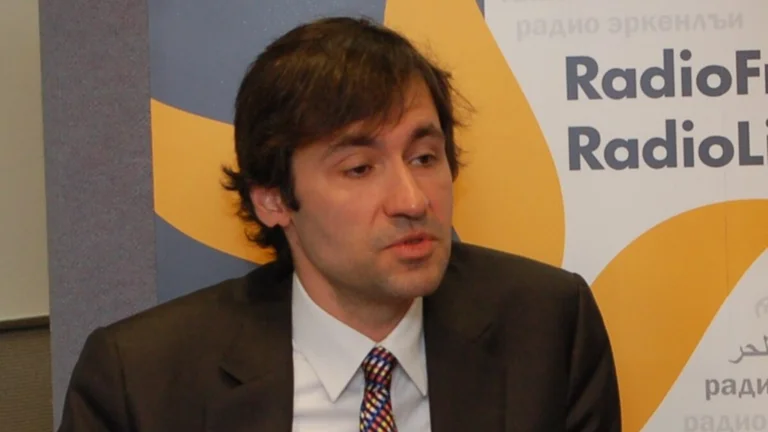
(5 years ago)Marko Prelec, senior analyst in the International Crisis Group, has said in an interview for Radio Free Europe that the outcome of the February 14th elections represents something almost revolutionary. According to him, if Albin Kurti is to be Kosovo's new prime minister, he will face many challenges, at the start of [...]
Marko Prelec, senior analyst in the International Crisis Group, has said in an interview for Radio Free Europe that the outcome of the February 14th elections represents something almost revolutionary. According to him, if Albin Kurti is to be Kosovo's new prime minister, he will face many challenges, at the top of which will be corruption and dialogue with Serbia.
As for the dialogue process, Prelec believes that as long as Kurti can be in power in Kosovo and Aleksandar Vuciq in Serbia, the final agreement is years away. Asked about relations with the United States, Prelec said he doesn't know how far American officials can pressure Kurti.
Radio Free Europe: Mr Prelec, the Vetevendosje Movement, led by Albin Kurti, is expected to mark major victories in early parliamentary elections. Compared to 2019, the difference is huge. What do you think happened in the meantime?
Marko Prelec: I don't think people have been satisfied with the way Kurt's past government collapsed. There's been feelings that something's not right about this. Later, former Kosovo President Hashim Thaci has been indicted and is now at The Hague on trial, along with a number of leaders from his party, but also from Vetevendosje. Another important thing is that officials of one of the main opposition parties now -- the prime minister's party in the past, Avdullah Hoti, the Democratic League of Kosovo -- have joined Kurti's party on the list. I'm talking about Vjosa Ousmane, the frontman. So a series of factors have been collected, but we have to remember that there is something almost revolutionary at this moment. No party has ever won such a large percentage in Kosovo, ever. It is a clear referendum on people who have led Kosovo in most of the last 20 years, and this has been a declaration that enough, we don't want you anymore, we want someone different.
Radio Free Europe: Kurt also named these elections a referendum. But do you think he can change things radically? Kosovo is facing the consequences of pandemic as each state in the world is.
Marko Prelec: Yes, he will face many challenges, some of which are relatively easier and some more complicated. It's too early to talk about this. He will most likely be prime minister and will have a lot of role in foreign relations. His view of dialogue with Serbia will be what will happen. I think dialogue, basically, will stop for a few years.
Radio Free Europe: You believe you can stop for a few years?
Marko Prelec: It may not stop formally, there may still be meetings in Brussels, but nothing important will happen. What is most difficult to revise is the system in Kosovo. This is something that remains to be seen, but it is something Kurt and Vetevendosje have pledged. But power finds ways of corrupt people. It remains to be seen to what extent they will move forward with their promises against corruption. You can fight corruption by judging those who are not already in positions, and that's an easy thing, or you can fight corruption by not becoming corrupt yourself, which is the hardest. I really hope that Vetevendosje would do both of these things. He needs accountability, but he also needs to keep his path to the future clean.
Radio Free Europe: You mention dialogue, you expect the biggest involvement of the European Union in this process, even though you said it could be postponed for several years?
Marko Prelec: I don't think it's about pushing, but I think the positions between the parties are so far apart. Kurt never had a positive approach to dialogue. So far, his comments have been negative about things he dislikes about this process. And this approach has ruled out almost everything that has been on the table concerning the big issue of reaching the agreement with Serbia and whether Serbia will recognise Kosovo. This question is expected to be outside the negotiating table for several years, as long as (Serbian President Aleksandar) Vuciq is in power in Serbia and Kurti is in power in Kosovo. They will need time to find common languages. It's not impossible for them to agree on a series of practical things, of course that's possible, and that would be good. One thing that is very important and which I expect to see, and many other people, is how Kurt will act with the Serb population in Kosovo.
Radio Free Europe: I think he said he'd support them and work for their well-being.
Marko Prelec: Yes, but their political representatives now elected are actually very loyal to Belgrade, and Serbia still has some institutions that function within Kosovo's territory. Whether he will continue government policy, ignoring and allowing them to move forward, or whether there will be more confrontational approaches, this remains to be seen. I don't expect anything to happen urgently, because he can enjoy a long term, but I think there is reason for concern. I think relationships will be more strained than in the past.
Radio Free Europe: Let's go back to Kosovo. What do you think of the Democratic League of Kosovo, or even the Democratic Party of Kosovo? What does this loss mean for them, which is significant in percentage?
Marko Prelec: Yeah, it tastes bad. I don't know, if I were in their positions, I would see this situation as a existential crisis. It's not now about improving their positions, but the question is whether they can really survive as political moves. This has nothing to do with Kosovo alone. Throughout Europe we have seen several cases of parties that once led, especially of the left, which have decreased to 5 or 6 percent of the popularity, and for very, very small times, almost overnight. Therefore, they must decide what they can offer to voters. Clearly, the next challenge will be to prepare for local elections and try to win at least a few municipalities. I think the PDK is a bit better in position than the LDK. But adapting to the role of the opposition and adapting to the role of not having power will be difficult for them.
Radio Free Europe: Having the great political rivalry ahead, will Kurt be a challenge to reach agreement with any party if he needs to form the government. So far, the Democratic Party of Kosovo has said it will not be part of the new government.
Marko Prelec: I think it's too early to talk. I don't expect Kurt to aim for a coalition. He may have some sort of deal with some opposition political parties on the president's issue, which should happen soon, almost immediately. Even if he could choose the president only with minority votes, so if there are more than 60 seats (in parliament) and 20 minority votes there are enough. It is a bit unpleasant to close all possibilities for Albanian majority parties. I think there'll be interesting negotiations on this issue.
“As regards US relations, it's no longer the 90s”
Radio Free Europe: Have you predicted something like that? You know Balkan issues, this seems to be a big victory for Vetevendosje Movement?
Marko Prelec: I don't want to pretend I anticipated such a big victory. Like everyone else I expected Vetevendosje to grow apart from the last time. But I honestly didn't expect him to win so much. I'm a little surprised, but not unpleasant. Victory could be even bigger, we're still waiting for diaspora votes.
Radio Free Europe: Back to the outside relations. Kurt's past government has not enjoyed the previous US administration very much. What are his chances with the American president's administration, Joe Biden?
Marko Prelec: They were not liked by anyone in the international community. Just a few years ago, there was a sort of informal embargo when it came to them, which both Kurt and Osman (Vyosa) worked hard to overcome, with considerable success. He supported Beden. I think the United States will be willing to work with him. I think the U.S. will pressure to be more flexible in dialogue, but I don't know how big that pressure will be. And I don't really know how much of a chance it's gonna be. The U.S. to make Kurt change his position. It's not the '90s anymore, when Washington has been able to intervene. It will remain visible, but I think relationships will be honest.