a few seconds ago
Persecuted: Political will still crucial to the truth about the dead
Periskopi(5 years ago)
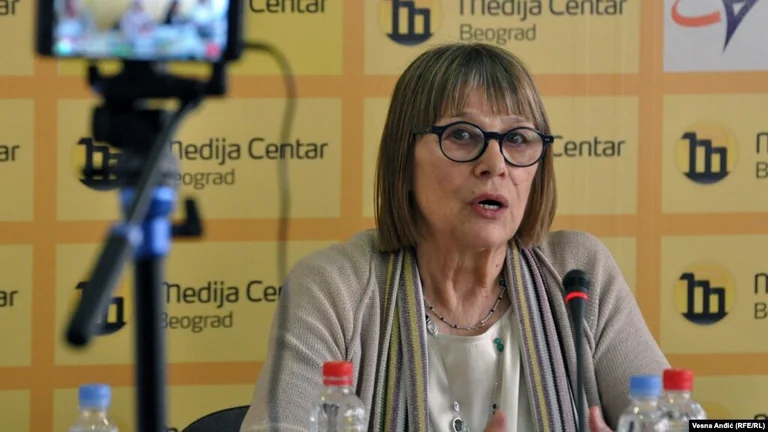
(5 years ago)Without political will and access to documents of public importance, the issue of missing persons during the war in Kosovo cannot be solved, Natasa has said, persecuted by the Fund for Humanitarian Law, at a conference held on February 25th, which is organised in online format by the network for reconciliation [...]
Without political will and access to documents of public importance, the issue of missing persons during the war in Kosovo cannot be solved, Natasa has said, persecuted by the Fund for Humanitarian Law, at a conference held on February 25th, which is organised in online format by the network for reconciliation. RECOM.
“is constantly asking whether that day will come when we can say we have done everything when it comes to whiteling the fate of missing persons during the war in Kosovo”, Persecuted.
It has estimated that only official Pristina and official Belgrade can resolve the issue.
“is constantly talking about numbers and humanitarian issues, but we are never seeing political will, in terms of information about the discovery of the massive new cemetery”, has added persecution, during the presentation of the results of investigations regarding the issue of undiscovered persons missing during the recent war in Kosovo.
Natasa has been persecuting that the documentation of missing persons differs from the documentation of murdered persons because the main sources of information, when it comes to missing persons, are conversations with their families.
For researchers from the Fund for Humanitarian Law, it's also important to know which locations have developed combat shares, which have ended with the expulsion of the population from certain countries.
Predrag Miletiq, one of the researchers from the Humanitarian Law Fund, who for many years has worked to clarify the fate of missing persons during the war in Kosovo, has reminded that the Penal Tribunal for the former Yugoslavia, when it came to missing persons, has most often brought about liberation proceedings, because there was not enough evidence of what happened to them.
After adopting the Law for Access to Information of Public Importance, we addressed institutions several times, primarily the Army and Police, but in most cases they refused to share information. There is documentation that is peaceful for us and has been declared state secret”, Miletic stressed.
He has clarified that documentation would be of great importance when it comes to whiteling the fate of missing persons from Kosovo, because “contains important information from which you can see who the operations actors were for hiding corpses in Kosovo”.
In this regard, Natasa Ka persecuted has found that international criminal courts can contribute more to whitewashing crimes committed than local courts, because “experience has shown how dependent the work of courts is on political will”.
“We still have a large number of missing persons from the beginning of the war in Kosovo in 1998, and what should be particularly disturbing after 21 years, is that we have many missing elderly people and cannot remain without mentioning that nearly 30 older men and women disappeared on June 1st 1998 from a village near the Decani municipality. This has happened since Serb forces were there and there are indicators there have been members of the Special Operations Unit (JSO). We still don't know what happened to those older people who have had more than 60 x2>, Natasa Ka persecuted.
The “Generals, who are now praised in Serbia, should provide the data on what happened in the Krelan area (The Gjakova municipality), where the bodies were sent and where the morto remains of” are found, Kharo persecuted.
Over 1,600 people, most of whom are Albanians, are still identified in Kosovo.