 2 hours ago
Murati: No problem guaranteed places, no problem is the privileges they carry
Periskopi(5 years ago)
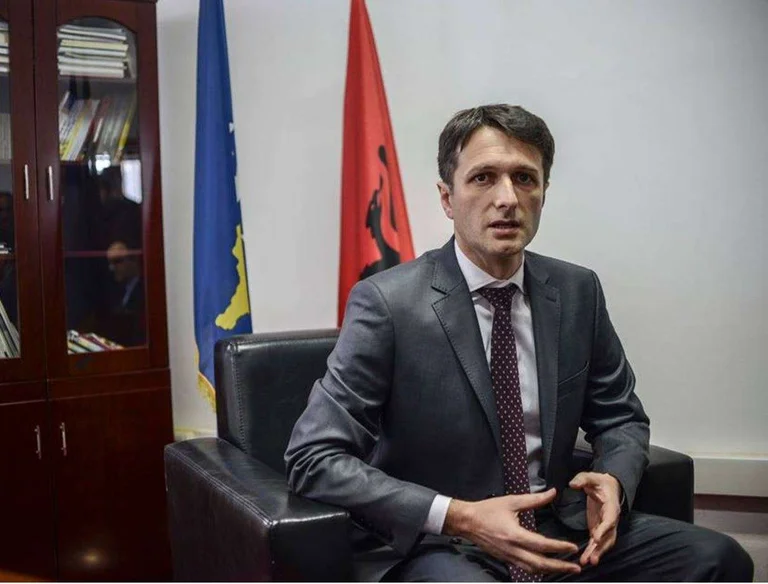
(5 years ago)Movement for the Union Chairman Valon Murati has said that the privileges reserved for the Serb List in the Kosovo Assembly are a problem for our country. Murati via a Facebook post has indicated that “Serbia and the Serbian List use any of Kosovo's internal arrangement to defunct it, but without [...]
Murati through a Facebook post has indicated that “Serbia and the Serbian List use any of Kosovo's internal regulation to defunct it, but without knowing the state of Kosovo”.
He has stressed that the constitution cannot be changed without the 2/3 of minority deputies' votes, as well as the laws belonging to eight areas treated as vital for minority rights without half the deputies present belonging to minorities.
Albania's policy in Kosovo, but also of other minorities, should be directed towards removing these privileges and maintaining all minority rights. And this is not an easy job because it requires political courage of the political class in Kosovo, it requires that in talks with Serbia be drawn from inside the box and that the issue of Albanians in eastern Kosovo,”, writes Murati.
Full Posting:
Not a problem in guaranteed countries, the problem is the privileges they carry!
Following the exploitation of the Serb List (mainly Serbia) model of minority guaranteed countries, to increase the influence even on the deputies of other minorities, through channeling Serbian votes to some of these new minority parties, the issue of guaranteed countries in the Kosovo Constitution was again re-equipped. It should be reiterated that at their core, the existence of these countries leaves no problem for Kosovo and its functioning. The main problem is privileges (in order) I'm not telling them right) that the constitution guarantees to these deputies: one cannot change the constitution without 2/3 of minority deputies' votes, as well as cannot change the laws belonging to eight areas that are treated as vital for minority rights (but laws such as those for education are vital to Albanians) without half of present deputies belonging to minorities. It should not be forgotten that these models mainly function in countries with a lot of emphasis on multiethnicity and with numbers of very equal or large populations, rather than in Kosovo, where Albanians are over 90% of the population. In Northern Macedonia, Albanians can even apply their veto only when their rights are affected, not for all constitutional changes. As absurd as this consecutive overhaul of Kosovo democracy has had some meaning only if Serbia had recognised Kosovo. In the situation given, they have no meaning, although they are a compromise that Albanians have made with the internationals in the Kosovo independence process. So these privileges are attractive to the Serbian List, respectively, because through them it aims to further damage the functionality of the state of Kosovo. Serbia and the Serbian List use anything from Kosovo's internal arrangement to defunct it, but without knowing the state of Kosovo. Therefore, Albanian politics in Kosovo, but also of other minorities, should be directed towards removing these privileges and maintaining all minority rights. And this is not an easy job because it requires political courage of the political class in Kosovo, it requires that in talks with Serbia be drawn from inside the box and that the issue of Albanians in eastern Kosovo be carried out.











