 2 hours ago
Merkel for extending restrictive measures: Mutations Can Destroy Any Success
Periskopi(5 years ago)
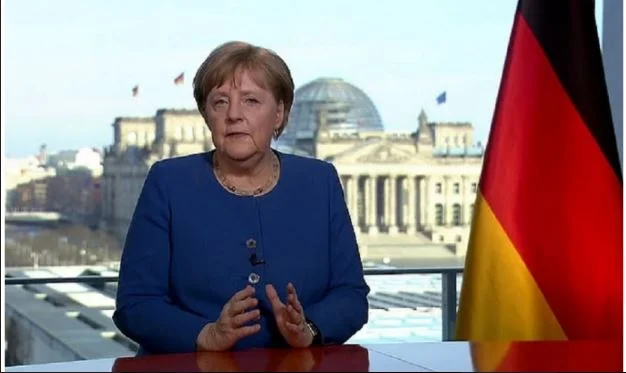
(5 years ago)German Chancellor Angela Merkel spoke on Thursday in Bundestag to protect the duration of restrictive measures across the country until March 7th. The German government and regional heads of federal countries agreed to extend restrictions over February 14th, but with the possibility of opening earlier”gradically” of schools and daily gardens [...]
The German government and regional heads of federal lands agreed to extend restrictions beyond February 14th, but with the possibility of opening earlier”gradically” of schools and daily gardens as well as of wig.
What did Merkel say?
“We must be extremely careful not to get back into this exponential growth spiral,” told MPs in Bundestag.
It also warned that new mutations, which are already present in Germany, “could destroy any success” achieved by the closure for months.
The Chancellor also defended the use of infection levels as argument to determine when it is safe to ease restrictive measures.
I really support the fact that when it comes to further opening and reopening we've decided based on these new mutations, not to give the date, but to give the infection rate,” she said.
The German Chancellor acknowledged that the impasse had caused much suffering, saying: “this is a difficult winter, both outside and when it comes to our lives”.
However, she said her goal was to avoid another wave of numbers of infection out of control.
My argument is that every new wave that can happen if the new versions of the virus become dominant, we don't give it space, we shouldn't end up with another two-digit exponential growth. ”
Merkel less under pressure to compromise
DW political correspondent Nina Hase, who attended the speech, stressed that Merkel's position is easier than the fact that she is not running for re-election. It “was not under the same pressure as other politicians to compromise”.
“Angela Merkel wanted the maximum possible extension of the current deadlock measures, it wanted them to last at least until March 14th,” told Hase of the DW.
However, “has some prime ministers who are under much greater pressure because many people want the lifting of restrictions and they will participate in local and regional elections to be held on March 14th. ”
The date for extending restrictive measures by March 7th was a “gift to voters” shortly before the elections, Hase said.
How did other lawmakers react?
Karl Lauterbach, health expert for Germany's Social Democrat Party (SPD), told DW that he thought he needed to give more emphasis to co-operation with Europe.
It's impossible for us to beat this pandemic alone. I was a little surprised that Angela Merkel did not mention Europe this time,” he said, referring to the Chancellor's speech in parliament.
Lauterbach warned that in the future, Europe should continue its current vaccine programme as well as provide new or adapted vaccines to deal with mutations.
He described the following weeks as key moments in dealing with the coronary pandemic. If we achieve the right results in the next three or four weeks, we will be able to really control the next two months until summer, when the wide extent of the vaccine is being prepared. ”











