 7 hours ago
Lajcak next week comes to Balkans for Kosovo talks, Serbia
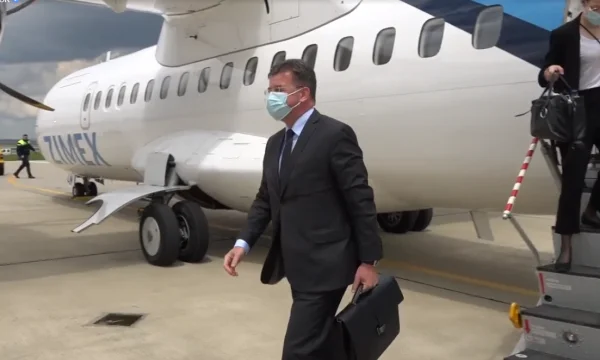
Periskopi(5 years ago)
(5 years ago)The European Union's Special Emisar for Kosovo talks -- Serbia, Miroslav Lajcak -- will stay for several days in the Western Balkans next week. His visit, in addition to Pristina and Belgrade, will remain in Montenegro, is part of efforts to ensure the resumption of talks on [...]
The European Union's Special Emisar for Kosovo talks -- Serbia, Miroslav Lajcak -- will stay for several days in the Western Balkans next week.
His visit, during which, apart from Pristina and Belgrade, will remain in Montenegro as well, is part of efforts to ensure the resumption of talks on normalising Kosovo relations -- Serbia -- which ceased due to the February 14th parliamentary elections in Kosovo.
A day after the elections, senior European Union officials said they expect the rapid formation of Kosovo institutions and its involvement in talks on normalising relations with Serbia.
The EU seems concerned about continuing talks due to the positions of Albin Kurti, chairman of the Vetevendosje movement, which came out victorious in the election that the talks are not his priority.
Kurt told the Voice of America a few days after the election victory that he could place talks “on fourth place after justice, employment and pandemic, but he cannot bring the two top priorities”.
The United States, which is the main supporters of Kosovo's independence, stressed on several occasions in recent days that it supports the Kosovo-Serbia talks enabled by the European Union, and expects a comprehensive normalisation agreement that would lead to a mutual recognition”.
Kosovo celebrated days earlier the 13th anniversary of its independence, which was proclaimed in 2008 with the support of the United States and the main countries of the European Union, but is opposed by Serbia and its ally Russia.
On Friday, Serbian President Aleksandar Vucic reaffirmed that he would never recognise him, following a meeting with Kosovo Serb representatives.
The two sides launched a negotiation process ten years ago for normalising relations as a condition for their progress towards European integration.
Talks that resumed in July 2020 did not mark any progress.
On September 4th of last year, Kosovo and Serbia signed an agreement on economic normalisation between them at the White House.
The international push for restarting talks after the formation of Kosovo institutions could increase due to concerns that elections warned in Serbia in the spring of next year could create a new vacuum in the process.
Mr. Lajcak's visit occurs at a time when he sparked many reactions in Kosovo after a presentation, in which there was a Balkan map in which, according to the reactions, Kosovo was presented as part of Serbia.
Mr. Lajcak later wrote on the social networks that all was a misunderstanding and that “Kosovo is there and also is the line separating Kosovo from Serbia”.
In the spring of last year, Mr. Lajcak, the former foreign minister of Slovakia, was appointed as a special European envoy following a controversial process in a part of EU and Kosovo countries, since his country is one of the five European countries that still do not recognise Kosovo's independence, among which is Spain, where the EU foreign policy chief Josep Borrell comes from.











