4 hours ago
Kurt for Le Temps: Dialogue is not in the first place, I'm going to compromise to rank as a third or fourth priority.
Periskopi(5 years ago)
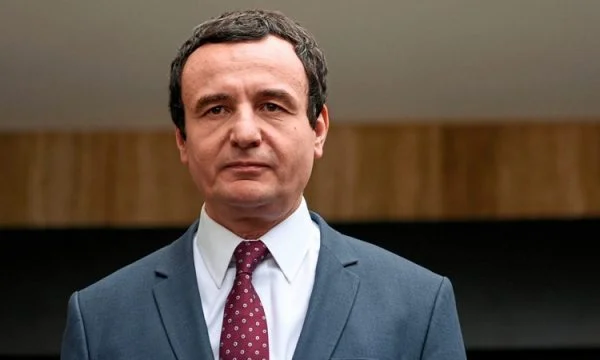
(5 years ago)The winner of the February 14th general elections, Albin Kurti, has spoken to the Swiss French-language newspaper “Le Temps” for how it aims to transform Kosovo. Kurt also had some calls for Kosovars living in Switzerland and Europe. The two priorities of Albin Kurti, leader of the leftist party, Vetevendosje, are clear: [...]
The two priorities of Albin Kurti, leader of the leftist party, Vetevendosje, are clear: to fight corruption and dialogue with the Serb minority in Kosovo. A day after his big victory in Sunday's legislative elections, he agreed to respond to “Le Temps”
Le Temps: You were already prime minister for 50 days, early 2020. What lessons do you learn from this brief experience when you return to this office?
Albin Kurti: We have two priorities, employment and justice. Kosovo has been destroyed by unemployment and corruption. We need investments, but nothing can happen without a determined fight against corruption. When I was prime minister, I started the administration vetting operations and we'll resume this job and pass the anti-Mafia law. However, while I was in Government, I discovered a very encouraging fact: corruption is focused on the top of the state, it has not included society, unlike other countries in the region. That's why people voted for change. We want to end a “Old Regime” where corrupt elites accumulate wealth.
Le Temps: During the campaign, you highly denounced this “Old Regime”. Who and what is this regime?
Kurti: Of all the parties that have come to power since 1999.
Le Temps: Are you supporting the diaspora to boost Kosovo's economy?
Kurti: A third of Kosovo's citizens live abroad, especially in Germany or Switzerland. The country receives more than 850m euros annually from the diaspora through bank transfers, and this amount is increasing annually. We also need to add the money that comes to the country with money that doesn't count, as well as the sums spent on those who return to Kosovo to take holidays or get married. Of all of this, diaspora money represents 1.5 billion euros annually, or 60% of the total state budget. Kosovo operates as a state of the Persian Gulf, except that we have no oil. Our oil is the diaspora.
Le Temps: This money supports consumption, but it has been talking about leading them towards productive investments for twenty years. How to Act
Kurti: We want this money to be useful to the country, not to fly away in a survival economy. Kosovo invaders have often seen the diaspora as a money cow, but we want to see Kosovars abroad as investors who can expect financial returns. diaspora entrepreneurs do not necessarily want to make quick profits, but want to invest safely in their homeland. They are patriots, they want to return, so we have to restore rule of law and increase Kosovo's authenticity. We also want to convince our students, our scientists to return to the country. Many highly educated Kosovars work abroad. We could create a six-month civil service for the diaspora.
Le Temps: The European Union insists on restarting dialogue with Belgrade, but you showed that this topic was only sixth or seventh in your priorities.
Kurti: This theme ranks sixth or seventh among citizens' priorities. All polls show that their main concerns are employment, economy, justice... Anyway, I'm willing to compromise, put dialogue in the third or fourth order of my priorities! The EU and the Balkans are very important for each other, but more than for a common market, we need investments. Southeast Europe is draining the brain and the EU should help us stop this bloodshed. The Western Balkan countries will one day integrate and I think all should be at the same time. If one of these countries enters the EU in front of others, we will again have problems, as is the case between Bulgaria and North Macedonia.
Integration will not happen in the near future, but the EU must give us a deadline so that the citizens of the region can have hope where to get caught. We also need to review the Berlin process [the process launched in 2014 in order to accelerate the accession of the countries of the region to the EU] to turn it into a real Marshall Plan, with emphasis on democratisation, rule of law and education of new generations. Former President Trump favoured “facts and interests” and we must add “values and principles”. I hope Brussels and Washington are at the same wave length for dialogue between Kosovo and Serbia, as do Berlin and Paris. We need this double synchronization, that's the key to success.
Le Temps: Do you think the idea of territorial exchange with Serbia has been abandoned?
Kurti: I hope so, but it doesn't last a week without a new expert, a group of young experts, coming up with a fabulous plan that would solve all Balkan problems with wands, bringing this old idea out of the closet...
Le Temps: Instead of dialogue with Belgrade, you want to privilege the internal “dialog with Serbs in Kosovo. What does that mean?
Kurti: I want to engage in a development-oriented dialogue with Kosovo Serbs. All should be treated with equality and respect, but we must end the phrases out loud as “dialog for reconciliation” or “historic”>. Why not bring together Albanian and Serbian farmers and talk about seeds, garbage, machinery, production, fuel prices? Let's start by doing something instead of repeating the same identity questions. As for dialogue with Serbia, it should be done for the benefit of the population. So far, it was about what Vuciqi [President of Serbia] benefited from what Thaci [former Kosovo president], autocratic leaders who met behind closed doors.
Le Temps: You have long defended the right to reunite Kosovo with Albania. Is the idea still important today?
Kurti: When Kosovo became independent, its constitution was written by others, and this constitution says the country has no right to join freely with other states. Our sovereignty is limited. When we are truly independent, we also have the right to give up this independence, for example to join a federation... However, the essential thing is to respect democratic procedures.