 4 hours ago
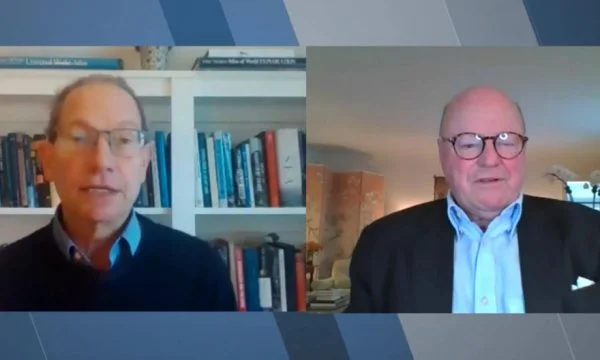
Kupchan's Wisner makes it clear that the Benden administration will seek progress in dialogue
Periskopi(5 years ago)
(5 years ago)In the United States, two experienced foreign policy and Balkan experts said that resolving disputes between Kosovo and Serbia is important for their future and the region. Their comments come after Vetevendosje leader Albin Kurti said after his party's victory that talks with [...]
After elections in Kosovo, both the EU and Washington have stressed the importance of talks between Kosovo and Serbia on normalisation.
The UN “The United States strongly supports EU facilitated dialogue between Kosovo and Serbia aimed at a comprehensive normalisation agreement, which should focus on mutual recognition,” said State Department spokesman Ned Price.
In an interview for Voice of America, Kurti said he did not underestimate talks with Serbia ...
“ ... but I can't say that it's going to be on top of the two priorities because we're coming out of a giant Vetevendosje movement victory, in which citizens voted for us for what they most need”, Mr. Kurti said referring to the domestic situation in the country.
The former special envoy for status talks between Kosovo and Serbia, Frank Wisner, said this stance is understandable.
“If Kosovo is unable to deal with its problems, build its own state, realise the dream Kosovars wanted when they gained independence over a decade ago, what chance does Kosovo have to make peace around it and with Serbia? ”
However, he says he hopes both efforts will be made parallel. Former Ambassador Wisner says Washington would like to see progress in the talks.
The relationship between Kosovo and the United States, between Pristina and Washington, will be stronger if Kosovo is committed and energetic to dealing with internal issues involving corruption and economic development and at the same time taking steps where there are opportunities to create a safer international and regional environment”, he says.
The director of Studies for Europe at the Council for Foreign Relations, Kupchan told the Voice of America in an interview that it is important not to interrupt the process.
“to continue dialogue with Belgrade in part to enhance the progress the administration of the former President Trump” achieved.
Kupchan, says only economic agreements do not lead away.
“They are not enough to create a strong political relationship. So there's still a lot of hard work to do. And I think that's why Mr. Biden's administration communicated early to convey to the leaders of the two countries the message to continue ahead of”, the expert says.
It refers to the messages President Beden has sent to both Serbia and Kosovo, where he stresses that the principle on which the talks should be established should be mutual recognition. The commitment of Beden himself may be the strongest incentive not to postpone negotiations.
On the other hand, President Aleksandar Vucic has said the Serbian stance not to recognise Kosovo has changed. Wisner says it is clear to Serbia what the West wants.
“I believe Belgrade and political leadership in Serbia understand well what the United States and Europe expect and wish Belgrade to do if it wants to have a fully developed and strong partnership with Europe and the United States”.
Kupchan says Mr. Vucic and Mr. Kurti can hold these tough positions because they function politically, but adds he believes there will be pressure from Europe and Washington to move forward.
I think both Kurti and Vucic should be prepared for the United States and their European partners to say it is time to return (to negotiations) and make progress in political relations”, he says.
Ambassador Wisner agrees:
Be assured that the United States will argue in Brussels, they will argue in Pristina and in Belgrade that past disputes should be overcome on the basis of mutual respect and understanding for each other's sovereignty, territorial integrity. We hope the result will be for Kosovo and Serbia to reach an agreement and for Serbia to recognise Kosovo's independence and to co-exist peacefully with Kosovo”, he says.
One of the reasons that may be an encouraging moment for resolving the remaining problems in the Balkans is the emphasis that Biden has put on traditional alliances.
The new US president will be engaged in European security, and in particular in the Balkans, unlike President Trump and I think that's generally good news. I think he'll cooperate more closely with the European Union. I think we will see co-ordination between the United States and the EU to advance dialogue between Belgrade and Pristina”, Kupchan says.
The traditional relationship of the United States with Europe, says Ambassador Wisner, is founded on the principle that Europe will be united, free and secure and that those issues that divide Europe from within will be addressed and resolved.
“Set up those issues is definitely the Western Balkans and Kosovo and Serbia, which are among the main parties with disagreements. Until those disputes are resolved, the dream of American politics for a safe and free united Europe cannot be realized”.
One of the reasons analysts differ as a need for more Western commitment in the Balkans are Russia and China's efforts for influence in that region. But they also point out that President Biden faces major domestic challenges.
“We need to have a strong domestic policy so that we can have a stable and efficient foreign policy in the Balkans and more broadly”, says Kupchan. /voa











