8 hours ago
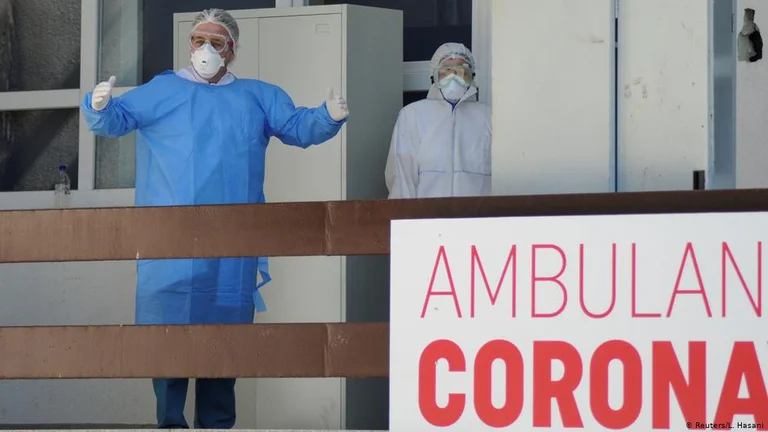
Infectious clinic full of patients, 70% of them oxygen
Periskopi(5 years ago)
(5 years ago)Although Health Minister Armenmen Zemaj this morning stated that the situation with COVID-19 in Kosovo is under control and there is no need for alarm, the Infectious Clinic says hospital capacities are already filled with coronary-infected patients. Currently, 90 coronary patients are lying in this clinic and around [...]
Although Health Minister Armenmen Zemaj this morning stated that the situation with COVID-19 in Kosovo is under control and there is no need for alarm, the Infectious Clinic says hospital capacities are already filled with coronary-infected patients.
Currently, 90 coronary patients are involved in the clinic, and about 70 percent of them have oxygen therapy. So has Kosovo priss infectedlogu, Izet Sadiku, who said that in intensive care there are always 4 to 5 patients.
And we actually have the capabilities filled with COVID patients, we have 90 patients, but it's filled up because in a department it's becoming the central oxygen supply that will be a huge contribution to treating patients with COVID-19. In contrast, other departments that are available to 90 beds are all filled with patients from whom 60 to 70 percent are oxygen therapy, and actually the Infectious Clinic is constantly filled with patients. We have some (patials) in intensive treatment, usually 4 to 5 patients are in serious condition, but even those in the departments who are with oxygen therapy are patients who can potentially at any moment exacerbate their";x1>, he stressed.
Sadiku says that the last days have seen a slight increase in cases as a result of the release of measures taken weeks ago.
Infectious Clinic infection believes there will be no high rise in coronary cases.
“We have seen a slight increase in cases this week, of course it is a consequence that all measures are released to us, then we have the number or movement that has occurred during the campaign, but this issue will be noted this week. But this number is not very large compared to the release measures they are, but the campaign's impact will be noted this week. I believe that by now we've had (the increase of the cases), but the expectations are that we will have a small growth, not a very large increase of”, Sadiku said. Regarding new versions already common in various parts of the world, Sadiku says that in addition to the three cases reported in January, there have been no suspicious case.
The three patients didn't have any particular clinical specifications that we could detect these patients from other patients, at first we couldn't. What has been announced so far is that new variants have a faster rate of spread but are not yet known whether they have more severe clinical forms. Of course there may be greater numbers, but this test on us is not done and should be sent out of Kosovo to test. When we have suspicious cases, we call the Institute and they send the samples. We didn't have any particular case (other) we suspected of”, Sadiku said.
Although it is now nearly a year from when the country registered its first cases of coronarys, patients described for antiviral treatment should be provided by them.
“We have occasional shortages, usually what is from antiviral drugs such as the Favipiraviri we have repeatedly, while the remdesivivivivivitri is missing and continues to be bought by citizens”, he stressed.
In the last 24 hours, 398 people have registered with the coronarys, while the battle with the disease has lost a 39-year-old from Drenas. Despite these figures, Kosovo has not yet provided anti vaccine - CO VID until all countries in the region have begun distribution.