4 hours ago
European Parliament: Kosovo independence is irreversible
Periskopi(5 years ago)
(5 years ago)With 50 votes for, ten against and nine abstentions, the European Parliament's Foreign Policy Commission has approved the report for Kosovo prepared by Violet Von Cremon-Taubdel, deputy Greens from Germany. With this report, the European Parliament once again calls on five European Union states, which do not have [...]
With 50 votes for, ten against and nine abstentions, the European Parliament's Foreign Policy Commission has approved the report for Kosovo prepared by Violet Von Cremon-Taubdel, deputy Greens from Germany.
With this report, the European Parliament once again calls on five European Union states, which have not recognised Kosovo, to do so. Spain, Slovakia, Romania, Cyprus and Greece are five EU member states have not recognised Kosovo's independence.
In a communique issued by the EP after this vote, “deputs point out that Kosovo's independence is irreversible and recognition by all EU states would benefit the normalisation of reports between Kosovo and Serbia”
European MPs have also reiterated the call for visa liberalisation for Kosovo, as the European Commission has long concluded that Kosovo has met all the required criteria.
Before being voted for the report as a whole, it was voted for separate amendments presented by MEPs.
Kosovo rapporteur Violet Von Cremon, who had even compiled the report's text, has expressed satisfaction with the approval of this report.
This result shows that most in the European Parliament support Kosovo on the European road. We clearly see the potential of this country, but also of the European Union. But, there is still work ahead for Kosovo. First we need a political stability for implementing necessary reforms”, Von Cremon has said as he commented on the vote for the Kosovo report.
She has said that the EU also has <x0-timers of the house” to do.
Therefore, we have called for the Council (EU) to finally adopt the visa liberalisation decision for Kosovo citizens”, Von Cremon has said.
In the report, Kosovo is criticised for lack of proper progress in many areas, especially in implementing the agenda priorities of European reforms.
MPs expressed regret over continuing political instability and have called on all political forces in Kosovo to commit to reform of the political system in order to improve legal clarity and the process of forming the government.
It also requires that Kosovo ensure reform of the judicial system so that it is more transparent, efficient and without political interference. Similarly, public administration reform is required.
The report mentions that Kosovo has a <x0medis pluralistic and vivid media”, but is required to ensure full transparency of media ownership and independence and freedom from political influences.
Members of the European Parliament have reiterated calls for Kosovo's reports with Serbia to remain a priority and condition for advancing the two countries in the European integration process.
They have asked the governments of both states to refrain from any actions that could prevent the building up of trust between the parties, which would put the constructive continuation of the dialogue at risk. From Kosovo it has also been asked to face internal problems in its approach to dialogue with Serbia, which is mediated by the EU.
The same day on the Foreign Policy Commission has been adopted by the Report on Serbia. Serbia has also been ordered to be constructive in dialogue with Kosovo.
MPs have criticised campaign against The EU in Serbia, including in state-funded media. They have demanded that political leaders in Serbia express themselves clearly and without hesitation in Serbia's pro-European orientation. Likewise, Eurodeputs have asked Serbia to join EU positions on foreign policy issues.
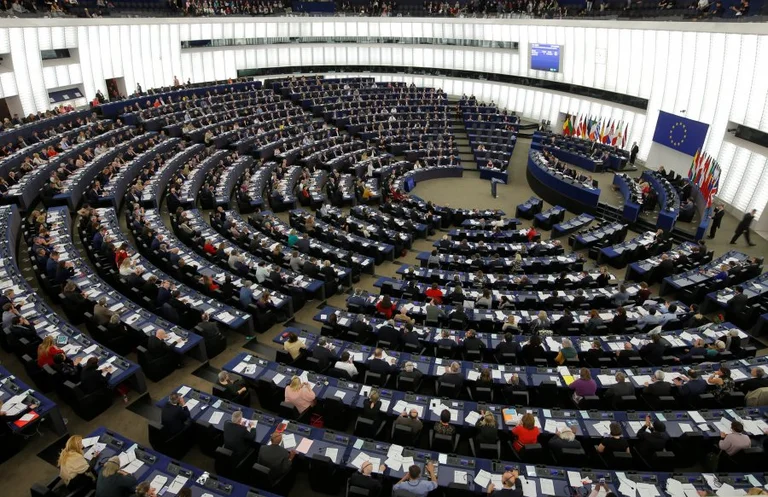
Reports of Serbia and Kosovo, adopted in the Foreign Policy Commission, will be carried in the form of resolution proposals at the European Parliament's plenary session.